Designing Semantic Knowledge Graphs: A Guide to Utilizing Semantic Web Technologies for Agile Data Management
暫譯: 設計語意知識圖譜:運用 Semantic Web 技術進行敏捷資料管理指南
Debellis, Michael
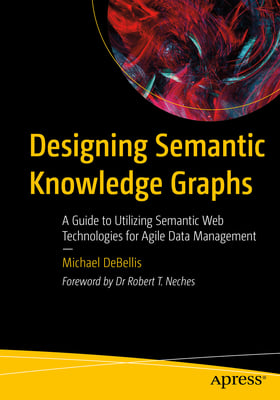
- 出版商: Apress
- 出版日期: 2026-11-04
- 售價: $2,180
- 貴賓價: 9.5 折 $2,071
- 語言: 英文
- 頁數: 506
- 裝訂: Quality Paper - also called trade paper
- ISBN: 9798868818226
- ISBN-13: 9798868818226
-
相關分類:
Information-management
海外代購書籍(需單獨結帳)
相關主題

商品描述
- Learn how Semantic Web standards like OWL, RDF, SPARQL, SHACL, and SWRL fit into modern data architecture Understand techniques for modeling domains that balance top-down structure with bottom-up data realities Explore common ontology design patterns Learn strategies for data ingestion, transformation, and validation at scale Learn how to create agile models that support change, iteration, and evolving requirements Understand how to integrate knowledge graphs with other components like Large Language Models and APIs
商品描述(中文翻譯)
OWL、RDF/RDFS、SPARQL、SHACL 和 SWRL 等 Semantic Web 技術,提供了以更靈活、更具意義且更具擴充性的方式管理資料的強大工具。隨著組織日益採用 Data Mesh、Data Fabric 和 Data Lake 等現代資料架構,Semantic Knowledge Graph(語意知識圖譜)可以作為統一層,讓資料更容易整合、驗證與推理。
然而,許多團隊仍對採用這些技術有所疑慮,通常認為它們過於複雜或偏向學術用途。本書旨在扭轉這種觀感,透過實際案例展示如何在真實世界的系統中有效運用這些工具。從限制條件驗證、領域建模,到查詢與推論,您將學習 Semantic Web 標準如何協助您處理雜亂、不斷演進且彼此連結的資料。
《Designing Semantic Knowledge Graphs》是一本實作導向指南,適合希望設計與建構符合現代企業需求之語意模型的軟體工程師、架構師和資料專業人員。您將學習如何將領域模型與真實資料銜接,建立能隨系統演進的敏捷本體,並將現有資料來源自動轉換為知識圖譜形式。在此過程中,您還將探索本體設計模式,運用 SHACL 驗證規則,並將知識圖譜與 LLM 和 SPARQL 等工具整合,以實現強大的查詢與推理能力。
所有技術都會使用 Protégé 和 AllegroGraph 社群版等免費且廣泛使用的工具進行說明。
您將學習:
- 了解 OWL、RDF、SPARQL、SHACL 和 SWRL 等 Semantic Web 標準如何融入現代資料架構
- 了解如何建模領域,在自上而下的結構與自下而上的資料現實之間取得平衡
- 探索常見的本體設計模式
- 學習大規模資料擷取、轉換與驗證的策略
- 學習如何建立支援變更、反覆迭代與需求演進的敏捷模型
- 了解如何將知識圖譜與 Large Language Models、API 等其他元件整合
適用對象:
使用結構化或半結構化資料,並希望建構更智慧、更具適應性系統的開發人員、資料科學家、軟體架構師與工程師。本書也適合希望更深入了解組織資料策略的產品經理、分析師與顧問。
作者簡介
Michael DeBellis is a Semantic Web and AI consultant and researcher with over 40 years of experience in industry and academia. He began designing ontologies in the early 1980s while building expert systems for Accenture and later worked as a researcher at USC's Information Sciences Institute (ISI), where he used Loom -- a direct predecessor to the Web Ontology Language (OWL). Throughout his career at firms including Deloitte, Accenture, and ThoughtWorks, he has focused on applying advanced technology to real-world enterprise challenges. His work emphasizes the practical integration of Semantic Knowledge Graphs into complex systems, highlighting the importance of user requirements, legacy data, and enterprise architecture over purely theoretical modeling. He has published and presented internationally on a broad range of topics across multiple domains.
作者簡介(中文翻譯)
Michael DeBellis 是一名 Semantic Web 與 AI 顧問及研究人員,在業界與學術界擁有超過 40 年的經驗。1980 年代初期,他在為 Accenture 建置專家系統時開始設計本體(ontologies);之後,他曾在 USC 的 Information Sciences Institute(ISI)擔任研究人員,期間使用 Loom——Web Ontology Language(OWL)的直接前身。他在 Deloitte、Accenture 及 ThoughtWorks 等公司任職期間,始終專注於將先進技術應用於真實世界的企業挑戰。他的工作著重於將語意知識圖譜(Semantic Knowledge Graphs)實際整合至複雜系統中,並強調使用者需求、舊有資料與企業架構的重要性,而非僅著眼於純理論建模。他曾針對跨越多個領域的廣泛主題,在國際間發表論文並進行演講。