商品描述
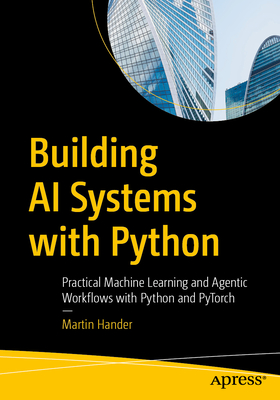
This book is a practical, end-to-end guide for engineers and practitioners who want to move beyond prototypes and confidently deploy machine learning and large language model solutions in real-world environments. This book guides through the entire modern machine learning lifecycle. You'll start with foundations using NumPy, Pandas, and PyArrow for data pipelines, then build solid baselines with scikit-learn. From there, you advance into deep learning with PyTorch, transformers, and LLM adaptation techniques such as LoRA and QLoRA. You'll explore diffusion and multimodal models, and learn to build retrieval-augmented generation systems with FAISS and pgvector. Practical chapters cover agents, tool use, evaluation frameworks, observability, and responsible AI practices including privacy, safety, and governance. Finally, you'll master deployment techniques using FastAPI, Ray Serve, TorchServe, and cutting-edge LLM serving engines like vLLM and TGI. Each concept is paired with clear code examples, testing patterns, and operational checklists. Instead of one-off tricks, you'll adopt repeatable workflows: schema-first tooling, reproducible training pipelines, evaluation with golden datasets, and secure production rollouts with monitoring and compliance checkpoints. In the end, this book helps you build systems that are robust, auditable, and optimized--whether you're deploying your first model or managing complex enterprise workloads. For engineers who want to ship AI confidently and responsibly, this is your practical playbook for the GenAI era. What you will learn: Implement modern AI models including transformers, diffusion, multimodal, recommenders, and RL using practical PyTorch examples. Fine tune and serve LLMs with LoRA/QLoRA, quantization, RAG, tool calling, structured prompts, and robust evaluation techniques. Design agentic AI systems with memory, planning, safe tool execution, multi agent patterns, and autonomy evaluation frameworks. Deploy and run production grade AI with MLOps/LLMOps covering serving, performance tuning, monitoring, cost control, compliance, and edge deployments. Who this book is for: This book is designed for practicing machine learning and AI engineers, software engineers moving into applied AI, data scientists building production systems, MLOps/LLMOps practitioners, and technical builders who want to go beyond demos and deploy real-world GenAI, LLM, and PyTorch-based systems at scale.
商品描述(中文翻譯)
這本書是一本實用的端到端指南,專為希望超越原型並自信地在現實環境中部署機器學習和大型語言模型解決方案的工程師和從業者而設計。
本書涵蓋了現代機器學習的整個生命週期。您將從使用 NumPy、Pandas 和 PyArrow 建立數據管道的基礎開始,然後使用 scikit-learn 建立穩固的基準。接著,您將進入使用 PyTorch 的深度學習,並學習轉換器和 LLM 調整技術,如 LoRA 和 QLoRA。您將探索擴散模型和多模態模型,並學習如何使用 FAISS 和 pgvector 構建檢索增強生成系統。實用章節涵蓋代理、工具使用、評估框架、可觀察性以及負責任的 AI 實踐,包括隱私、安全和治理。最後,您將掌握使用 FastAPI、Ray Serve、TorchServe 以及前沿的 LLM 服務引擎如 vLLM 和 TGI 的部署技術。每個概念都配有清晰的代碼示例、測試模式和操作檢查清單。您將採用可重複的工作流程,而不是一次性的技巧:以模式為先的工具、可重現的訓練管道、使用黃金數據集進行評估,以及具有監控和合規檢查點的安全生產推出。
最終,本書幫助您構建穩健、可審計和優化的系統——無論您是部署第一個模型還是管理複雜的企業工作負載。對於希望自信且負責任地交付 AI 的工程師來說,這是您在 GenAI 時代的實用手冊。
您將學到的內容:
實現現代 AI 模型,包括使用實用的 PyTorch 示例的轉換器、擴散、多模態、推薦系統和強化學習。
使用 LoRA/QLoRA、量化、RAG、工具調用、結構化提示和穩健的評估技術來微調和服務 LLM。
設計具有記憶、計劃、安全工具執行、多代理模式和自主評估框架的代理 AI 系統。
部署和運行生產級 AI,涵蓋 MLOps/LLMOps 的服務、性能調優、監控、成本控制、合規性和邊緣部署。
本書的讀者對象:
本書專為實踐機器學習和 AI 的工程師、轉向應用 AI 的軟體工程師、構建生產系統的數據科學家、MLOps/LLMOps 從業者以及希望超越演示並在規模上部署現實世界 GenAI、LLM 和基於 PyTorch 的系統的技術建設者而設計。
作者簡介
Martin Hander, Ph.D. (LIGS University), is a technology expert, author, and researcher specializing in artificial intelligence, cloud computing, web services and modern data platforms. With more than 15 years of experience in enterprise software engineering, distributed systems, and cloud-native architectures, he has worked across both academic and industry settings, helping organizations build scalable, secure, and future-ready applications. When not writing or researching, Martin enjoys mentoring developers, exploring emerging artificial intelligence innovations, and contributing to the global tech community.
作者簡介(中文翻譯)
馬丁·漢德博士(LIGS大學)是一位技術專家、作者和研究員,專注於人工智慧、雲端運算、網路服務和現代數據平台。擁有超過15年的企業軟體工程、分散式系統和雲原生架構的經驗,他在學術界和產業界都有工作經歷,幫助組織構建可擴展、安全且未來準備好的應用程式。當不在寫作或研究時,馬丁喜歡指導開發者、探索新興的人工智慧創新,並為全球科技社群做出貢獻。