相關主題


商品描述
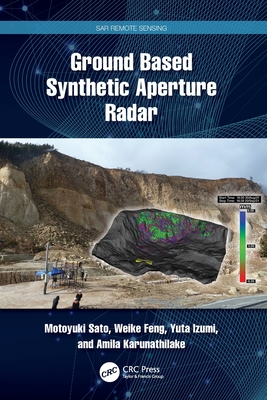
Explains the fundamentals of Ground Based Synthetic Aperture Radar, the principles of Synthetic Aperture Radar (SAR) image generation, and Interferometric SAR (InSAR) processing for observation of small ground surface deformation less than 1 mm, and gives examples of GB-SAR used for landslide monitoring, its potentials, and its limitations.
商品描述(中文翻譯)
解釋了地面合成孔徑雷達(Ground Based Synthetic Aperture Radar, GB-SAR)的基本原理、合成孔徑雷達(Synthetic Aperture Radar, SAR)影像生成的原理,以及干涉合成孔徑雷達(Interferometric SAR, InSAR)處理小於1毫米的地表變形觀測,並舉例說明GB-SAR在滑坡監測中的應用、潛力及其限制。
作者簡介
Motoyuki Sato is a professor emeritus at Tohoku University, Japan, and CEO of ALISys Co., Ltd, Japan. He received his B.E., M.E., and Dr. Eng. in information engineering from Tohoku University, Sendai, Japan, in 1980, 1982, and 1985, respectively. From 2007 to 2011 he was a distinguished professor at Tohoku University and from 2009 to 2013 was the director of the Center for Northeast Asian Studies. He was a visiting researcher at the Federal German Institute for Geoscience and Natural Resources (BGR) in Hannover, Germany, in 1988-1989. His current interests include transient electromagnetics and antennas, radar polarimetry, ground-penetrating radar (GPR), borehole radar, electromagnetic induction sensing, and ground-based synthetic aperture radar (GB-SAR) and multiple-input multiple-output (MIMO) radar systems. He developed GPR sensors for humanitarian demining, and they are used in mine-affected countries, including Cambodia and Ukraine. He received the 2014 Frank Frischknecht Leadership Award from society of exploration Geophysicists (SEG) for his sustained and important contributions to near-surface geophysics in the field of ground-penetrating radar. He received the The Institute of Electronics, Information and Communication Engineers (IEICE) Best Paper award in 2017 (Kiyasu Award) and 2020, Achievement Award in 2019, IEEE GRSS Education Award in 2012, and IEEE Ulrich L. Rohde Innovative Conference Paper Awards on Antenna Measurements and Applications in 2017. He was a visiting professor at Jilin University, China; Delft University of Technology, the Netherlands; and the Mongolian University of Science and Technology. Dr. Sato was the general chair of the IEEE International Geoscience and Remote Sensing Symposium (IGARSS) in 2011 in Sendai-Vancouver.
Weike Feng is an associate professor at Air Force Engineering University, Shaanxi, China, and the leader of a youth innovation team of Shaanxi universities. He received his B.E. from Air Force Engineering University, Shaanxi, China, in 2013 and his Ph.D. from Tohoku University, Sendai, Japan, in 2019. Dr. Feng received the Young Researcher Award from the IEEE GRSS All Japan Joint Chapter, the Student Award from IEEE AP-S Japan, and the Excellent Paper Award from IET International Radar Conference in 2018, as well as the Professor Fujino Incentive Award from Tohoku University and the Best Student Paper Award from PIERS in 2019.
Yuta Izumi received his B. Eng and M. Eng from Chiba University, Japan, in 2016 and 2018, respectively, and his Ph.D. in radar remote sensing from Tohoku University, Japan, in 2021. From 2018 to 2020, he was a JSPS research fellow DC1. From 2019 to 2020, he stayed at the Swiss Federal Institute of Technology (ETH), Zurich, Switzerland. From 2021 to 2022, he was a JSPS research fellow (postdoctoral) at the Institute of Industrial Science, University of Tokyo. He is currently an assistant professor at the Muroran Institute of Technology. His research interests include SAR interferometry and polarimetry and their applications for disaster mitigation and infrastructure health monitoring. Dr. Izumi is a recipient of the Student Paper Award at the ISRS in 2017, President Award from Chiba University in 2018, Dean Award from the Graduate School of Advanced Integration in 2018, Science Young Researcher Award from the IEEE Geoscience and Remote Sensing Society All Japan Joint Chapter in 2019, and Student Poster Award at the IEICE-AP in 2020.
Amila Karunathilake is a senior researcher at Advanced Technologies Research Laboratory, Asia Air Survey Co., LTD., Kawasaki, Japan. He received his B.Sc. and M.Sc. from the University of Peradeniya, Kandy, Sri Lanka, in 2011 and 2014, respectively, and his Ph.D. in environmental studies from Tohoku University, Sendai, Japan, in 2017. He was a post-doctoral research fellow with Tohoku University in 2018. He has shown his expertise by involvement in multi-participant disaster prevention research projects under the Cross-Ministerial Strategic Innovation Promotion Program (SIP) from 2019 to 2020. He collaborated with the Ministry of Land, Infrastructure, Transport and Tourism (MLIT) from 2021-2022 in Japan by consulting SAR remote sensing, spatial data processing, and analysis. His research interests include 3D spatial modeling, LiDAR-based mobile mapping systems (MMSs), new algorithms, application development for spaceborne and ground-based synthetic aperture radar, interferometric and polarimetric SAR analysis for infrastructure monitoring, and disaster prevention and mitigation. Dr. Karunathilake was a recipient of the Young Researcher Award from the IEEE GRSS Japan Chapter and the best Ph.D. Student Award from Graduate School of Environmental Studies, Tohoku University, in 2017.
作者簡介(中文翻譯)
佐藤基之是日本東北大學的名譽教授及ALISys有限公司的執行長。他於1980年、1982年和1985年分別在日本仙台的東北大學獲得資訊工程的學士、碩士和博士學位。從2007年到2011年,他擔任東北大學的特聘教授,並於2009年至2013年擔任東北亞研究中心的主任。他於1988年至1989年在德國漢諾威的德國聯邦地質科學與自然資源研究所(BGR)擔任訪問研究員。他目前的研究興趣包括瞬態電磁學和天線、雷達偏振測量、地面穿透雷達(GPR)、鑽孔雷達、電磁感應感測以及地面合成孔徑雷達(GB-SAR)和多輸入多輸出(MIMO)雷達系統。他為人道主義排雷開發了GPR感測器,這些感測器在包括柬埔寨和烏克蘭在內的地雷影響國家中使用。他因在地面穿透雷達領域對近地表地球物理學的持續和重要貢獻而獲得2014年勘探地球物理學會(SEG)弗蘭克·弗里施克內赫特領導獎。他於2017年(清安獎)和2020年獲得電子資訊通信學會(IEICE)最佳論文獎,2019年獲得成就獎,2012年獲得IEEE GRSS教育獎,並於2017年獲得IEEE烏爾里希·L·羅德創新會議論文獎(天線測量與應用)。他曾擔任中國吉林大學、荷蘭代爾夫特科技大學及蒙古科技大學的訪問教授。佐藤博士於2011年在仙台-溫哥華舉辦的IEEE國際地球科學與遙感研討會(IGARSS)擔任總主席。
馮偉克是中國陝西空軍工程大學的副教授,並且是陝西省大學青年創新團隊的領導者。他於2013年在中國陝西空軍工程大學獲得學士學位,並於2019年在日本仙台的東北大學獲得博士學位。馮博士獲得了IEEE GRSS全日本聯合分會的青年研究者獎、IEEE AP-S日本的學生獎,以及2018年IET國際雷達會議的優秀論文獎,還獲得了東北大學的藤野教授激勵獎和2019年PIERS的最佳學生論文獎。
泉裕太於2016年和2018年分別在日本千葉大學獲得學士和碩士學位,並於2021年在日本東北大學獲得雷達遙感的博士學位。從2018年到2020年,他是JSPS研究員DC1。2019年至2020年,他在瑞士蘇黎世的瑞士聯邦理工學院(ETH)進行研究。2021年至2022年,他在東京大學工業科學研究所擔任JSPS研究員(博士後)。他目前是室蘭工業大學的助理教授。他的研究興趣包括SAR干涉測量和偏振測量及其在災害減緩和基礎設施健康監測中的應用。泉博士於2017年獲得ISRS的學生論文獎,2018年獲得千葉大學的校長獎,2018年獲得先進整合研究所的院長獎,2019年獲得IEEE地球科學與遙感學會全日本聯合分會的科學青年研究者獎,以及2020年IEICE-AP的學生海報獎。
阿米拉·卡魯納提拉克是日本川崎的亞洲空中調查有限公司先進技術研究實驗室的高級研究員。他於2011年和2014年分別在斯里蘭卡康提的佩拉德尼亞大學獲得學士和碩士學位,並於2017年在日本仙台的東北大學獲得環境研究的博士學位。他於2018年在東北大學擔任博士後研究員。他在2019年至2020年期間參與跨部會戰略創新推進計畫(SIP)的多參與者災害預防研究項目,展現了他的專業知識。他於2021年至2022年與日本國土交通省(MLIT)合作,提供SAR遙感、空間數據處理和分析的諮詢服務。他的研究興趣包括3D空間建模、基於LiDAR的移動測繪系統(MMS)、新算法、太空和地面合成孔徑雷達的應用開發、基礎設施監測的干涉和偏振SAR分析,以及災害預防和減緩。卡魯納提拉克博士於2017年獲得IEEE GRSS日本分會的青年研究者獎和東北大學環境研究所的最佳博士生獎。