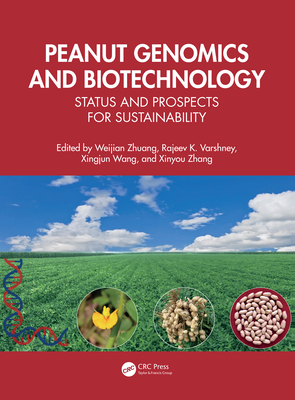
Peanut Genomics and Biotechnology: Status and Prospects for Sustainability
暫譯: 花生基因組學與生物技術:現狀與可持續發展的前景
Zhuang, Weijian, Varshney, Rajeev K., Wang, Xingjun
- 出版商: CRC
- 出版日期: 2025-12-23
- 售價: $9,750
- 貴賓價: 9.5 折 $9,262
- 語言: 英文
- 頁數: 342
- 裝訂: Hardcover - also called cloth, retail trade, or trade
- ISBN: 1032420499
- ISBN-13: 9781032420493
-
相關分類:
生物資訊 Bioinformatics
海外代購書籍(需單獨結帳)
相關主題


商品描述
In a world where food security and sustainable agriculture face unprecedented challenges, the cultivated peanut emerges as an important food crop. Representing an essential quality oil and food legume crop grown across over 100 countries, peanuts provide vital nutrition and economic stability. Peanut Genomics and Biotechnology: Status and Prospects for Sustainability delves into the fascinating journey of peanuts, from their evolutionary origins as a natural tetraploid hybrid to their critical roles in addressing global food and oil demands amidst changing climates.
Advances in peanut genomics and biotechnology have transformed the possibilities for sustainable production. This book is a comprehensive guide to these breakthroughs, offering insights into peanut genome sequencing, breeding pro>grams, and the innovative biotechnological tools that are driving progress. From decoding the complexities of the peanut genome to addressing abiotic and biotic stresses, this resource provides actionable solutions to develop resilient cultivars with superior yields and nutritional content.
Peanut Genomics and Biotechnology: Status and Prospects for Sustainability is useful to students, researchers, and practitioners, bringing together knowledge on genome editing technologies, omics, and bioinformatics applications. By providing a single, consolidated source of systemic information, it empowers scientists and agricultural professionals to revolutionize peanut breeding programs and contribute to sustainable agriculture.
商品描述(中文翻譯)
在一個食品安全和可持續農業面臨前所未有挑戰的世界中,栽培花生成為一種重要的糧食作物。花生作為一種在超過100個國家種植的優質油脂和食品豆類作物,提供了重要的營養和經濟穩定。《花生基因組學與生物技術:可持續性的現狀與前景》深入探討了花生的迷人歷程,從其作為自然四倍體雜交種的進化起源,到在應對全球食品和油脂需求以及氣候變化中所扮演的關鍵角色。
花生基因組學和生物技術的進展改變了可持續生產的可能性。本書是這些突破的綜合指南,提供了有關花生基因組測序、育種計劃以及推動進展的創新生物技術工具的見解。從解碼花生基因組的複雜性到應對非生物和生物壓力,這本資源提供了可行的解決方案,以開發具有優越產量和營養成分的抗逆品種。
《花生基因組學與生物技術:可持續性的現狀與前景》對學生、研究人員和實踐者都非常有用,匯集了有關基因編輯技術、組學和生物信息學應用的知識。通過提供一個系統性信息的單一綜合來源,它使科學家和農業專業人士能夠徹底改變花生育種計劃,並為可持續農業做出貢獻。
作者簡介
Prof. Weijian Zhuang is a senior scientist specializing in genomics, molecular and cell biology, genetics, and breeding and has over 38 years of service at Fujian Agriculture and Forestry University (FAFU, China), UC Berkeley, UCLA, UC Davis, and TUSKEGEE University as a research fellow and postdoc appointee or visiting professor. He is serving FAFU as a director, Oil Crop Research Institute; Centra for Legume Plant Genetics and System Biology. He has served as the head of the Fujian Province Key Laboratory of Plant Molecular and Cell Biology and is now a guest/special professor or PI at several universities, provincial and ministry key laboratories, and state key laboratories in Fujian and other provinces. He is vice-chairman/executive member of the Plant Biotechnology and Industrialization Professional Committee of Chinese Society for Plant Biology, as well as other national crop societies and provincial academic societies. He has hosted several national conferences on plant biotechnology and oil crops. He is the principal investigator on over 40 national and provincial research projects. Focusing on peanut, he has published over 200 papers in national and international journals, a book, and chapters for several other books; released 18 peanut varieties into application; obtained 28 patents; and won seven prizes for contributions to science and technology from Fujian Province and the Ministry of China. In 2019, by leading an international research team, his group was first to decode the tetraploid cultivated peanut genome, greatly promoting peanut scientific research. He won distinguished expert of Fujian Province and the state council allowance of China.
Professor Rajeev K. Varshney FRS is an agricultural research scientist specializing in genomics and molecular breeding with more than 20 years of service in international agriculture while working in India, Germany, Australia, Mexico, and several countries in Africa. At present, he is serving Murdoch University (Australia) as a director of the Centre for Crop & Food Innovation; director of the State Agricultural Biotechnology Centre; and International Chair in Agriculture & Food Security with the Food Futures Institute. He is an Honorary or Adjunct Professor with more than ten universities/organizations in China, Australia, Africa, and India. Prof. Varshney is a globally recognized leader for his work on genome sequencing, cataloguing and utilizing genetic diversity, genomics-assisted breeding, seed systems, and capacity building in developing countries. He has made centrally important contributions in the area of assembling genomes, developing genomic resources, and integrating genomic technologies in crop improvement programs in many tropical crops. His research has contributed towards enhancing farmers' profitability and environmental sustainability in Australia and improving food and nutrition security in India and several countries in Africa and Asia.
Professor Xingjun Wang is a senior scientist at the Institute of Crop Germplasm Resources, Shandong Academy of Agricultural Sciences (SAAS), Jinan, China. He is the former director general of Biotechnology Research Center, SAAS. He is the Master and PhD student supervisor of Shandong University and Shandong Normal University. He is the vice chairman of the Shandong Genetics Society. He is an executive member of the Oil Crop Branch of the Crop Science Society of China and an executive member of the High Technology Branch of the China Association of Agricultural Science Society. He is a Taishan Scholar Expert and a Distinguished Expert of Shandong Province. He received his Ph.D. from the Life Science College of the National University of Singapore (NUS) and completed his postdoctoral research at the University of California, Los Angeles (UCLA). Professor Wang has focused on peanut functional genomics, genomics, gene identification, DNA marker development, germplasm innovation, and molecular breeding since 2006 in SAAS. He is the principal investigator on more than 20 national and provincial projects, including the regular NSFC project and NSFCCGIAR project. He has published more than 180 papers in national and international journals, edited the book Studies on Peanut Biotechnology, and wrote chapters for several books. He has been awarded six prizes for Progress in Science and Technology from Shandong Province and the Ministry of Agriculture and Rural Affairs of the People's Republic of China. He won the Outstanding Contribution Award for peanut genomics studies. He has given talks at different national and international congresses and hosted the 11th International Conference of the Peanut Research Community on Advances in Arachis through Genomics and Biotechnology (AAGB), held in 2019 in Jinan, China.
Prof. Xinyou Zhang is a member of Chinese Academy of Engineering (CAE), the president of Henan Academy of Agricultural Sciences (HAAS), and the chief scientist of China's National Peanut Industry Technology System affiliated to the Ministry of Agriculture and Rural Affairs. He has been serving as a researcher specializing in the genetic improvement of peanut at HAAS for over 40 years, where he initiated a distant hybridization program and made great technological progress in deriving valuable germplasm lines integrating elite traits from wild Arachis species. The variety "Yuanza 9102," developed and released by his group, has become the most widely grown peanut variety developed through interspecific hybridization. He has also actively participated in organizing and implementing the International Peanut Genome Initiative, contributing to the completion of genome sequencing for peanut cultivars and their diploid ancestors. Prof. Xinyou Zhang is one of the leading scientists in peanut breeding in China. He has made significant contributions in variety improvement and breeding technology innovations. The "Yuhua" and "Yuanza" series of peanut varieties released by his group have been grown over a total area of over 10 million hectares, substantially facilitating the development of China's peanut industry, assisting Chinese farmers in increasing their income, and ensuring a stable supply of edible vegetable oil in China.
作者簡介(中文翻譯)
莊維建教授是一位專注於基因組學、分子與細胞生物學、遺傳學及育種的高級科學家,並在中國福建農林大學(FAFU)、加州大學伯克利分校、加州大學洛杉磯分校、加州大學戴維斯分校及塔斯基基大學擔任研究員及博士後研究員或訪問教授,服務超過38年。他目前擔任福建農林大學油料作物研究所所長及豆科植物遺傳學與系統生物學中心主任。他曾擔任福建省植物分子與細胞生物學重點實驗室的負責人,並且現在是多所大學、省級及部級重點實驗室及國家重點實驗室的客座/特聘教授或首席研究員。他是中國植物生物學會植物生物技術與工業化專業委員會的副主席/執行委員,並參與其他國家作物學會及省級學術社團。他主持過多次國家級植物生物技術及油料作物的會議,並擔任超過40個國家及省級研究項目的首席研究員。專注於花生,他在國內外期刊上發表了超過200篇論文,出版了一本書及數本書的章節;釋出18個花生品種進入應用;獲得28項專利;並獲得福建省及中國部委的七項科技貢獻獎。2019年,他帶領國際研究團隊首次解碼四倍體栽培花生基因組,極大促進了花生科學研究。他獲得福建省的傑出專家及中國國務院津貼。
拉吉夫·K·瓦爾什尼教授 FRS 是一位專注於基因組學和分子育種的農業研究科學家,在國際農業領域擁有超過20年的服務經驗,曾在印度、德國、澳大利亞、墨西哥及非洲多個國家工作。目前,他在澳大利亞的墨爾本大學擔任作物與食品創新中心主任;州農業生物技術中心主任;以及食品未來研究所的國際農業與食品安全主席。他是中國、澳大利亞、非洲及印度超過十所大學/機構的榮譽或兼任教授。瓦爾什尼教授因其在基因組測序、遺傳多樣性的目錄編制與利用、基因組輔助育種、種子系統及發展中國家的能力建設方面的工作而被全球認可為領導者。他在組裝基因組、開發基因組資源及將基因組技術整合到許多熱帶作物的改良計劃中做出了重要貢獻。他的研究有助於提高澳大利亞農民的盈利能力和環境可持續性,並改善印度及非洲和亞洲多個國家的食品和營養安全。
王興軍教授是中國山東省農業科學院作物種質資源研究所的高級科學家。他曾擔任山東省農業科學院生物技術研究中心的主任。他是山東大學和山東師範大學的碩士及博士生導師。他是山東省遺傳學會的副會長,也是中國作物科學學會油料作物分會及中國農業科學學會高科技分會的執行委員。他是泰山學者專家及山東省的傑出專家。他在新加坡國立大學(NUS)生命科學學院獲得博士學位,並在加州大學洛杉磯分校(UCLA)完成博士後研究。自2006年以來,王教授專注於花生功能基因組學、基因組學、基因識別、DNA標記開發、種質創新及分子育種。他是超過20個國家及省級項目的首席研究員,包括常規的NSFC項目及NSFCCGIAR項目。他在國內外期刊上發表了超過180篇論文,編輯了《花生生物技術研究》一書,並為數本書撰寫章節。他獲得了山東省及中華人民共和國農業農村部的六項科技進步獎。他因花生基因組學研究獲得傑出貢獻獎。他在不同的國內外會議上發表演講,並主辦了2019年在中國濟南舉行的第11屆國際花生研究社區會議,主題為基因組學與生物技術在Arachis中的應用(AAGB)。
張新友教授是中國工程院院士,河南省農業科學院院長,以及隸屬於農業農村部的中國國家花生產業技術體系首席科學家。他在河南省農業科學院專注於花生的遺傳改良研究已超過40年,期間啟動了遠緣雜交計劃,並在整合野生Arachis物種的優良性狀方面取得了重大技術進展。他的團隊開發並釋出的品種「元雜9102」已成為通過種間雜交開發的最廣泛栽培的花生品種。他還積極參與組織和實施國際花生基因組計劃,為花生栽培品種及其二倍體祖先的基因組測序的完成做出了貢獻。張新友教授是中國花生育種領域的領軍科學家之一,在品種改良和育種技術創新方面做出了重要貢獻。他的團隊釋出的「玉華」和「元雜」系列花生品種的總栽培面積超過1000萬公頃,顯著促進了中國花生產業的發展,幫助中國農民增加收入,並確保中國食用植物油的穩定供應。