相關主題


商品描述
Artificial Intelligence (AI) is widely used in society today. The (mis)use of biased data sets in machine learning applications is well-known, resulting in discrimination and exclusion of citizens. Another example is the use of non-transparent algorithms that can't explain themselves to users, resulting in the AI not being trusted and therefore not being used when it might be beneficial to use it.
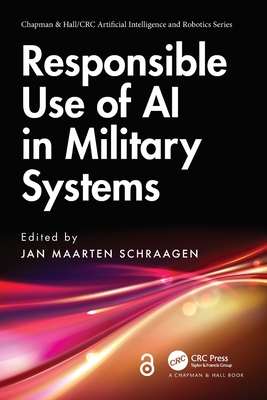
Responsible Use of AI in Military Systems lays out what is required to develop and use AI in military systems in a responsible manner. Current developments in the emerging field of Responsible AI as applied to military systems in general (not merely weapons systems) are discussed. The book takes a broad and transdisciplinary scope by including contributions from the fields of philosophy, law, human factors, AI, systems engineering, and policy development.
Divided into five sections, Section I covers various practical models and approaches to implementing military AI responsibly; Section II focuses on liability and accountability of individuals and states; Section III deals with human control in human-AI military teams; Section IV addresses policy aspects such as multilateral security negotiations; and Section V focuses on 'autonomy' and 'meaningful human control' in weapons systems.
Key Features:
- Takes a broad transdisciplinary approach to responsible AI
- Examines military systems in the broad sense of the word
- Focuses on the practical development and use of responsible AI
- Presents a coherent set of chapters, as all authors spent two days discussing each other's work
This book provides the reader with a broad overview of all relevant aspects involved with the responsible development, deployment and use of AI in military systems. It stresses both the advantages of AI as well as the potential downsides of including AI in military systems.
商品描述(中文翻譯)
人工智慧(AI)在當今社會中被廣泛使用。在機器學習應用中,偏見數據集的(誤)用是眾所周知的,這導致了對公民的歧視和排斥。另一個例子是使用不透明的算法,這些算法無法向用戶解釋其運作原理,導致AI不被信任,因此在可能有益的情況下不被使用。
《負責任的軍事系統中的AI使用》闡述了在軍事系統中以負責任的方式開發和使用AI所需的條件。書中討論了負責任AI在軍事系統(不僅僅是武器系統)中的應用的最新發展。該書採取了廣泛的跨學科範疇,包含了來自哲學、法律、人因工程、AI、系統工程和政策發展等領域的貢獻。
本書分為五個部分,第一部分涵蓋了負責任地實施軍事AI的各種實用模型和方法;第二部分專注於個人和國家的責任與問責;第三部分處理人類與AI軍事團隊中的人類控制;第四部分涉及多邊安全談判等政策方面;第五部分則聚焦於武器系統中的「自主性」和「有意義的人類控制」。
主要特點:
- 採取廣泛的跨學科方法來探討負責任的AI
- 從廣義上檢視軍事系統
- 專注於負責任AI的實際開發和使用
- 提供一套連貫的章節,所有作者花了兩天時間討論彼此的工作
本書為讀者提供了有關負責任地開發、部署和使用AI於軍事系統的所有相關方面的廣泛概述。它強調了AI的優勢以及將AI納入軍事系統的潛在缺點。
作者簡介
Jan Maarten Schraagen is Principal Scientist at TNO, The Netherlands. His research interests include human-autonomy teaming and responsible AI. He is main editor of Cognitive Task Analysis (2000) and Naturalistic Decision Making and Macrocognition (2008) and co-editor of the Oxford Handbook of Expertise (2020). He is editor in chief of the Journal of Cognitive Engineering and Decision Making. Dr. Schraagen holds a PhD in Cognitive Psychology from the University of Amsterdam, The Netherlands.
作者簡介(中文翻譯)
Jan Maarten Schraagen 是荷蘭TNO的首席科學家。他的研究興趣包括人類與自主系統的協作以及負責任的人工智慧。他是Cognitive Task Analysis(2000年)和Naturalistic Decision Making and Macrocognition(2008年)的主編,並且是Oxford Handbook of Expertise(2020年)的共同編輯。他是Journal of Cognitive Engineering and Decision Making的主編。Schraagen博士擁有荷蘭阿姆斯特丹大學的認知心理學博士學位。