Machine Learning for Survival Analysis
暫譯: 用於存活分析的機器學習
Bender, Andreas, Sonabend, Raphael
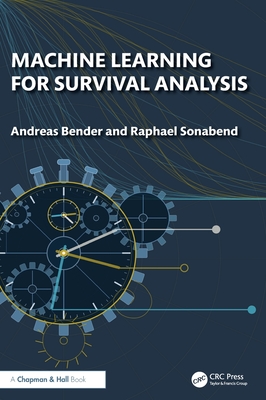
- 出版商: CRC
- 出版日期: 2026-12-16
- 售價: $5,230
- 貴賓價: 9.5 折 $4,968
- 語言: 英文
- 頁數: 260
- 裝訂: Hardcover - also called cloth, retail trade, or trade
- ISBN: 1032537493
- ISBN-13: 9781032537498
-
相關分類:
Machine Learning
尚未上市,無法訂購
相關主題


商品描述
Survival analysis is a mature field with decades of methodological development, yet machine learning survival analysis is still taking shape as a discipline in its own right. While machine learning methods for time-to-event prediction are increasingly used in health care, clinical research, actuarial science, engineering, and industry, a critical gap remains in the literature: few texts bridge the theoretical foundations of survival analysis with the methods, workflows, and evaluation tools of modern machine learning. Machine Learning in Survival Analysis fills this gap by providing a systematic treatment of machine learning approaches to time-to-event prediction.
From nonparametric estimators, Cox proportional hazards models, and parametric models to random forests, support vector machines, gradient boosting machines, and neural networks, this book offers a rigorous yet accessible journey through the field. It formally defines the survival analysis machine learning task, introduces key prediction targets, and explains how censoring and truncation change the structure of standard predictive modeling problems. Beyond model fitting, the book gives detailed attention to model evaluation, including discrimination, calibration, scoring rules, censoring adjustment, and the assumptions required for valid comparison. The book covers single-event right-censored data, with extensions to other censoring mechanisms, truncation, competing risks, reduction methods, and event history analysis more generally.
Key Features:
- Comprehensive coverage from survival analysis foundations to modern machine learning methods, including non-parametric, semi-parametric, and fully parametric models, random forests, support vector machines, gradient boosting machines, and neural networks
- Formal treatment of survival analysis as a machine learning task, with clear definitions of censoring, truncation, competing risks, and multiple prediction targets
- Detailed evaluation framework covering discrimination, calibration, scoring rules, censoring adjustment, and the practical limitations of commonly used measures
- Coverage of reduction methods that connect survival analysis to standard regression and classification frameworks
- Extensions beyond single-event right censoring, including interval censoring, truncation, competing risks, and event history analysis
This book is designed for graduate students, researchers, and data science practitioners with foundational knowledge of statistics and machine learning. It serves as a textbook for courses in survival analysis, biostatistics, machine learning, and applied predictive modeling, as well as a reference for practitioners developing, evaluating, or deploying survival models in clinical, industrial, engineering, financial, or scientific settings. Whether the reader is learning survival analysis for the first time, moving from standard machine learning to time-to-event modeling, or seeking a unified treatment of classical and modern approaches, this book provides the theory needed to understand, evaluate, and apply machine learning methods to time-to-event data and temporal processes with partially observed information.
商品描述(中文翻譯)
生存分析(survival analysis)是一個已發展成熟的領域,經過數十年的方法論發展;然而,機器學習生存分析(machine learning survival analysis)作為一門獨立學科,仍在逐步成形。雖然用於事件發生時間(time-to-event)預測的機器學習方法,已日益廣泛應用於醫療保健、臨床研究、精算科學、工程與產業領域,但相關文獻中仍存在一項關鍵缺口:很少有書籍能將生存分析的理論基礎,與現代機器學習的方法、工作流程及評估工具銜接起來。《Machine Learning in Survival Analysis》正是為填補此一缺口而著,針對事件發生時間預測的機器學習方法,提供系統性的介紹。
本書涵蓋從無母數估計量(nonparametric estimators)、Cox 比例風險模型(Cox proportional hazards models)與參數模型(parametric models),到隨機森林(random forests)、支援向量機(support vector machines)、梯度提升機(gradient boosting machines)及神經網路(neural networks),以嚴謹且易於理解的方式帶領讀者探索此一領域。本書正式定義生存分析中的機器學習任務,介紹關鍵的預測目標,並說明設限(censoring)與截斷(truncation)如何改變標準預測建模問題的結構。除了模型擬合之外,本書也詳細探討模型評估,包括鑑別度(discrimination)、校準度(calibration)、評分規則(scoring rules)、設限調整(censoring adjustment),以及進行有效比較所需的假設。本書主要涵蓋單一事件的右設限資料(right-censored data),並延伸討論其他設限機制、截斷、競爭風險(competing risks)、化約方法(reduction methods),以及更廣義的事件歷程分析(event history analysis)。
主要特色:
• 從生存分析基礎到現代機器學習方法的完整涵蓋,包括無母數、半參數(semi-parametric)與完全參數模型、隨機森林、支援向量機、梯度提升機及神經網路
• 將生存分析正式視為一項機器學習任務,清楚定義設限、截斷、競爭風險及多種預測目標
• 詳細的評估架構,涵蓋鑑別度、校準度、評分規則、設限調整,以及常用衡量指標在實務上的限制
• 涵蓋將生存分析連結至標準迴歸與分類架構的化約方法
• 超越單一事件右設限的延伸內容,包括區間設限(interval censoring)、截斷、競爭風險及事件歷程分析
本書適合具備統計學與機器學習基礎知識的研究生、研究人員及資料科學實務工作者。本書可作為生存分析、生物統計學、機器學習及應用預測建模課程的教材,也可作為實務參考書,協助讀者在臨床、產業、工程、金融或科學環境中開發、評估或部署生存模型。無論讀者是首次學習生存分析、希望從標準機器學習進一步掌握事件發生時間建模,或正在尋找能整合經典與現代方法的完整介紹,本書都提供了理解、評估及應用機器學習方法於事件發生時間資料,以及具有部分觀測資訊之時間過程所需的理論基礎。
作者簡介
Dr. Andreas Bender is a Senior Lecturer at the Department of Statistics, Head of the Machine Learning Consulting Unit (MLCU) at the Munich Center for Machine Learning (MCML), and founder of the Open Science Initiative in Statistics at LMU Munich. Machine Learning Survival Analysis is one of Andreas' main research areas. Andreas created several open-source packages and actively contributes to survival analysis software, including pammtools and mlr3proba.
Dr. Raphael Sonabend-Friend is an Associate Director at the National Institute for Health and Care Excellence (NICE) and the CEO and Co-Founder of OSPO Now. Raphael holds a PhD focused on the accessible and transparent use of machine learning for survival analysis. Raphael has over a decade of experience at the intersection of AI and healthcare, including work with large philanthropies, small local charities, governmental bodies, and private sector organizations in the United Kingdom and globally. Raphael has created and maintained several software packages for survival analysis and machine learning, including mlr3proba, survivalmodels, and SurvivalAnalysis.jl. Raphael co-edited and co-authored Applied Machine Learning Using mlr3 in R.
作者簡介(中文翻譯)
Dr. Andreas Bender 是統計學系的高級講師,也是 Munich Center for Machine Learning (MCML) 的 Machine Learning Consulting Unit (MLCU) 主管,以及 LMU Munich 統計學 Open Science Initiative 的創辦人。Machine Learning Survival Analysis 是 Andreas 的主要研究領域之一。Andreas 開發了數個開放原始碼套件,並積極投入 survival analysis 軟體的貢獻,包括 pammtools 和 mlr3proba。
Dr. Raphael Sonabend-Friend 是 National Institute for Health and Care Excellence (NICE) 的副主任,也是 OSPO Now 的執行長暨共同創辦人。Raphael 擁有一個以可近性與透明方式運用 machine learning 進行 survival analysis 為研究重點的博士學位。Raphael 在 AI 與 healthcare 的交會領域擁有超過十年的經驗,合作對象包括大型慈善基金會、小型地方慈善機構、政府機關,以及英國和全球各地的私人企業組織。Raphael 開發並維護了數個用於 survival analysis 與 machine learning 的軟體套件,包括 mlr3proba、survivalmodels 和 SurvivalAnalysis.jl。Raphael 共同編輯並合著了 Applied Machine Learning Using mlr3 in R。


