相關主題

商品描述
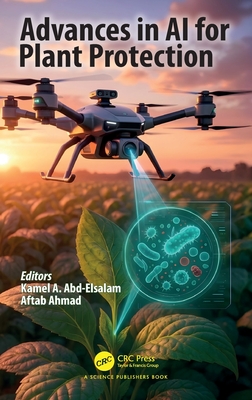
This is a critical book that examines the power of artificial intelligence to transform the health of crops. It covers the latest AI technologies being used for proactive and accurate protection of plants. The book is a detailed guide on drones and robotics that are used to monitor and spray specific areas and provide highly advanced image processing that help in detecting diseases early on in crops such as wheat, cotton, and tomato. It fills the disconnect between data science and agronomy, including smart sensing, predictive analytics, and integration with precision agriculture systems. The book sheds light on useful ways of managing the pest population sustainably and addresses ethical challenges that define the future of AI-enabled agriculture.
商品描述(中文翻譯)
這是一本關鍵的書籍,探討人工智慧在改變作物健康方面的力量。它涵蓋了最新的人工智慧技術,這些技術被用於主動且準確地保護植物。這本書詳細介紹了用於監控和噴灑特定區域的無人機和機器人,並提供高度先進的影像處理技術,幫助及早檢測小麥、棉花和番茄等作物的疾病。它填補了數據科學與農藝學之間的鴻溝,包括智能感測、預測分析以及與精準農業系統的整合。這本書闡明了可持續管理害蟲族群的有用方法,並探討了定義人工智慧驅動農業未來的倫理挑戰。
作者簡介
Kamel A. Abd-Elsalam, Ph.D., is currently a Research Professor and Deputy Director for Research at the Plant Pathology Research Institute, Agricultural Research Center, Giza, Egypt. Dr. Kamel's research interests include developing and improving plant biosecurity diagnostic tools, understanding fungal pathogen genomes, and creating eco-friendly hybrid nanomaterials for controlling toxigenic fungi and plant diseases as well as applications in agroecosystems. Kamel earned his Ph.D. in Molecular Plant Pathology from Christian Albrechts University of Kiel (Germany) and Suez Canal University (Egypt). In 2008, he was awarded a postdoc-toral fellowship from the same institution. Dr. Kamel served as a Visiting Associate Professor at Mae Fah Luang University in Thailand, the Institute of Microbiology at TUM in Germany, the Laboratory of Phytopathology at Wageningen University in the Netherlands, and the Plant Protection Department at Sassari University in Italy.
He has published 41 books related to nanobiotechnology applications in agriculture and plant protection with major publishing houses such as Springer, Taylor & Francis, and Elsevier. Since 2019, he has served as the Editor-in-Chief of the Elsevier book series Nanobiotechnology for Plant Protection and as the Series Editor for Applications of Genome Modified Plants and Microbes in Food and Agriculture. Additionally, he has been an active member of the Elsevier Advisory Panel since 2020, providing feedback and suggestions to improve Elsevier's products and services. He has published more than 328 scientific research articles in international and regional specialized journals with high impact factors, and has an H-index of 55, an i-10 index of 173, and over +11802 citations. He served as a Guest Editor for the Journal of Fungi, Plants, and Microorganisms, and as a Review Editor for Frontiers in Genomic Assay Technology, Agrochemicals, and Plant Nano Biology. He was ranked in the top 2% of the most influential scientists in the world in nanobiotechnology for 2021, 2022, 2023, 2024 and 2025 by Elsevier and Stanford University. In 2014, he was awarded the Federation of Arab Scientific Research Councils Prize for excellent scientific research in biotechnology (fungal genomics), ranking first. Additionally, he received the Egyptian State Award for Agricultural Scientific Excellence from ASRT, Egypt, in 2022 with a silver medal.
Aftab Ahmad, Ph.D., is currently working as an Associate Professor at the Natural and Medical Sciences Research Center (NMSRC), University of Nizwa, Oman. Dr. Aftab's research interests include developing biotic stress-tolerant gene-edited plants using CRISPR/Cas technology. He has published four international books on CRISPR and more than 40 research articles in international peer reviewed journals including Frontiers in Plant Science, Journal of Biomedical Sciences, Scientific Reports-Nature, PLOS One, Journal of Translational Medicine, Plant Molecular Biology Reporter, Molecules, Journal of Cereal Science, and Genetic Resources and Crop Evolution. Dr. Aftab pursued his Ph.D. and postdocs in Plant Molecular Biology from the University of Shizuoka, Japan, under the Center of Excellence (COE, 21st Century) program. He works as a guest editor in Frontiers in Genome Editing and Frontiers in Plant Sciences. Dr. Aftab also served as a visiting scientist in the Department of Plant Sciences, University of California, Davis, USA. Dr. Aftab has more than ten years of teaching experience in biochemistry and molecular biology, and his research focuses on CRISPR/Cas-based genome editing in plants.
作者簡介(中文翻譯)
Kamel A. Abd-Elsalam博士目前是埃及吉薩農業研究中心植物病理研究所的研究教授及研究副所長。Kamel博士的研究興趣包括開發和改進植物生物安全診斷工具、理解真菌病原體基因組,以及創造環保的混合納米材料以控制毒素真菌和植物疾病,並應用於農業生態系統。Kamel在德國基爾基督阿爾布雷希特大學和埃及蘇伊士運河大學獲得分子植物病理學博士學位。2008年,他獲得該機構的博士後獎學金。Kamel博士曾擔任泰國梅法魯昂大學的訪問副教授、德國慕尼黑工業大學微生物學研究所、荷蘭瓦赫寧根大學植物病理學實驗室及意大利薩薩里大學植物保護系的訪問教授。
他已出版41本與農業和植物保護中納米生物技術應用相關的書籍,主要由Springer、Taylor & Francis和Elsevier等大型出版社出版。自2019年以來,他擔任Elsevier書系列《植物保護的納米生物技術》的主編,以及《基因改造植物和微生物在食品和農業中的應用》系列的編輯。此外,自2020年以來,他一直是Elsevier顧問小組的活躍成員,提供反饋和建議以改善Elsevier的產品和服務。他在國際和區域專業期刊上發表了超過328篇科學研究文章,這些期刊的影響因子均較高,並擁有55的H指數、173的i-10指數以及超過11802次引用。他曾擔任《真菌、植物和微生物學期刊》的客座編輯,以及《基因組檢測技術、農藥和植物納米生物學前沿》的審稿編輯。他在2021、2022、2023、2024和2025年被Elsevier和史丹佛大學評選為全球納米生物技術領域最具影響力的科學家前2%。2014年,他因在生物技術(真菌基因組學)方面的卓越科學研究獲得阿拉伯科學研究理事會聯合會獎,並名列第一。此外,他於2022年獲得埃及科學卓越國家獎,並獲得銀獎。
Aftab Ahmad博士目前在阿曼尼茲瓦大學自然與醫學科學研究中心(NMSRC)擔任副教授。Aftab博士的研究興趣包括利用CRISPR/Cas技術開發耐生物胁迫的基因編輯植物。他已出版四本關於CRISPR的國際書籍,並在包括《植物科學前沿》、《生物醫學科學期刊》、《自然科學報告》、《PLOS One》、《轉化醫學期刊》、《植物分子生物學報告》、《分子》、《穀物科學期刊》和《遺傳資源與作物演化》在內的國際同行評審期刊上發表了超過40篇研究文章。Aftab博士在日本靜岡大學的植物分子生物學領域獲得博士學位及博士後研究,並參加了21世紀卓越中心(COE)計劃。他在《基因編輯前沿》和《植物科學前沿》擔任客座編輯。Aftab博士還曾在美國加州大學戴維斯分校植物科學系擔任訪問科學家。Aftab博士在生物化學和分子生物學方面擁有超過十年的教學經驗,其研究重點是基於CRISPR/Cas的植物基因組編輯。