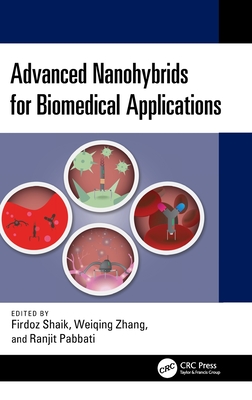
Advanced Nanohybrids for Biomedical Applications
暫譯: 生物醫學應用的先進奈米複合材料
Shaik, Firdoz, Zhang, Weiqing, Pabbati, Ranjit
商品描述
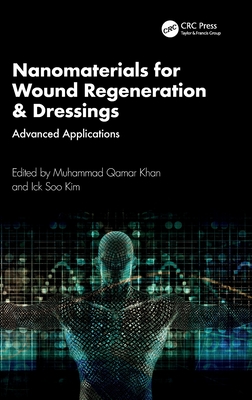
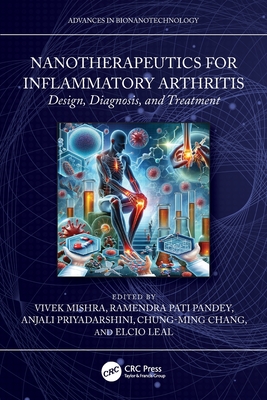
This book is focused on the applications of various advanced nanohybrids in biomedical sectors to provide solutions for different pressing challenges. Through detailed discussions and case studies, it explores how these advanced nanomaterials can address critical issues and offer new perspectives with practical approaches. It provides a comprehensive exploration of the properties of advanced nanohybrids that are used for the diagnosis of inflammatory diseases, and in nano-drugs for several cancers and wound healing applications. It also addresses contemporary trends in biomedical electronics and biosensors, and the use of cutting-edge plasmonic nanomaterials in biomedicine.
Features
- Provides comprehensive understanding of the current applications of nanohybrids in biomedical areas.
- Presents state-of-the-art technologies and research invested in nanohybrids.
- Discusses current hot topics such as semiconductor-based nanohybrids and plasmonic metal-based nanohybrids.
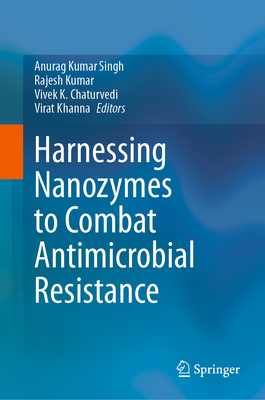
- Evaluates the role of nanozymes as anticancer drug agents and as novel antibiotics for antimicrobial resistant microorganisms.
- Includes case studies from across the world, especially from regions where high-level research is underway.
Advanced Nanohybrids for Biomedical Applications is an excellent reference for researchers, professionals, graduate and senior undergraduate students in biomedical engineering, biotechnology, and biomaterials.
商品描述(中文翻譯)
這本書專注於各種先進奈米混合材料在生物醫學領域的應用,以提供針對不同迫切挑戰的解決方案。通過詳細的討論和案例研究,探討這些先進奈米材料如何解決關鍵問題,並以實用的方法提供新的視角。它全面探討了用於診斷炎症性疾病的先進奈米混合材料的特性,以及在多種癌症和傷口癒合應用中的奈米藥物。它還涉及生物醫學電子學和生物感測器的當代趨勢,以及在生物醫學中使用尖端的等離子奈米材料。
特色
- 提供對奈米混合材料在生物醫學領域當前應用的全面理解。
- 展示在奈米混合材料方面的尖端技術和研究。
- 討論當前熱門話題,如基於半導體的奈米混合材料和基於等離子金屬的奈米混合材料。
- 評估奈米酶作為抗癌藥物和新型抗生素對抗抗微生物耐藥微生物的角色。
- 包含來自世界各地的案例研究,特別是來自高水平研究正在進行的地區。
《Advanced Nanohybrids for Biomedical Applications》是生物醫學工程、生物技術和生物材料領域的研究人員、專業人士、研究生和高年級本科生的優秀參考資料。
作者簡介
Dr. Firdoz Shaik earned his PhD in chemical and biomolecular engineering from the National University of Singapore in 2015. He completed his M.Tech in nanotechnology from the Indian Institute of Technology Roorkee in 2010, following a B.Tech in biotechnology from JNTU-Hyderabad in 2007. Over the course of more than seven years, he has held various academic and research positions - including postdoctoral fellow, academic staff (teaching), and scientist - at esteemed institutions such as the Technion-Israel Institute of Technology, Haifa, and its Guangdong Technion-Israel Institute of Technology (GTIIT) campus. Currently, he is serving as Associate Professor at the Department of Biotechnology, Vignan's Foundation for Science and Technology, India.
Dr. Firdoz possesses deep expertise in the rational design of advanced nanostructures, with a particular focus on bio-semiconductor hybrids and nanozymes tailored for environmental and biomedical applications. His interdisciplinary research, bridging materials science and biotechnology, has added significant value to this volume. He has authored and co-authored over 40 peer-reviewed publications in reputed international journals.
Dr. Weiqing Zhang received her PhD in chemical and biomolecular engineering from the National University of Singapore in 2014. She obtained her M.Sc in inorganic chemistry from the University of Science and Technology of China in 2008, and her B.Sc in chemistry from Hebei Normal University in 2005. She conducted postdoctoral research at both the National University of Singapore and Nanyang Technological University for four years and previously served as Associate Professor at Tianjin University of Technology. Currently, she is a professor at the Department of Experimental Research, Guangxi Medical University Cancer Hospital, China. Dr. Zhang's research focuses on the development of advanced noble metal-based nanohybrids for energy and biomedical applications, with particular emphasis on nanozyme catalysis, photothermal therapy, and tumor-targeted nanomedicine. She has authored or co-authored more than 40 peer-reviewed research articles in high-impact scientific journals.
Dr. Ranjit Pabbati completed his B.Tech (2003-2007), M.Tech (2007-2009), and PhD in biotechnology at Jawaharlal Nehru Technological University, Hyderabad, India. His research work focused on the area of medicinal plant biotechnology for evaluation of its antimicrobial activity on various pathogenic bacteria and antioxidant activity. He also worked to understand the secondary metabolite biosynthesis pathways for mapping of genes involved in antimicrobial activity by transcriptome analysis using next generation sequencing techniques. He has 14 years of teaching experience, teaching undergraduate and postgraduate students. He has mentored undergraduate and postgraduate students for their projects. He has received an internal grant from the Technical Education Quality Improvement Programme of the Government of India (TEQIP) and worked in the area of plant biotechnology. Currently he is working as Assistant Professor at the Centre for Biotechnology, University College of Engineering Science and Technology Hyderabad, Jawaharlal Nehru Technological University, Hyderabad, Telangana, India. He has published 25 book chapters, three books, 25 research papers, and three review articles in reputed journals. He has one patent for design from the Indian Patent Agency in 2023.
作者簡介(中文翻譯)
Dr. Firdoz Shaik於2015年在新加坡國立大學獲得化學與生物分子工程博士學位。他於2010年在印度理工學院魯爾基分校獲得納米技術碩士學位,並於2007年在哈德拉巴爾的JNTU獲得生物技術學士學位。在超過七年的時間裡,他在以色列理工學院(Technion-Israel Institute of Technology)、海法及其廣東以色列理工學院(GTIIT)等知名機構擔任過多個學術和研究職位,包括博士後研究員、教學學術人員和科學家。目前,他在印度Vignan's Foundation for Science and Technology的生物技術系擔任副教授。
Dr. Firdoz在先進納米結構的理性設計方面擁有深厚的專業知識,特別專注於針對環境和生物醫學應用的生物半導體混合物和納米酶。他的跨學科研究將材料科學與生物技術相結合,為本書增添了重要價值。他在國際知名期刊上發表和共同發表了超過40篇同行評審的論文。
Dr. Weiqing Zhang於2014年在新加坡國立大學獲得化學與生物分子工程博士學位。她於2008年在中國科學技術大學獲得無機化學碩士學位,並於2005年在河北師範大學獲得化學學士學位。她在新加坡國立大學和南洋理工大學進行了四年的博士後研究,並曾擔任天津科技大學的副教授。目前,她是中國廣西醫科大學癌症醫院實驗研究系的教授。Dr. Zhang的研究專注於開發基於貴金屬的先進納米混合物,用於能源和生物醫學應用,特別強調納米酶催化、光熱療法和腫瘤靶向納米醫學。她在高影響力的科學期刊上發表或共同發表了超過40篇同行評審的研究文章。
Dr. Ranjit Pabbati於2003年至2007年在印度哈德拉巴爾的賈瓦哈拉爾·尼赫魯科技大學完成了生物技術的學士(B.Tech)、碩士(M.Tech)和博士學位。他的研究工作專注於藥用植物生物技術,評估其對各種病原細菌的抗菌活性及抗氧化活性。他還致力於理解次級代謝物的生物合成途徑,通過轉錄組分析和下一代測序技術繪製參與抗菌活性的基因圖譜。他擁有14年的教學經驗,教授本科生和研究生,並指導他們的項目。他曾獲得印度政府技術教育質量提升計劃(TEQIP)的內部資助,並在植物生物技術領域工作。目前,他在賈瓦哈拉爾·尼赫魯科技大學哈德拉巴爾的工程科學與技術學院的生物技術中心擔任助理教授。他在知名期刊上發表了25章書籍、三本書、25篇研究論文和三篇綜述文章。他於2023年獲得印度專利局的設計專利。