相關主題

商品描述
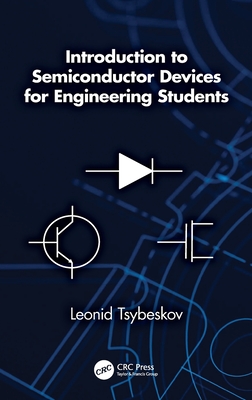
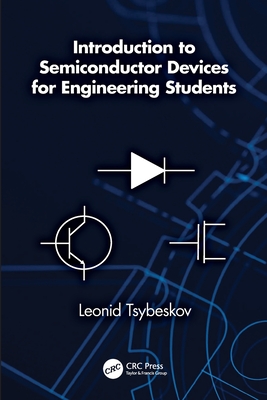
This textbook provides a highly focused overview of the physics and materials science of semiconductors and introductory analysis of semiconductor devices. It will be foundational reading for those planning to dedicate their professional careers to the development of novel semiconductor materials and devices.
Introduction to Semiconductor Devices for Engineering Students discusses the energy band diagram and specific models that are traditionally used in explaining the properties of semiconductor devices. The book includes detailed (but not overwhelming) explanations of major properties of semiconductors, principles of operations and limitations of Schottky and PN junction diodes, solar cells, photodetectors, light-emitting diodes, bipolar junction transistors, and metal-oxide-semiconductor-based devices (MOSFETs, memory devices, etc.). It will help the reader to quickly and efficiently build the required knowledge in semiconductor physics and materials science (including energy band diagrams, density of energy states, electron statistics, carrier transport, electronic noise, etc.) without diving into the complexity of quantum mechanics and solid-state theory. The important feature of the book is numerous examples of calculations with emphasis on using proper units and fundamental constants, which are critically important for engineering students developing a feel of numbers associated with semiconductor device design, limitations and operations.
This book is intended as a textbook for a one-semester semiconductor device course for undergraduate engineering students. This course is required for all electrical engineering and some materials science programs.
A solutions manual and figure slides are available for adopting professors.
商品描述(中文翻譯)
這本教科書提供了半導體的物理學和材料科學的高度專注概述,以及對半導體設備的入門分析。對於那些計劃將其職業生涯專注於新型半導體材料和設備開發的人來說,這將是基礎閱讀材料。
《工程學生的半導體設備導論》討論了能帶圖和傳統上用於解釋半導體設備特性的特定模型。這本書詳細(但不過於繁瑣)地解釋了半導體的主要特性、肖特基二極體和PN接面二極體的操作原理及其限制、太陽能電池、光檢測器、發光二極體、雙極接面晶體管以及基於金屬氧化物半導體的設備(如MOSFET、記憶體設備等)。它將幫助讀者快速而有效地建立半導體物理學和材料科學所需的知識(包括能帶圖、能態密度、電子統計、載流子傳輸、電子噪聲等),而無需深入量子力學和固態理論的複雜性。這本書的一個重要特點是提供了大量計算示例,強調使用正確的單位和基本常數,這對於發展與半導體設備設計、限制和操作相關的數字感覺的工程學生至關重要。
這本書旨在作為本科工程學生一學期半導體設備課程的教科書。這門課程是所有電機工程和部分材料科學課程的必修課程。
為採用的教授提供了解答手冊和圖表幻燈片。
作者簡介
Dr. Leonid Tsybeskov is a Distinguished Professor in Helen and John C. Hartmann Department of Electrical and Computer Engineering at New Jersey Institute of Technology. He received his Ph.D. from Odessa Mechnikov University; Applied Physics in 1983. His research interests are in semiconductor nanostructures.
作者簡介(中文翻譯)
Dr. Leonid Tsybeskov 是新澤西理工學院 (New Jersey Institute of Technology) 海倫與約翰·C·哈特曼電機與計算機工程系的特聘教授。他於1983年在敖德薩梅奇尼科夫大學 (Odessa Mechnikov University) 獲得應用物理學博士學位。其研究興趣集中在半導體納米結構。