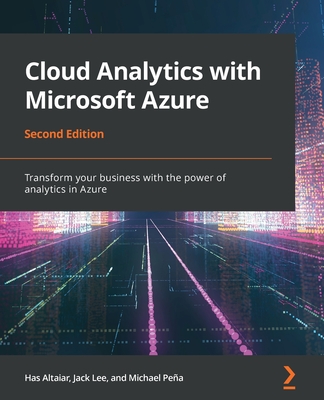
Building an Anonymization Pipeline: Creating Safe Data (Paperback)
暫譯: 打造匿名化資料管線:建立安全資料(平裝本)
Arbuckle, Luk, Emam, Khaled El

- 出版商: O'Reilly 會員日滿千折百
- 出版日期: 2020-05-19
- 定價: $2,070
- 售價: 9.0 折 $1,863
- 語言: 英文
- 頁數: 163
- 裝訂: Quality Paper - also called trade paper
- ISBN: 1492053430
- ISBN-13: 9781492053439
-
相關分類:
資訊安全、Data-mining
-
相關翻譯:
構建數據分析匿名化流水線 (簡中版)
立即出貨 (庫存=1)
買這商品的人也買了...
-
 Arduino 官方正版 Genuino 101
$1,700$1,700 -
 Raspberry Pi 3 Model B+ (UK製)
$1,720$1,685 -
 數位憑證技術與應用, 2/e
$480$432 -
 $1,971Learning Chaos Engineering
-
 晉昇軟體最高殿堂:Jenkins2 持續整合大師之路
$600$474 -
 $1,320Deep Learning with JavaScript: Neural Networks in Tensorflow.Js
-
 $1,490CCSP (ISC)2 Certified Cloud Security Professional Official Study Guide & Practice Tests Bundle, 2/e
-
 $402Electron 實戰:入門、進階與性能優化
-
 $149ETL 數據整合與處理 (Kettle)
-
 $265大數據爬取、清洗與可視化教程
-
 $402Angular 開發入門與實戰
-
 $1,438Kubernetes 權威指南:從 Docker 到 Kubernetes 實踐全接觸, 5/e
-
 $2,070Multithreaded JavaScript: Concurrency Beyond the Event Loop
-
 電腦網路原理, 6/e (含ITS Networking 網路管理與應用國際認證模擬試題)
$360$284 -
 Google 的軟體工程之道|從程式設計經驗中吸取教訓 (Software Engineering at Google)
$880$695 -
 OAuth 2.0 從入門到實戰:利用驗證和授權守護 API 的安全
$600$468 -
 精通 API 架構|設計、營運和發展基於 API 的系統 (Mastering API Architecture: Design, Operate, and Evolve Api-Based Systems)
$680$537 -
 CI/CD 安全防護大揭密:DevSecOps 最佳實踐指南
$680$578 -
 $1,863Software Supply Chain Security: Securing the End-To-End Supply Chain for Software, Firmware, and Hardware (Paperback)
-
 現代系統管理|可靠及永續的系統管理 (Modern System Administration: Managing Reliable and Sustainable Systems)
$680$537 -
 資訊安全概論與實務, 4/e (含 ITS Network Security 網路安全管理核心能力國際認證模擬試題)
$520$410 -
 OpenTelemetry 入門指南:建立全面可觀測性架構(iThome鐵人賽系列書)【軟精裝】
$750$585 -
 內行人才知道的機器學習系統設計面試指南 (Machine Learning System Design Interview)
$680$537 -
 資料工程基礎|規劃和建構強大、穩健的資料系統 (Fundamentals of Data Engineering)
$980$774 -
 先整理一下?|個人層面的軟體設計考量 (Tidy First?: A Personal Exercise in Empirical Software Design)
$480$379
相關主題


商品描述
How can you use data in a way that protects individual privacy but still provides useful and meaningful analytics? With this practical book, data architects and engineers will learn how to establish and integrate secure, repeatable anonymization processes into their data flows and analytics in a sustainable manner.
Luk Arbuckle and Khaled El Emam from Privacy Analytics explore end-to-end solutions for anonymizing device and IoT data, based on collection models and use cases that address real business needs. These examples come from some of the most demanding data environments, such as healthcare, using approaches that have withstood the test of time.
- Create anonymization solutions diverse enough to cover a spectrum of use cases
- Match your solutions to the data you use, the people you share it with, and your analysis goals
- Build anonymization pipelines around various data collection models to cover different business needs
- Generate an anonymized version of original data or use an analytics platform to generate anonymized outputs
- Examine the ethical issues around the use of anonymized data
商品描述(中文翻譯)
如何在保護個人隱私的同時使用資料,並提供實用且具意義的分析結果?本實用指南將協助資料架構師與資料工程師學習如何以可持續的方式,建立安全、可重複執行的匿名化流程,並將其整合至資料流與分析作業中。
Privacy Analytics 的 Luk Arbuckle 與 Khaled El Emam,將根據能夠解決實際商業需求的資料蒐集模型與使用情境,探討裝置資料與 IoT 資料的端到端匿名化解決方案。這些範例來自醫療保健等要求最嚴苛的資料環境,並採用經過長期實務驗證的方法。
• 建立多元的匿名化解決方案,以涵蓋各種使用情境
• 根據所使用的資料、資料分享對象,以及分析目標,選擇相應的解決方案
• 針對各種資料蒐集模型建構匿名化管線,以滿足不同的商業需求
• 產生原始資料的匿名化版本,或使用分析平台產生匿名化輸出
• 探討使用匿名化資料所涉及的倫理議題
作者簡介
Luk Arbuckle is Chief Methodologist at Privacy Analytics, providing strategic leadership in how to responsibly share and use data. Luk was previously Director of Technology Analysis at the Office of the Privacy Commissioner of Canada leading a highly skilled team that conducted privacy research and assisted in investigations when there was a technology component involved. Before joining the Office of the Privacy Commissioner of Canada, Luk worked on developing de-identification methods and re-identification risk measurement tools, participated in the development and evaluation of secure computation protocols, and led a top-notch research and consulting team that developed and delivered data anonymization solutions. Luk originally plied his trade in the area of image processing and analysis, and then in the area of applied statistics (use R!).
Dr. Khaled El Emam is a senior scientist at the Children's Hospital of Eastern Ontario (CHEO) Research Institute and Director of the multi-disciplinary Electronic Health Information Laboratory, conducting applied academic research on synthetic data generation methods and tools, and re-identification risk measurement. He is also a Professor in the Faculty of Medicine (Pediatrics) at the University of Ottawa, Canada.
Khaled is the co-founder and CEO of Replica Analytics, a company focused on the development of synthetic data to drive the application of AIML in the healthcare industry. He is also the founder, and was until the end of 2019 the General Manager and President of Privacy Analytics, which was acquired by IMS Health (now IQVIA)in 2016. He currently invests, advises, and sits on the boards of technology companies developing data protection technologies, and building analytics tools to support healthcare delivery and drug discovery.
He has been performing data analysis since the early 90`s, building statistical and machine learning models for prediction and evaluation. Since 2004 he has been developing technologies to facilitate the sharing of data for secondary analysis, from basic research on algorithms to applied solutions development that have been deployed globally. These technologies addressed problems in anonymization & pseudonymization, synthetic data, secure computation, and data watermarking.
He has (co-)written and (co-)edited multiple books on various privacy and software engineering topics. In 2003 and 2004, he was ranked as the top systems and software engineering scholar worldwide by the Journal of Systems and Software based on his research on measurement and quality evaluation and improvement.
Previously, Khaled was a Senior Research Officer at the National Research Council of Canada. He also served as the head of the Quantitative Methods Group at the Fraunhofer Institute in Kaiserslautern, Germany. He held the Canada Research Chairin Electronic Health Information at the University of Ottawa from 2005 to 2015, and has a PhD from the Department of Electrical and Electronics Engineering, King's College, at the University of London, England.
作者簡介(中文翻譯)
Luk Arbuckle 是 Privacy Analytics 的首席方法學家,負責在如何以負責任的方式分享與使用資料方面提供策略性領導。Luk 過去曾任加拿大隱私專員辦公室(Office of the Privacy Commissioner of Canada)的技術分析主任,帶領一支技術能力卓越的團隊,進行隱私研究,並在調查涉及技術因素的案件時提供協助。在加入加拿大隱私專員辦公室之前,Luk 曾參與去識別化方法與重新識別風險測量工具的開發、安全計算協定的開發與評估,以及帶領一支頂尖的研究與顧問團隊,開發並交付資料匿名化解決方案。Luk 最初專精於影像處理與分析,之後轉向應用統計學領域(使用 R!)。
Khaled El Emam 博士是東安大略兒童醫院(Children’s Hospital of Eastern Ontario,CHEO)研究所的資深科學家,也是跨學科電子健康資訊實驗室(Electronic Health Information Laboratory)的主任,從事合成資料生成方法與工具,以及重新識別風險測量的應用學術研究。他同時也是加拿大渥太華大學醫學院(兒科)的教授。
Khaled 是 Replica Analytics 的共同創辦人兼執行長。Replica Analytics 專注於開發合成資料,以推動 AI/ML 在醫療保健產業中的應用。他也是 Privacy Analytics 的創辦人,並擔任該公司的總經理兼總裁至 2019 年底。Privacy Analytics 於 2016 年被 IMS Health(現為 IQVIA)收購。目前,他投資於開發資料保護技術及建置支援醫療服務與藥物探索之分析工具的科技公司,並為這些公司提供顧問服務及擔任董事會成員。
自 1990 年代初期起,他便開始進行資料分析,建構用於預測與評估的統計及機器學習模型。自 2004 年起,他一直開發促進資料共用以進行次級分析的技術,涵蓋從演算法的基礎研究,到已在全球部署的應用解決方案開發。這些技術處理了匿名化與假名化、合成資料、安全計算及資料浮水印等問題。
他曾獨立或與他人共同撰寫及編輯多本探討隱私與軟體工程等不同主題的書籍。2003 年與 2004 年,他因在測量、品質評估與品質改善方面的研究,獲《Journal of Systems and Software》評為全球頂尖的系統與軟體工程學者。
Khaled 過去曾任加拿大國家研究委員會(National Research Council of Canada)的資深研究官。他也曾擔任德國凱撒斯勞滕 Fraunhofer Institute 的量化方法組主管。2005 年至 2015 年間,他在渥太華大學擔任加拿大電子健康資訊研究講座教授(Canada Research Chair in Electronic Health Information),並取得英國倫敦大學 King’s College 電機與電子工程系的博士學位。
目錄大綱
From the Preface
When conceptualizing this book, we divided the audience in two groups: those who need strategic support (our primary audience) and those who need to understand strategic decisions (our secondary audience). Whether in government or industry, it is a functional need to deliver on the promise of data. We assume that our audience is ready to do great things, beyond compliance with data privacy and data protection laws. And we assume that they are looking for data access models, to enable the safe and responsible use of data.
Primary audience (concerned with crafting a vision and ensuring the successful execution of that vision):
- Executive teams concerned with how to make the most of data, e.g., to improve efficiencies, derive new insights, and bring new products to market, all in an effort to make their services broader and better while enhancing the privacy of data subjects. They are more likely to skim this book to nail down their vision and how anonymization fits within it.
- Data architects and data engineers who need to match their problems to privacy solutions, thereby enabling secure and privacy-preserving analytics. They are more likely to home in on specific details and considerations to help support strategic decisions and figure out the specifics they need for their use cases.
目錄大綱(中文翻譯)
From the Preface
When conceptualizing this book, we divided the audience in two groups: those who need strategic support (our primary audience) and those who need to understand strategic decisions (our secondary audience). Whether in government or industry, it is a functional need to deliver on the promise of data. We assume that our audience is ready to do great things, beyond compliance with data privacy and data protection laws. And we assume that they are looking for data access models, to enable the safe and responsible use of data.
Primary audience (concerned with crafting a vision and ensuring the successful execution of that vision):
- Executive teams concerned with how to make the most of data, e.g., to improve efficiencies, derive new insights, and bring new products to market, all in an effort to make their services broader and better while enhancing the privacy of data subjects. They are more likely to skim this book to nail down their vision and how anonymization fits within it.
- Data architects and data engineers who need to match their problems to privacy solutions, thereby enabling secure and privacy-preserving analytics. They are more likely to home in on specific details and considerations to help support strategic decisions and figure out the specifics they need for their use cases.