Building Distributed Applications That Work: Design, Debug, Test, Observe, Secure, and Deploy
暫譯: 打造真正可運作的分散式應用程式:設計、除錯、測試、可觀測性、安全與部署
Sazanavets, Fiodar
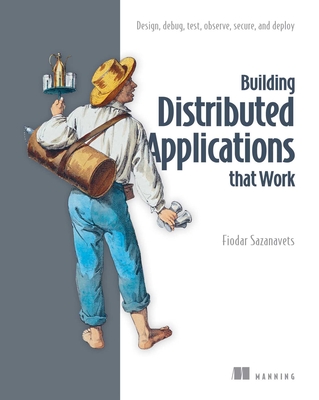
- 出版商: Manning
- 出版日期: 2026-11-03
- 售價: $2,300
- 貴賓價: 9.5 折 $2,185
- 語言: 英文
- 頁數: 272
- 裝訂: Quality Paper - also called trade paper
- ISBN: 1633435121
- ISBN-13: 9781633435124
-
相關分類:
Microservices 微服務、Kubernetes、DevOps、Message Queue
尚未上市,無法訂購
相關主題


商品描述
--Scott Hanselman, Microsoft Systems that are split into independent, network-connected services, whatever their benefits, can be difficult to design, deploy, and maintain. In Building Distributed Applications that Work, author Fiodar Sazanavets shows you how to conquer the inevitable communication failures, complex startup dependencies, and fragmented diagnostic data using industry-grade architectural patterns. Written for busy builders and software shippers, this book sticks to the techniques you'll actually need--all demonstrated with examples using the .NET Aspire framework. Practical from the very start, this book gives you the tools and techniques to have a real project up and running by the end of the first chapter! Building Distributed Applications that Work introduces a realistic e-commerce application that provides a clear, step-by-step progression through essential cloud-native concepts. You'll start by mastering local orchestration and service discovery to establish clean service boundaries. Then, you'll make your system resilient and scalable by externalizing state into relational databases, document stores, and cloud-native blobs. This hands-on journey helps you learn how to handle real-world system evolution cleanly rather than studying isolated code snippets or simplified, abstract configurations. As your distributed system grows, you'll add other elements from the Aspire ecosystem, including interactive SignalR tracking and local AI capabilities. Reviewer Rob Ruetsch of Little Bird GmbH praised the "forward-leaning" examples, commenting, "Very realistic. I love that MCP and agents were discussed in chapter 10!" You will host local language models using Ollama and build autonomous, tool-calling AI agents. This modern approach to intelligent systems ensures you can safely build smart, responsive applications that are fully prepared for next-generation enterprise workloads. Because graceful failure is mandatory for distributed systems, you'll explore asynchronous message queues, distributed locking, and end-to-end token security. Reviewer David Sellen of Sweet Systems pointed out that "even for simple applications, visibility into logs, traces, and metrics is essential, and this book is a great introduction to observability!" By learning to construct robust integration tests, configure Open-Telemetry, and secure microservices via OIDC and JWT token propagation, you ensure your applications are resilient, highly observable, and production-ready. As you build your distributed application in Aspire, author Fiodar Sazanavets carefully expands each concept so you can reproduce it in your framework of choice. For .NET developers, this book is a practical guide to Aspire's dashboard, AppHost, and service defaults. Developers and DevOps practitioners from other ecosystems will also gain transferable insight into orchestrating, observing, testing, and deploying multi-service applications--though the hands-on examples use .NET and Aspire. What's inside - Code-first microservices orchestration
- OpenTelemetry distributed tracing and structured logging
- Securing cross-service communications with Keycloak, OIDC, and JWTs
- Deploying containerized workflows to Kubernetes and Azure
- Examples use the .NET Aspire framework About the reader This book is designed for mid-career software engineers, architects, and DevOps professionals seeking hands-on patterns to build, observe, and deploy resilient distributed systems. About the author Fiodar Sazanavets is a senior software engineer, independent consultant, and Microsoft MVP. He has designed and scaled massive distributed systems, including high-throughput real-time data pipelines. Table of Contents Part 1
1 Getting started with distributed systems and Aspire
2 Managing infrastructure components with containers and integrations
3 Using database and storage components
Part 2
4 Adding order-tracking functionality with SignalR
5 Building a ChatGPT clone with Aspire, Ollama, and Semantic Kernel
Part 3
6 Integration testing and monitoring
7 Components for messaging and caching
8 Application security in Aspire
Part 4
9 Deploying Aspire apps to production
10 Adding legacy apps to Aspire and working with AI agents
商品描述(中文翻譯)
在 Manning 註冊您的紙本書,即可免費獲得電子書。
「將開發人員體驗與分散式應用程式的實際問題連結起來:組態設定、相依性、偵錯、測試與部署。」
--Scott Hanselman,Microsoft
將系統拆分為彼此獨立、透過網路連線的服務,無論具備哪些優點,都可能難以設計、部署與維護。在《Building Distributed Applications that Work》中,作者 Fiodar Sazanavets 運用業界級的架構模式,教您克服不可避免的通訊失敗、複雜的啟動相依性,以及分散的診斷資料。本書為忙碌的開發者與軟體交付人員而寫,專注於您實際需要的技術,並全部透過 .NET Aspire framework 的範例加以示範。本書從一開始就相當實用,讓您在讀完第一章時,就具備讓實際專案運作起來所需的工具與技術!
《Building Distributed Applications that Work》介紹一個真實的電子商務應用程式,透過清楚、循序漸進的方式,帶您掌握重要的 cloud-native 概念。您將先熟悉本機協調與服務探索,以建立清晰的服務邊界。接著,您會將狀態外部化至關聯式資料庫、文件儲存區與 cloud-native blob,讓系統更具韌性且更容易擴充。這趟實作旅程將協助您學會以整潔的方式處理真實世界中的系統演進,而不是只研究彼此孤立的程式碼片段或簡化、抽象化的組態設定。
隨著分散式系統逐漸擴展,您將加入 Aspire 生態系統中的其他元件,包括互動式 SignalR 追蹤與本機 AI 功能。Little Bird GmbH 的評論者 Rob Ruetsch 稱讚這些「具前瞻性的」範例,並評論道:「非常寫實。我很喜歡第 10 章討論了 MCP 與 agents!」您將使用 Ollama 執行本機語言模型,並建構能夠呼叫工具的自主 AI agents。這種現代化的智慧系統開發方式,確保您能安全地建構智慧、回應迅速的應用程式,並完整因應下一代企業工作負載。
由於優雅地處理失敗是分散式系統的必要條件,您將探索非同步訊息佇列、分散式鎖定,以及端對端 token 安全性。Sweet Systems 的評論者 David Sellen 指出:「即使是簡單的應用程式,能夠查看 logs、traces 與 metrics 也十分重要,而本書是認識 observability 的絕佳入門!」透過學習建構健全的整合測試、設定 OpenTelemetry,以及使用 OIDC 與 JWT token 傳遞來保護微服務,您將確保應用程式具備韌性、高度可觀測性,並符合正式上線的要求。在 Aspire 中建構分散式應用程式的過程中,作者 Fiodar Sazanavets 會仔細擴展每個概念,讓您能在自己選擇的 framework 中重現這些做法。
對 .NET 開發人員而言,本書是一本介紹 Aspire dashboard、AppHost 與 service defaults 的實用指南。來自其他生態系統的開發人員與 DevOps 從業人員,也能從中獲得協調、觀測、測試與部署多服務應用程式的可轉用洞見,儘管書中的實作範例使用 .NET 與 Aspire。
本書內容
- 以程式碼優先的微服務協調
- OpenTelemetry 分散式追蹤與結構化 logging
- 使用 Keycloak、OIDC 與 JWT 保護跨服務通訊
- 將容器化工作流程部署至 Kubernetes 與 Azure
- 範例使用 .NET Aspire framework
適合讀者
本書專為職涯中期的軟體工程師、架構師與 DevOps 專業人員設計,協助他們透過實作模式來建構、觀測與部署具韌性的分散式系統。
關於作者
Fiodar Sazanavets 是資深軟體工程師、獨立顧問,也是 Microsoft MVP。他曾設計並擴展大規模分散式系統,其中包括高吞吐量的即時資料管線。
目錄
第 1 部分
1 開始使用分散式系統與 Aspire
2 使用容器與整合來管理基礎架構元件
3 使用資料庫與儲存元件
第 2 部分
4 使用 SignalR 新增訂單追蹤功能
5 使用 Aspire、Ollama 與 Semantic Kernel 建構 ChatGPT clone
第 3 部分
6 整合測試與監控
7 訊息傳遞與快取元件
8 Aspire 中的應用程式安全性
第 4 部分
9 將 Aspire 應用程式部署至正式環境
10 將 legacy 應用程式加入 Aspire,並使用 AI agents
作者簡介
作者簡介(中文翻譯)
Fiodar Sazanavets 是一位資深軟體工程師、獨立顧問與作者,專精於使用 .NET 和 Azure 建構大規模、資料密集型的分散式系統。他過去曾任職於 Microsoft,並撰寫過多本關於 .NET、雲端架構與軟體工程的技術書籍及訓練課程。他是 Microsoft Developer Technologies 領域的 MVP。