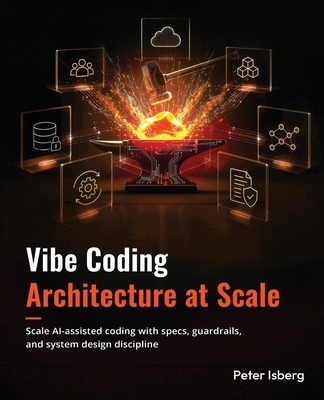
Vibe Coding Architecture at Scale: Scale AI-assisted coding with specs, guardrails, and system design discipline
暫譯: 大規模編碼架構:以規範、護欄和系統設計紀律擴展AI輔助編碼
Isberg, Peter
- 出版商: Packt Publishing
- 出版日期: 2026-09-02
- 售價: $1,550
- 貴賓價: 9.5 折 $1,472
- 語言: 英文
- 頁數: 566
- 裝訂: Quality Paper - also called trade paper
- ISBN: 1808654919
- ISBN-13: 9781808654916
-
相關分類:
Design Pattern
海外代購書籍(需單獨結帳)
買這商品的人也買了...
-
 嵌入式系統設計實務-電路與驅動程式
$250$225 -
 $1,710Using SQLite (Paperback)
 -
 ASP.NET 本質論
$520$410 -
 $700Professional Scrum Development with Microsoft Visual Studio 2012 (Paperback)
 -
 Beginning Big Data with Power BI and Excel 2013: Big Data Processing and Analysis Using PowerBI in Excel 2013 (Paperback)
$1,740$1,653 -
 $474系統分析與設計 : 敏捷疊代方法 (原書第6版)
 -
 IoT Solutions in Microsoft's Azure IoT Suite: Data Acquisition and Analysis in the Real World
$3,410$3,239 -
 $957深度學習
 -
 演算法之美:隱藏在資料結構背後的原理 (C++版)
$650$507 -
 $534JSON 實戰
 -
 $283大數據技術
 -
 手機攝影必學 BOOK:用OX帶你學會拍人物、食物、風景等情境照片
$398$298 -
 創意競擇:從賈伯斯黃金年代的軟體設計機密流程,窺見蘋果的創意方法、本質與卓越關鍵
$460$391 -
 Web 開發者一定要懂的駭客攻防術 (Web Security for Developers: Real Threats, Practical Defense)
$420$331 -
 資料科學的統計實務 : 探索資料本質、扎實解讀數據,才是機器學習成功建模的第一步
$599$539 -
 Martin Fowler 的企業級軟體架構模式:軟體重構教父傳授 51個模式,活用設計思考與架構決策 (Patterns of Enterprise Application Architecture)
$800$624 -
 我懂了!專案管理 (暢銷紀念版)
$400$316 -
 電腦視覺機器學習實務|建立端到端的影像機器學習 (Practical Machine Learning for Computer Vision: End-To-End Machine Learning for Images)
$780$616 -
 $2,070Learning Blazor: Build Single-Page Apps with Webassembly and C# (Paperback)
 -
 ASP.NET Core Razor Pages in Action (Paperback)
$2,160$2,052 -
 超圖解 ESP32 應用實作
$820$647 -
 無瑕的程式碼 軟體工匠篇:程式設計師必須做到的紀律、標準與倫理 (Clean Craftsmanship: Disciplines, Standards, and Ethics)
$720$561 -
 從源頭就優化 - 動手開發自己的編譯器實戰
$880$695 -
 UX 商業價值實現之道|打造成功的數位產品服務 (UX for Business: How to Design Valuable Digital Companies)
$780$616 -
 建構可擴展系統|設計分散式架構 (Foundations of Scalable Systems: Designing Distributed Architectures)
$780$616
相關主題

商品描述
Turn vibe coding into reliable software delivery by using specs, guardrails, tests, and workflows that keep AI-generated systems coherent
Key Features:
- Turn fast AI coding into scalable software architecture
- Use specs, tests, and guardrails to control generated code
- Apply workflows for agents, reviews, CI/CD, and team adoption
Book Description:
AI-assisted coding can help teams move faster, but speed without structure creates brittle systems, hidden dependencies, weak tests, and decisions that are difficult to trace. This book reframes vibe coding as a disciplined engineering workflow for turning prompts, generated code, and agent output into systems that can be reviewed, tested, and scaled.
Based on Peter Isberg's experience across defense, automotive, online travel, and logistics, the book shows how to bring architectural intent into AI-assisted software development. You'll learn how to manage context, use specs as guardrails, design architectural tests, visualize system behavior, build prompt and review workflows, and apply practices for multi-agent orchestration, CI/CD, prompt lineage, model routing, and secure handling of untrusted context.
By the end of this book, you'll be able to move beyond ad hoc prompting and use vibe coding architecture to guide AI-generated software with clearer structure, stronger feedback loops, and better engineering control.
What You Will Learn:
- Use specs to guide AI-assisted software delivery
- Manage context to reduce prompt entropy and drift
- Design guardrails for generated code and agents
- Build tests that check architectural intent
- Apply review workflows for AI-generated changes
- Handle prompt injection and untrusted context safely
- Use CI/CD and orchestration for multi-agent work
- Track prompts, model choices, and intent in Git
Who this book is for:
This book is for developers, product managers, engineers, architects, and technical leads who are already using or evaluating AI-assisted coding and need stronger control over architecture, quality, security, and team workflow. Familiarity with software delivery, code review, testing, and modern development tools will help readers get the most from the book.
Table of Contents
- The Entropy of the Prompt
- Shift Left, Guide Right
- Context Diets
- Annotation-Driven Design
- Architectural Unit Testing
- Visualizing the Vibe
- Spec-Driven Development: The Spec Is the Guardrail
- Spec Kit in Practice: From Prompt to Merged Code
- Kiro: When the IDE Is the Spec Engine
- Zenflow: The Spec as an Executable DAG
- Get-Shit-Done: Spec-Driven Plus Context Engineering
- Superpowers: The Portable Workflow
- Vibe Coding Prompt Template: Thinking Before Building
- Vibe Coding Playbook: Prompting as Engineering
- Vibe Kanban: Managing the Human Bottleneck
- Skill Forge: Skills Forged From Your Own Codebase
- The Asynchronous Trap
- Schema Drift & API Contracts
- The Untrusted Context: Prompt Injection
- The Attacker Agent: Adversarial Runtime Testing
- Multi-Agent Orchestration & CI/CD
- The Two-AI Gripe: Adversarial Review Pipelines
- Prompt Lineage: Git for Intent
- Git as a Save-State Engine