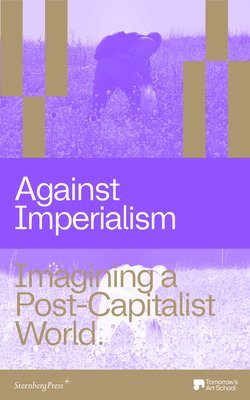
How art and cultural institutions can resist, critique, and build alternatives to the intersecting crises of racial capitalism, imperialism, neofascism and neoliberal authoritarianism. We are living in a time of global upheaval, genocide, and humanitarian disasters. Driven by big finance and new forms of imperialism, extractive racial capitalism is reaping mass casualties and ecological catastrophes around the world, as the inequalities between nations and the communities within them reach new extremes. Ascendent forms of neofascism, techno-feudalism, and violent systems of oppression have infiltrated our lives, redefining politics, work, leisure, the family, our forms of socialization, cultural production, and consumption. Meanwhile, new forms of censorship, self-censorship, repression, surveillance, and control have proliferated in the last decade--many implemented and escalated since the global pandemic by governments and corporations working in tandem via digital capitalism. Apparently unregulated, these forms have penetrated our social norms, habits, intellectual, public, and pedagogical structures to unprecedented degrees. Moreover, in supposedly democratic states we have witnessed a criminalization of peaceful protest, the normalization of anti-immigration and xenophobic rhetoric and policy, and the dismantling of collective action. Western nations that once defended ideals of liberalism, democracy, justice, and freedom of expression have readily discarded them, as demonstrated by the collective blind eye turned to the Israeli genocide of the Palestinian people in Gaza.
Amid these polycrises, what were once autonomous cultural and educational institutions that fostered discursive critique and freedom of expression have, under the stranglehold of neoliberal privatization, increasingly acquiesced to neoconservative, far right, and neofascist ideologies. Despite the supposed social and political turn in contemporary art and its institutions in the wake of the Occupy and Black Lives Matter movements, the neoliberal public arts museum is arguably less political than it has ever been. This collection of essays addresses these issues, asking what role public arts and other cultural institutions, cultural workers, public intellectuals, arts educators, and practitioners can play--not just in resisting and critiquing right-wing populism and authoritarianism, but in imagining, materializing and mobilizing alternatives to this reactionary political horizon.
ContributorsBen Burbridge, Tj Demos, The Otolith Group, Sophia Yadong Hao, Deeqa Ismail, Sarah E. James, Yazan Khalili, Alana Lake, Jumana Manna, Stefano Harney & Zun Lee & Fred Moten, Philippe Pirotte, Vera Mey
Copublished by Manchester School of Art, Manchester Metropolitan University.
藝術與文化機構如何抵抗、批判種族資本主義、帝國主義、新法西斯主義與新自由主義威權主義彼此交織的危機,並建立替代方案。
我們正生活在一個全球動盪、種族滅絕與人道災難頻仍的時代。在大型金融資本與新型態帝國主義的驅動下,攫取式種族資本主義正在世界各地造成大量傷亡與生態災難;國家之間,以及各國內部社群之間的不平等,也達到了前所未有的極端程度。日益壯大的新法西斯主義、科技封建主義與暴力壓迫體系已滲入我們的生活,重新定義政治、工作、休閒、家庭、社會化形式、文化生產與消費。與此同時,過去十年來,新的審查、自我審查、鎮壓、監控與控制形式大量蔓延;自全球疫情以來,其中許多更由政府與企業透過數位資本主義協力推行並逐步升級。這些形式表面上不受監管,卻已以前所未有的程度滲透我們的社會規範、習慣,以及知識、公共與教育結構。
此外,在號稱民主的國家中,我們目睹了對和平抗議的刑事化、反移民與仇外言論及政策的常態化,以及集體行動的瓦解。那些曾經捍衛自由主義、民主、正義與言論自由理想的西方國家,如今卻輕易拋棄了這些理想;以集體對以色列在 Gaza 對巴勒斯坦人民所施行的種族滅絕視而不見為例,便清楚展現了這一點。
在這些多重危機之中,曾經具有自主性、能夠促進論述批判與言論自由的文化及教育機構,如今在新自由主義私有化的鉗制下,日益向新保守主義、極右派與新法西斯主義意識形態屈服。儘管當代藝術及其機構在 Occupy 與 Black Lives Matter 運動之後,據稱出現了社會與政治轉向,但新自由主義公共藝術博物館可說比以往任何時候都更不具政治性。
本論文集探討上述問題,並追問公共藝術及其他文化機構、文化工作者、公共知識分子、藝術教育工作者與實踐者,能夠扮演什麼樣的角色——不僅是抵抗與批判右翼民粹主義和威權主義,更要想像、實現並動員各種替代方案,以超越這個反動的政治前景。
貢獻者
Ben Burbridge、Tj Demos、The Otolith Group、Sophia Yadong Hao、Deeqa Ismail、Sarah E. James、Yazan Khalili、Alana Lake、Jumana Manna、Stefano Harney、Zun Lee、Fred Moten、Philippe Pirotte、Vera Mey
由 Manchester School of Art、Manchester Metropolitan University 共同出版。
Sarah E. James is Professor of Visual Culture at Manchester School of Art, Manchester Metropolitan University. She writes widely about contemporary art, politics, photography, and the visual cultures of the Cold War. She has published two monographs:
Common Ground: German Photographic Cultures across the Iron Curtain (2013) and
Paper Revolutions: An Invisible Avant-Garde (MIT Press, 2022). Her new book,
Art and the Ends of Capitalism: Practising Politics, is forthcoming. She is the founding editor of the series
Tomorrow's Art School, co-published with Sternberg Press and Manchester School of Art.
Vera Mey is Associate Professor of Contemporary Art History and Theory at the Ruskin School of Art, University of Oxford. Along with Philippe Pirotte, she was Co-Artistic Director of the 2024 Busan Biennale, "Seeing in the Dark," and is a founding co-editor of the journal
Southeast of Now: Directions in Contemporary and Modern Art in Asia.