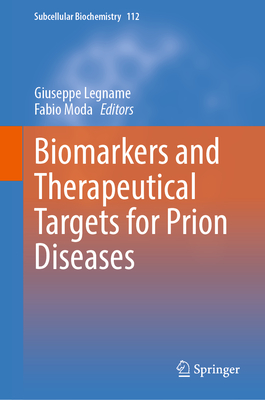
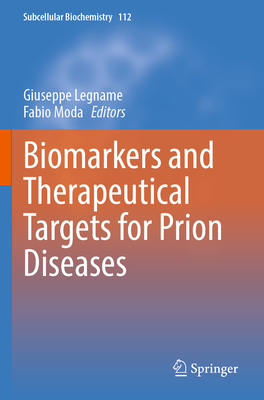
Biomarkers and Therapeutical Targets for Prion Diseases
暫譯: 普里昂疾病的生物標誌物與治療標靶
Legname, Giuseppe, Moda, Fabio
- 出版商: Springer
- 出版日期: 2026-09-28
- 售價: $7,570
- 貴賓價: 9.5 折 $7,191
- 語言: 英文
- 頁數: 320
- 裝訂: Quality Paper - also called trade paper
- ISBN: 3031970578
- ISBN-13: 9783031970573
海外代購書籍(需單獨結帳)
相關主題

商品描述
This book explores the intricate landscape of prion diseases, exploring the various methodologies for detecting human and animal prions, emphasizing both current techniques and those under development, as well as emerging techniques and methodologies for biomarker detection in prion diseases, paving the way for improved diagnostic and therapeutic approaches.
The rational development of theranostic small molecules for prion diseases is also included, shedding light on potential treatment. It examines the utility of prion disease diagnostic markers in pre-symptomatic disease stages, offering insights into early detection strategies.
Pharmacological approaches in prion diseases are explored, along with the potential of Lab-on-Chip platforms for monitoring prion and "prion-like" amyloid assembly and behavior. The role of reactive microglia and astrocytes as therapeutic targets is investigated, highlighting novel avenues for intervention.
Furthermore, the book addresses biological fluid biomarkers in human prion diseases, paying special attention to biosafety considerations. Human genetic evidence is analyzed to identify new targets in prion diseases, discussing both opportunities and challenges.
The utilization of RT-QuIC analysis of peripheral tissues and PMCA applications in prion disease diagnosis is examined, along with the extension of seed amplification assays for the clinical diagnosis of neurodegenerative disorders beyond prion pathologies. Overall, the book provides a comprehensive overview of biomarkers and therapeutic targets in prion diseases, encapsulating both current knowledge and emerging trends in the field.
Chapter 10 is available open access under a Creative Commons Attribution 4.0 International License via link.springer.com.
商品描述(中文翻譯)
本書深入探討朊病毒疾病(prion diseases)的複雜領域,介紹各種偵測人類與動物朊病毒的方法,著重於目前採用的技術、正在開發中的技術,以及用於偵測朊病毒疾病生物標記的嶄新技術與方法,為改善診斷與治療方式鋪路。
本書也涵蓋朊病毒疾病治療診斷小分子(theranostic small molecules)的理性開發,闡明其潛在治療價值。此外,本書探討朊病毒疾病診斷標記在症狀前疾病階段的應用效益,並針對早期偵測策略提供深入見解。
書中探討朊病毒疾病的藥理學治療方法,以及 Lab-on-Chip 平台在監測朊病毒與「類朊病毒」澱粉樣蛋白組裝及其行為方面的潛力。同時也研究反應性小膠質細胞(microglia)與星狀細胞(astrocytes)作為治療標的的角色,突顯嶄新的介入途徑。
此外,本書探討人類朊病毒疾病中的生物流體生物標記,並特別關注生物安全性考量。書中分析人類遺傳學證據,以辨識朊病毒疾病中的新治療標的,並討論其中的機會與挑戰。
本書檢視周邊組織的 RT-QuIC 分析,以及 PMCA 在朊病毒疾病診斷中的應用;同時也探討如何擴展種子增殖分析(seed amplification assays),使其能用於超越朊病毒病理範疇的神經退化性疾病臨床診斷。整體而言,本書全面概述朊病毒疾病中的生物標記與治療標的,涵蓋該領域目前的知識與新興趨勢。
第 10 章透過 link.springer.com 以 Creative Commons Attribution 4.0 International License 授權提供開放取用。
作者簡介
Giuseppe Legname earned his Doctor of Philosophy degree at the University of Warwick, UK. After a long spell in industry in the field of immunotherapy, he moved to the National Institute for Medical Research (NIMR), Medical Research Council in London, UK as a Research Associate. In 1999 he became Assistant Adjunct Professor, and later Associate Adjunct Professor, at the Institute for Neurodegenerative Diseases (IND), University of California at San Francisco, USA, under the direction of 1997 Nobel Laureate Professor Stanley B. Prusiner.
In 2006 he joined the faculty of the Scuola Internazionale Superiore di Studi Avanzati (SISSA) in Trieste, Italy, at the Department of Neuroscience. Currently he is Professor of Biochemistry in the same Department and Coordinator of the PhD Program in Molecular Biology.
The main focuses of his research program are the physiological function of the prion protein in mammals and the mechanisms of prion replication as well as the structural characterization of molecular determinants for prion infectivity.
Fabio Moda earned his Doctor of Philosophy degree in Translational and Molecular Medicine at the University of Milano-Bicocca, Italy. In 2022 he completed his specialization in Clinical Pathology and Clinical Biochemistry at the University of Pavia, Italy. Since 2006, he has been working at the Fondazione IRCCS Istituto Neurologico Carlo Besta in Milan. He is currently an Assistant Professor of Clinical Biochemistry and Clinical Molecular Biology in the Department of Medical Biotechnology and Translational Medicine at the University of Milan and also carries out research and clinical activities as a Biologist Manager at the Carlo Besta Neurological Institute. At the Besta Institute, he is in charge of the biosafety level 3 laboratory (BSL3), where he performs diagnostic tests on cerebrospinal fluids and biochemical analysis of brain tissues collected from patients with prion diseases and other dementias. His research primarily focuses on identifying novel disease biomarkers present in peripheral tissues, including the olfactory mucosa, urine, saliva, tears, and blood of patients with neurodegenerative disorders.作者簡介(中文翻譯)
Giuseppe Legname 於英國 University of Warwick 取得哲學博士學位。在免疫療法領域從事業界工作多年後,他轉往英國倫敦的 National Institute for Medical Research (NIMR), Medical Research Council,擔任研究助理。1999 年,他在美國 University of California at San Francisco 的 Institute for Neurodegenerative Diseases (IND) 擔任助理兼任教授,後升任副兼任教授,師從 1997 年諾貝爾獎得主 Stanley B. Prusiner 教授。
2006 年,他加入義大利 Trieste 的 Scuola Internazionale Superiore di Studi Avanzati (SISSA) 神經科學系。目前,他是該系的生物化學教授,同時擔任分子生物學博士班課程協調人。
他的研究計畫主要聚焦於哺乳動物中朊蛋白(prion protein)的生理功能、朊病毒(prion)的複製機制,以及朊病毒感染性的分子決定因子之結構特徵分析。
Fabio Moda 於義大利 University of Milano-Bicocca 取得轉譯與分子醫學哲學博士學位。2022 年,他於義大利 University of Pavia 完成臨床病理學與臨床生物化學專業訓練。自 2006 年起,他便任職於米蘭的 Fondazione IRCCS Istituto Neurologico Carlo Besta。目前,他是 University of Milan 醫學工藝與轉譯醫學系的臨床生物化學與臨床分子生物學助理教授,同時也在 Carlo Besta Neurological Institute 擔任生物學家主管,從事研究與臨床工作。
在 Besta Institute,他負責生物安全第三級實驗室(BSL3),進行腦脊髓液的診斷檢測,以及分析從朊病毒疾病與其他失智症患者採集的腦組織。他的研究主要聚焦於辨識存在於神經退化性疾病患者周邊組織中的新型疾病生物標記,包括嗅覺黏膜、尿液、唾液、淚液與血液中的生物標記。