商品描述
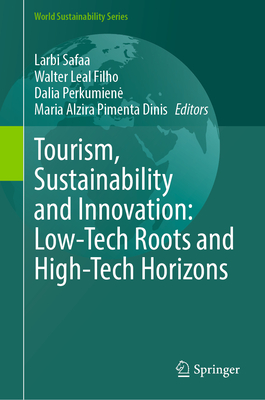
Today, tourism offers a privileged perspective to explore the relationships between sustainability, innovation, and inclusion. This volume, Tourism, Sustainability and Innovation: Low-Tech Roots and High-Tech Horizons (part of the World Sustainability Series), includes contributions from scholars with 23 different nationalities (Belgium, Bulgaria, Cameroon, China, Finland, France, Germany, Hungary, Japan, Kazakhstan, Latvia, Lithuania, Morocco, Poland, Portugal, Qatar, Saudi Arabia, Spain, Taiwan, Tunisia, Turkey, Ukraine, United Kingdom). This diversity reflects the richness of perspectives included in the book, encompassing around fifteen different case studies and country contexts, analyzed through a variety of cultural, economic, and institutional lenses. Collectively, the chapters open a dialogue on how to reconcile practices deeply rooted in local territories with the emerging horizons shaped by new technologies. Central to the theme of Tourism, Sustainability and Innovation: Low-Tech Roots and High-Tech Horizons is a creative tension: how do we embrace the authenticity of local practices, traditional "know-how" and cultural resources, often carriers of resilience and 'low-tech' sustainability, while purposely bringing in the digital, intelligent, automated solutions that are transforming tourism today? The difficulty is not to play past against future, but to think about how innovation can keep hold of tourism's human, social and territorial roots, and at the same time, open new possibilities. From this point of view, notably, we can ask: How can tourism experiences be meaningfully inclusive? How can digital transformation add to our focus on sustainability? And how can technology be deployed not for itself alone, but as a lever for destinations, communities, and stakeholders across the industry? This book is important because it redefines innovation in tourism beyond just high-tech solutions. It promotes a balanced approach that values basic "low-tech" sustainable practices, like community-based models and resource conservation. At the same time, it shows the rôle of advanced "high-tech" tools, such as AI and big data. By connecting this often-neglected range, it offers a complete and practical framework for building a truly sustainable tourism sector. It serves as a necessary guide to ensure that innovation supports the larger goals of environmental responsibility, social fairness, and lasting resilience. The book is structured around six main sections, each reflecting a key thematic axis of contemporary tourism research. The first section, Vulnerability, Rights and Sustainable Pathways in Tourism, highlights institutional transitions, multi-level governance, legal protections, and the need for more equitable and resilient destinations. The second section, New Trends in Technology, Digitalization and Innovation in Tourism, examines neuro-tourism, smart technologies, digital platforms such as Booking.com and Instagram, public digitalization, logistics optimization, and issues related to data protection, privacy and ethics. The third section, Tourism Destinations: Image, Perceptions, and Governance, explores destination image, emotional connections, social media dynamics, urban environments, and the e-reputation of cities including Essaouira, Marrakech, Makkah and Jeddah. The fourth section, Tourism, Heritage and Cultural Resources, focuses on cultural and intangible heritage, creative and art tourism, gastronomy, value systems in online reviews, and legal perspectives on medical tourism. The fifth section, Entrepreneurship, Career Dynamics and Organizational Transformation in Tourism, addresses community participation, professional trajectories in the hotel sector, digital transformation in organizations, and legal dimensions of transportation and accommodation. Finally, the sixth section, Tourist Experiences and Behavioral Perspectives, examines rural tourism experiences, tourist expenditures, senior well-being, urban mobility, leisure infrastructures, and issues of personal data protection in the age of artificial intelligence.
商品描述(中文翻譯)
今天,旅遊提供了一個特權的視角來探索可持續性、創新和包容性之間的關係。本書《旅遊、可持續性與創新:低科技根基與高科技視野》(屬於世界可持續性系列)包含來自23個不同國家的學者的貢獻(比利時、保加利亞、喀麥隆、中國、芬蘭、法國、德國、匈牙利、日本、哈薩克、拉脫維亞、立陶宛、摩洛哥、波蘭、葡萄牙、卡塔爾、沙烏地阿拉伯、西班牙、台灣、突尼西亞、土耳其、烏克蘭、英國)。這種多樣性反映了書中所包含的觀點的豐富性,涵蓋約十五個不同的案例研究和國家背景,通過各種文化、經濟和制度的視角進行分析。各章節共同開啟了一場對話,探討如何調和深植於當地領域的實踐與由新技術塑造的新興視野。書中《旅遊、可持續性與創新:低科技根基與高科技視野》的主題核心是一種創造性的緊張關係:我們如何擁抱當地實踐的真實性、傳統的“知識”和文化資源,這些往往是韌性和“低科技”可持續性的承載者,同時有意引入正在改變當今旅遊業的數位、智能、自動化解決方案?困難之處不在於將過去與未來對立,而在於思考創新如何能夠保持旅遊的人文、社會和地域根基,同時開啟新的可能性。從這個角度來看,我們可以問:旅遊體驗如何能夠有意義地包容?數位轉型如何能增強我們對可持續性的關注?技術如何能夠不僅僅為了自身而部署,而是作為目的地、社區和行業各方利益相關者的杠杆?
本書的重要性在於它重新定義了旅遊中的創新,不僅僅是高科技解決方案。它促進了一種平衡的方法,重視基本的“低科技”可持續實踐,如社區基礎模型和資源保護。同時,它展示了先進的“高科技”工具的角色,如人工智慧和大數據。通過連接這一常被忽視的範疇,它提供了一個完整且實用的框架,以建立一個真正可持續的旅遊部門。它作為一個必要的指南,以確保創新支持環境責任、社會公平和持久韌性的更大目標。
本書的結構圍繞六個主要部分,每個部分反映當代旅遊研究的關鍵主題軸。第一部分《旅遊中的脆弱性、權利與可持續路徑》強調制度轉型、多層次治理、法律保護,以及對更公平和韌性目的地的需求。第二部分《旅遊中的技術、新趨勢、數位化與創新》探討神經旅遊、智能技術、數位平台如Booking.com和Instagram、公共數位化、物流優化,以及與數據保護、隱私和倫理相關的問題。第三部分《旅遊目的地:形象、感知與治理》探討目的地形象、情感連結、社交媒體動態、城市環境,以及包括索維拉、馬拉喀什、麥加和吉達在內的城市的電子聲譽。第四部分《旅遊、遺產與文化資源》專注於文化和非物質遺產、創意和藝術旅遊、美食、在線評價中的價值體系,以及醫療旅遊的法律視角。第五部分《旅遊中的創業、職業動態與組織轉型》涉及社區參與、酒店行業的職業軌跡、組織中的數位轉型,以及交通和住宿的法律維度。最後,第六部分《旅遊體驗與行為視角》探討農村旅遊體驗、旅客支出、老年人福祉、城市流動性、休閒基礎設施,以及在人工智慧時代的個人數據保護問題。
作者簡介
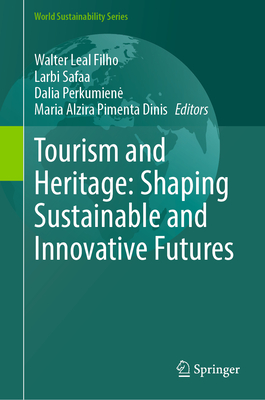
This editorial team brings together internationally recognized scholars in sustainability, tourism, and heritage. Safaa Larbi (Cadi Ayyad University, Morocco) specializes in resources, mobility, and territorial attractiveness within tourism studies. Walter Leal Filho (Hamburg University of Applied Sciences, Germany) is a leading authority in sustainability and climate change research. Dalia Perkumiene (Lithuanian Engineering University of Applied Sciences, Lithuania) contributes expertise in landscape engineering and sustainable resource management, while Maria Alzira Pimenta Dinis (University Fernando Pessoa, Portugal) focuses on innovation and development in heritage and tourism. Together, they form a highly regarded academic team that has successfully coordinated a first Springer volume within the World Sustainability Series, under the theme Tourism and Heritage: Shaping Sustainable and Innovative Futures. Their collective expertise and international recognition position them as key contributors to advancing research and global dialogue in sustainable tourism and heritage studies.
作者簡介(中文翻譯)
這個編輯團隊匯聚了國際公認的可持續性、旅遊和遺產領域的學者。Safaa Larbi(摩洛哥卡迪阿亞德大學)專注於旅遊研究中的資源、流動性和區域吸引力。Walter Leal Filho(德國漢堡應用科技大學)是可持續性和氣候變化研究的領先權威。Dalia Perkumiene(立陶宛應用科技大學)在景觀工程和可持續資源管理方面提供專業知識,而Maria Alzira Pimenta Dinis(葡萄牙費爾南多·佩索亞大學)則專注於遺產和旅遊中的創新與發展。他們共同組成了一個備受推崇的學術團隊,成功協調了《世界可持續性系列》中的第一本Springer卷,主題為《旅遊與遺產:塑造可持續和創新的未來》。他們的集體專業知識和國際認可使他們成為推進可持續旅遊和遺產研究的關鍵貢獻者,並促進全球對話。