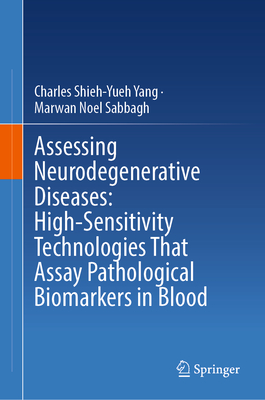
Assessing Neurodegenerative Diseases: High-Sensitivity Technologies That Assay Pathological Biomarkers in Blood
暫譯: 評估神經退行性疾病:高靈敏度技術檢測血液中的病理生物標記
Yang, Charles Shieh-Yueh, Sabbagh, Marwan Noel
- 出版商: Springer
- 出版日期: 2026-08-14
- 售價: $5,460
- 貴賓價: 9.5 折 $5,187
- 語言: 英文
- 頁數: 244
- 裝訂: Hardcover - also called cloth, retail trade, or trade
- ISBN: 3032238625
- ISBN-13: 9783032238627
海外代購書籍(需單獨結帳)
相關主題

商品描述
Diagnosing Alzheimer's disease (AD) and other neurodegenerative diseases such as dementia with Lewy bodies (DLB), Parkinson's disease (PD), frontotemporal dementia (FTD), and amyotrophic lateral sclerosis poses significant challenges to healthcare, often resulting in delayed or inadequate patient care. Additionally many of the conditions have overlapping phenotypes or pathologies which makes it difficult to identify single pathological contributions.
Despite the high prevalence of mild cognitive impairment and dementia and other neurodegenerative diseases, up to 92% of patients with early cognitive decline remain undiagnosed or misdiagnosed in healthcare settings. Moreover, the scarcity of neurological specialists in the US exacerbates the situation, with many patients failing to access specialty care, and those who are referred experience prolonged wait times. Consequently, because the majority of AD neuroimaging or cerebrospinal fluid (CSF) biomarker testing takes place in specialty care settings (i.e., secondary or tertiary care), only a small fraction of patients with cognitive impairment receives such testing.
Traditional biomarker modalities for confirming neuro pathology in conditions such as AD, PD, DLB and FTD include positron emission tomography (PET) or a lumbar puncture to collect CSF to measure concentrations of A, tau and others. PET and CSF biomarkers have a number of shortcomings including high cost, limited accessibility, and perceived invasiveness, making them unsuitable for widespread use across care settings. Recent advancements in blood-based biomarker (BBM) tests for AD offer a promising alternative. These tests are less costly, more accessible, more acceptable to patients, and more practical for serial collection to monitor disease progression.
In PD and DLB, there are emerging CSF assays for alpha-synuclein but a BBBM for PD or DLB has not emerged. There are BBBMs being considered for FTD and PSP but none have been commercially approved.
Blood-based biomarkers (BBM) for Alzheimer's disease (AD) and other neurodegenerative diseases are being increasingly used in clinical practice to support clinical diagnosis. In contrast to traditional diagnostic modalities, such as amyloid positron emission tomography and cerebrospinal fluid biomarkers, BBMs offer a more accessible and lower cost alternative for AD biomarker testing. Their unique scalability addresses the anticipated surge in demand for biomarker testing with the emergence of disease-modifying treatments that require confirmation of amyloid pathology. The major change in the field is that the detection assays have improved from nanomolar (10-9) to femtomolar (10-15) which allows for detection of proteins previously not considered measurable in the blood spaces.
The clinical integration of blood-based biomarkers (BBBMs) for AD and other neurodegenerative diseases holds promise in enabling early detection of pathology and timely intervention. Similar investigations are being considered for other neurodegenerative diseases. However, several critical considerations, such as limited understanding of BBM test characteristics, insufficient evidence on BBM performance across diverse populations, and how individual test parameters performed on different assay platforms can be meaningfully compared.
This book summarizes the current assays ready for clinical use or in development for neurodegenerative diseases including AD, PD, DLB, PSP, FTD and ALS, from assay technologies to clinical applications.
As starting from technologies in Chapter 1, seventeen ultra-sensitive assay platforms are introduced. The details of detecting mechanism, feature of assay, plasma preparation, commercialization, and key specifications of assay kits are illustrated for each assay platform. Readers can have comprehensive understanding about insights of these complicated technologies for assaying blood-based biomarkers associated with neurodegenerative diseases.
Owing to the ultralow concentrated biomarkers in human blood, the sample (plasma) preparations significantly attribute to the measured results. In Chapter 2, the effects of factors of plasma preparations on the measurements are explored. The recipes include blood collecting tubes, storage temperature of whole blood, centrifugation temperatures of whole blood, time period to centrifuge blood samples from blood draw, lifetime of biomarkers in frozen plasma, and freeze/thaw cycles of plasma. The contents are really helpful for developers, laboratory technicians and physicians to establish the standard operating processes for plasma preparations in assaying blood-based biomarkers of neurodegenerative diseases.
The assay kits and analyzers of blood-based biomarkers for assessing/diagnosing neurodegenerative diseases are categorized to in-vitro diagnosis (IVD) medical devices. Many bench tests must be conducted to demonstrate the safety, pre-clinical performance and validity of measurements. In Chapter 3, the philosophy, guidelines and methods of the bench tests for assay kits and analyzers measuring blood-based biomarkers are literature. Practical examples are given to illustrate the details of bench tests for characterizing the assay kits and analyzers under developments.
In Chapter 4, the clinical validations of blood-based biomarker tests for assessing/diagnosing neurodegenerative disease are reviewed. The criteria are to correlate blood-based biomarker tests to standard diagnosis in guidelines for neurodegenerative disease, such as brain tissue staining, neuroimaging, biomarker tests in cerebrospinal fluid, clinical diagnosis, etc., depending on the types of neurodegenerative disease. The contents can help readers bridge blood-based biomarkers to the standard diagnosis.
Authors have been using blood-based biomarkers in routine practice for many years. Valuable experiences in solving clinical puzzles usin
商品描述(中文翻譯)
診斷阿茲海默症(AD)及其他神經退行性疾病,如路易體癡呆(DLB)、帕金森病(PD)、額顳葉癡呆(FTD)和肌萎縮側索硬化症,對醫療保健提出了重大挑戰,常導致患者護理的延遲或不足。此外,許多這些疾病具有重疊的表型或病理,這使得識別單一病理貢獻變得困難。
儘管輕度認知障礙和癡呆及其他神經退行性疾病的高盛行率,卻有多達92%的早期認知衰退患者在醫療環境中未被診斷或誤診。此外,美國神經科專家的稀缺加劇了這一情況,許多患者無法獲得專科護理,而被轉診的患者則面臨長時間的等待。因此,由於大多數AD的神經影像學或腦脊髓液(CSF)生物標記檢測是在專科護理環境中進行(即二級或三級護理),只有一小部分認知障礙患者接受了這類檢測。
傳統的生物標記檢測方法用於確認AD、PD、DLB和FTD等疾病的神經病理,包括正電子發射斷層掃描(PET)或腰椎穿刺以收集CSF,測量Aβ、tau等的濃度。PET和CSF生物標記存在多種缺點,包括高成本、可及性有限和被認為具有侵入性,使其不適合在各種護理環境中廣泛使用。最近,基於血液的生物標記(BBM)檢測在AD方面提供了一個有前景的替代方案。這些檢測成本較低、可及性更高、對患者更可接受,並且更適合進行連續收集以監測疾病進展。
在PD和DLB中,已出現針對α-突觸核蛋白的CSF檢測,但尚未出現針對PD或DLB的BBBM。目前正在考慮針對FTD和PSP的BBBM,但尚未有商業批准的產品。
針對阿茲海默症(AD)及其他神經退行性疾病的基於血液的生物標記(BBM)在臨床實踐中越來越多地被用來支持臨床診斷。與傳統的診斷方法(如淀粉樣蛋白正電子發射斷層掃描和腦脊髓液生物標記)相比,BBM提供了一種更可及且成本更低的AD生物標記檢測替代方案。其獨特的可擴展性應對了隨著需要確認淀粉樣病理的疾病修飾治療的出現而預期的生物標記檢測需求激增。該領域的主要變化是檢測方法的靈敏度從納摩爾(10^-9)提高到飛摩爾(10^-15),這使得能夠檢測以前被認為在血液中不可測量的蛋白質。
基於血液的生物標記(BBBMs)在AD及其他神經退行性疾病的臨床整合有望促進病理的早期檢測和及時干預。類似的研究也正在考慮其他神經退行性疾病。然而,幾個關鍵考量因素,如對BBM檢測特徵的有限理解、對BBM在不同人群中表現的證據不足,以及如何在不同檢測平台上對個別檢測參數進行有意義的比較。
本書總結了目前準備臨床使用或正在開發的針對神經退行性疾病(包括AD、PD、DLB、PSP、FTD和ALS)的檢測方法,涵蓋了檢測技術到臨床應用。
從第一章的技術開始,介紹了十七種超靈敏檢測平台。每個檢測平台的檢測機制、檢測特徵、血漿準備、商業化及檢測套件的關鍵規格等細節均有說明。讀者可以全面了解這些複雜技術在檢測與神經退行性疾病相關的基於血液的生物標記方面的見解。
由於人類血液中生物標記的超低濃度,樣本(血漿)準備對測量結果有顯著影響。在第二章中,探討了血漿準備因素對測量的影響。這些因素包括血液收集管、全血的儲存溫度、全血的離心溫度、從抽血到離心血樣的時間、冷凍血漿中生物標記的壽命,以及血漿的冷凍/解凍循環。這些內容對於開發者、實驗室技術人員和醫生建立神經退行性疾病基於血液的生物標記檢測的標準操作流程非常有幫助。
針對評估/診斷神經退行性疾病的基於血液的生物標記的檢測套件和分析儀被歸類為體外診斷(IVD)醫療設備。必須進行多項基準測試以證明測量的安全性、臨床前性能和有效性。在第三章中,文獻中介紹了測量基於血液的生物標記的檢測套件和分析儀的基準測試的理念、指導方針和方法。提供了實際範例以說明正在開發的檢測套件和分析儀的基準測試細節。
在第四章中,回顧了針對評估/診斷神經退行性疾病的基於血液的生物標記檢測的臨床驗證。標準是將基於血液的生物標記檢測與神經退行性疾病的標準診斷進行關聯,如腦組織染色、神經影像學、腦脊髓液中的生物標記檢測、臨床診斷等,具體取決於神經退行性疾病的類型。這些內容可以幫助讀者將基於血液的生物標記與標準診斷相連接。
作者們多年來一直在日常實踐中使用基於血液的生物標記,積累了寶貴的經驗來解決臨床難題。
作者簡介
Dr. Charles Shieh-Yueh Yang finished a PhD program in physics at National Taiwan Normal University in 1999. His major focus is superconducting electronics, especially superconducting quantum interference devices (SQUIDs). From 1999 to 2004, Charles served as a postdoctoral research fellow at the Institute of Physics, Academia Sinica, Taiwan. The main topic of his postdoctoral work was bio-functionalized magnetic nanoparticles. As a faculty member at the Institute of Electro-optical Science And Technology at National Taiwan Normal University, Dr. Yang et al.
invented the so-called immunomagnetic reduction (IMR) technology and demonstrated the impact of IMR on unmet demands in the clinic. In 2008, Dr. Yang quit the faculty and started a private biotech company. Dr. Yang has been the CEO of the biotech company for more than 10 years.
Dr. Yang was the editor of the bimonthly magazine "Physics" of the Taiwan Association of Physics in 2006. He was the secretary of the 2006 Taiwan International Conference on Superconductivity and the 8th Workshop on Low-temperature Physics. Dr. Yang has been the principal investigator of research/technology development projects supported by the Ministry of Science and Technology, the Ministry of Economics, and the Ministry of Health and Welfare, Taiwan, since 2002. Dr. Yang has published more than 200 papers in SCI journals and has issued more than 30 patents in the U.S., Taiwan, Europe, Japan and China.
Marwan Noel Sabbagh, MD, board certified neurologist and geriatric neurologist, has dedicated his career to finding a cure for Alzheimer's and other age-related neurodegenerative diseases.
Dr. Sabbagh is a leading investigator for many prominent national Alzheimer's treatment trials. Dr. Sabbagh is on the editorial board for Journal of Alzheimer's Disease and Alzheimer's and Dementia TRCI. He is editor-in-chief of Neurology and Therapy. He has authored and co-authored over 450 medical and scientific articles on Alzheimer's research.
Dr. Sabbagh is the author of The Alzheimer's Answer: Reduce Your Risk and Keep Your Brain Healthy, with foreword by Justice Sandra Day O'Connor, and of The Alzheimer's Prevention Cookbook: 100 Recipes to Boost Brain Health. He has edited Palliative Care for Advanced Alzheimer's and Dementia: Guidelines and Standards for Evidence Based Care and Geriatric Neurology, published in 2014 and Fighting for my Life: living in the shadow of Alzheimer's disease in 2019 and Strong Heart, Sharp Mind published in 2022.
Dr. Sabbagh earned his undergraduate degree from the University of California, Berkeley and his medical degree from the University of Arizona in Tucson. He received his residency training in neurology at Baylor College of Medicine, Houston, Texas, and completed his fellowship in geriatric neurology and dementia at the University of California, San Diego School of Medicine, where he served on the faculty as assistant professor.
Before joining the faculty of the Barrow Neurological Institute, he was the Camille and Larry Ruvo Endowed Chair for Brain Health, the Director of the Cleveland Clinic Lou Ruvo Center for Brain Health in Las Vegas and the founding Principal Investigator of the NIH funded Nevada Exploratory Alzheimer's Disease Research Center. From 2000-2015, he was the director of the Banner Sun Health Research Institute in Sun City AZ. From 2015-2018, he was the Karsten Solheim Endowed Chair for Alzheimer's research at the Barrow Neurological Institute. Presently, in addition to being vice chair, he also serves as Associate Program Director for Research for the Neurology Residency and holds the Moreno Family Chair for Alzheimer's Research.
作者簡介(中文翻譯)
陳雪月博士於1999年在國立台灣師範大學完成物理學博士學位。他的主要研究方向是超導電子學,特別是超導量子干涉裝置(SQUIDs)。從1999年到2004年,陳博士擔任中央研究院物理研究所的博士後研究員,主要研究主題為生物功能化磁性奈米顆粒。作為國立台灣師範大學電光科技研究所的教職員,陳博士等人發明了所謂的免疫磁性還原(IMR)技術,並展示了IMR對臨床未滿足需求的影響。2008年,陳博士辭去教職,創辦了一家私人生技公司,並擔任該公司的執行長超過10年。陳博士於2006年擔任台灣物理學會雙月刊《物理學》的編輯,並擔任2006年台灣國際超導會議及第八屆低溫物理研討會的秘書。自2002年以來,陳博士一直是由台灣科技部、經濟部及衛生福利部支持的研究/技術開發專案的主要研究者。陳博士在SCI期刊上發表了超過200篇論文,並在美國、台灣、歐洲、日本和中國申請了超過30項專利。
馬萬·諾埃爾·薩巴赫醫生,經過認證的神經科醫生及老年神經科醫生,致力於尋找阿茲海默症及其他與年齡相關的神經退行性疾病的治療方法。薩巴赫醫生是許多重要的全國阿茲海默症治療試驗的主要研究者。他是《阿茲海默症期刊》和《阿茲海默症與癡呆症TRCI》的編輯委員會成員,並擔任《神經學與治療》的主編。他已經撰寫和共同撰寫了超過450篇有關阿茲海默症研究的醫學和科學文章。薩巴赫醫生是《阿茲海默症的解答:降低風險並保持大腦健康》的作者,該書由桑德拉·戴·奧康娜法官撰寫前言,還有《阿茲海默症預防食譜:100道提升大腦健康的食譜》。他編輯了《晚期阿茲海默症和癡呆症的緩和醫療:基於證據的護理指導方針和標準》和《老年神經學》,分別於2014年和2019年出版《為我的生命而戰:生活在阿茲海默症的陰影下》,以及於2022年出版的《強健的心,敏銳的頭腦》。薩巴赫醫生在加州大學伯克利分校獲得學士學位,並在亞利桑那大學圖森校區獲得醫學學位。他在德克薩斯州休士頓的貝勒醫學院接受神經學住院醫師訓練,並在加州大學聖地牙哥醫學院完成老年神經學和癡呆症的研究員訓練,並擔任助理教授。加入巴羅神經科學研究所的教職之前,他曾擔任拉里·魯沃腦健康基金會的腦健康講座教授,並擔任克里夫蘭診所拉斯維加斯魯沃腦健康中心的主任,以及NIH資助的內華達探索性阿茲海默症研究中心的創始主要研究者。從2000年到2015年,他是亞利桑那州陽光城的Banner Sun Health研究所的主任。從2015年到2018年,他是巴羅神經科學研究所的阿茲海默症研究卡斯滕·索爾海姆講座教授。目前,除了擔任副主任外,他還擔任神經學住院醫師研究的副計畫主任,並持有莫雷諾家庭阿茲海默症研究講座。