商品描述
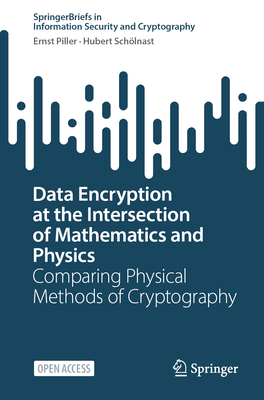
Data is becoming increasingly important, and so is data security. This book is aimed at anyone interested in high data security in telecommunications and data storage, especially IT security experts, procurers, decision-makers, consultants, and computer scientists. Anyone involved in procurement in this field makes decisions about algorithms, technologies, and providers, and thus also about infrastructure and security. The generation and distribution of keys for data encryption play a central role in this. Because security assessments for mathematical methods are based on assumptions, physical methods are becoming interesting in the high-security sector. They promise to link security more closely to the laws of nature. This raises the key question: Which technology is suitable for which application scenario, and what assumptions, costs, and operational risks are involved? This book provides answers and, for the first time, compares QKD (Quantum Key Distribution), RKD (Radio-signal Key Distribution), and MKD (Memory Key Distribution) within a common, transparent criteria framework: technology-neutral, practical, and easy to understand. The evaluation covers secret key rates, range/attenuation, robustness, costs, infrastructure, portability, standardization, IT security, and security risks (implementation, integration, post-processing, side channels). The evaluations are deliberately presented not as a ranking, but as a decision-making aid. The book will be published in print and as open access. QKD derives its security from the laws of quantum physics, but secret key rates decrease with increasing attenuation. Key management systems connect short QKD distances over longer distances, but only at the cost of additional attack surfaces ("trusted nodes"). Its use for mobile applications fails due to a lack of technical maturity. Very high financial costs and high maintenance requirements for QKD solutions make them unattractive in high-security environments. RKD utilizes the reciprocal physical properties of a radio link and scores points for its low technical complexity, excellent suitability for mobile applications (e.g., vehicles or drones), and very low costs. However, RKD falls far short of the key rates achieved by QKD solutions and is still limited to shorter distances. In addition, there is no established infrastructure for distributing key material to more than two partners. MKD takes a completely different approach: each party produces key material, stores it on a data carrier, and transports it physically to the other party. Because MKD can securely transfer 16 TB of key material in a single transport, only MKD has the potential to continuously provide a one-time pad (OTP) and thus provably 100% secure data encryption. The price is organizational responsibility: secure generation, storage, transport, and documented chain of custody. The book examines data security for telecommunications and data storage, discusses encryption modes for OTP, and addresses the question of when "OTP proximity" makes more sense than theoretical purity. The result of approximately one year of source-critical research and the comparison of literature, manufacturer specifications, and practical observations with systematic cross-checking and our own R&D activities, this book helps to justify architecture and procurement decisions, locate risks (side channels, misconfigurations, logistical vulnerabilities), and separate "security gains" from "new attack surfaces."
商品描述(中文翻譯)
數據變得越來越重要,數據安全性也同樣如此。本書旨在針對任何對電信和數據存儲中的高數據安全性感興趣的人,特別是IT安全專家、採購人員、決策者、顧問和計算機科學家。任何參與該領域採購的人都會對算法、技術和供應商做出決策,因此也會涉及基礎設施和安全性。數據加密的密鑰生成和分發在這方面扮演著核心角色。由於對數學方法的安全評估是基於假設,因此在高安全性領域,物理方法變得越來越有趣。它們承諾將安全性與自然法則更緊密地聯繫起來。這引出了關鍵問題:哪種技術適合哪種應用場景,涉及哪些假設、成本和操作風險?
本書提供了答案,並首次在一個共同的透明標準框架內比較QKD(量子密鑰分發)、RKD(無線信號密鑰分發)和MKD(記憶體密鑰分發):技術中立、實用且易於理解。評估涵蓋了秘密密鑰速率、範圍/衰減、穩健性、成本、基礎設施、可攜性、標準化、IT安全性和安全風險(實施、整合、後處理、側信道)。這些評估故意不以排名的方式呈現,而是作為決策輔助工具。
本書將以印刷版和開放存取的形式出版。
QKD的安全性源自量子物理的法則,但隨著衰減的增加,秘密密鑰速率會下降。密鑰管理系統將短距離的QKD連接到更長的距離,但這僅以增加攻擊面(“受信節點”)為代價。由於缺乏技術成熟度,其在移動應用中的使用失敗。QKD解決方案的高財務成本和高維護要求使其在高安全環境中變得不具吸引力。
RKD利用無線鏈路的相互物理特性,因其低技術複雜性、對移動應用(例如,車輛或無人機)的優良適用性以及非常低的成本而得分。然而,RKD的密鑰速率遠遠低於QKD解決方案,且仍然限於較短的距離。此外,尚未建立分發密鑰材料給超過兩個合作夥伴的基礎設施。
MKD採取了完全不同的方法:每一方生成密鑰材料,將其存儲在數據載體上,並實體運輸到另一方。由於MKD可以在一次運輸中安全地轉移16 TB的密鑰材料,只有MKD有潛力持續提供一次性密碼(OTP),從而實現可證明的100%安全數據加密。代價是組織責任:安全生成、存儲、運輸和文檔化的保管鏈。
本書探討了電信和數據存儲的數據安全性,討論了OTP的加密模式,並解決了“OTP接近性”何時比理論純粹性更有意義的問題。這是約一年來源批判性研究的結果,並通過系統交叉檢查文獻、製造商規格和實際觀察以及我們自己的研發活動進行比較,本書有助於為架構和採購決策提供正當理由,定位風險(側信道、錯誤配置、後勤脆弱性),並將“安全收益”與“新攻擊面”區分開來。