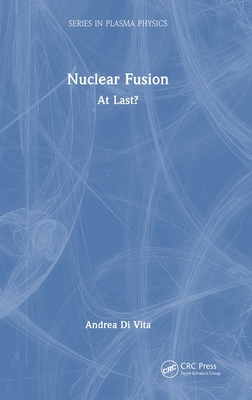
Fusion on the Moon: Nuclear Fusion for High-Power, Semi-Independent Lunar Development
暫譯: 月球上的核融合:以核融合實現高功率、半自主的月球開發
Nuttall, W. J., Grzegorczyk-Nuttall, M. A., Marsh, V. W. E.
- 出版商: Springer
- 出版日期: 2026-09-20
- 售價: $1,830
- 貴賓價: 9.5 折 $1,738
- 語言: 英文
- 頁數: 87
- 裝訂: Quality Paper - also called trade paper
- ISBN: 3032382165
- ISBN-13: 9783032382160
-
相關分類:
物理學 Physics
海外代購書籍(需單獨結帳)
相關主題

商品描述
This open access book explores synergies between two of the most ambitious high technology challenges of the twenty-first century--lunar settlement and nuclear fusion energy. Governance arrangements for the Moon are weak, and the world is in a period of intense geopolitical competition. In both the space and fusion sectors, private enterprise is taking the lead where once national laboratories and public sector technology developers were dominant.
This book envisages a scenario whereby energy demand in the lunar economy could be significantly higher, if only supply were able to match to that demand. This book considers such a high-power lunar future. In such a scenario, different things will happen than are expected in more incremental futures. A megawatt-scale lunar scenario is not easily satisfied using renewable solar power and furthermore conventional nuclear energy, based on the physics of fission, has certain drawbacks. However, the less mature technology of fusion shows promise. Imagining fusion on the Moon, as this book does, reveals insights that rather than simply suggesting that lunar fusion will be even harder to achieve than on Earth, it reveals key ways in which Fusion on the Moon could be easier.
Importantly, fusion on the Moon has the potential to link to new neutronic fusion reactions, free of a reliance on hard-to-source tritium. Helium-3, as found on the Moon, could be key to such futures further boosting the prospects for Fusion on the Moon.
This book is written in an accessible style and is designed for students of physics, engineering, the space economy, and innovation. It also suits the needs of experts in one domain--e.g., space, fusion energy--keen to learn more about the challenges and opportunities of the other. It offers a fresh interdisciplinary perspective on how technology, energy, industry, and various commercial scenarios could shape future activity on the Moon.
商品描述(中文翻譯)
這本開放取用書籍探討二十一世紀最具雄心的兩項高科技挑戰之間的協同效應——月球定居與核融合能源。月球治理機制目前仍相當薄弱,而世界正處於激烈地緣政治競爭的時期。在太空與核融合兩個領域中,私營企業正逐漸扮演領導角色;過去這些領域則主要由國家實驗室與公共部門的技術開發機構主導。
本書設想一種情境:如果能源供應能夠滿足需求,月球經濟中的能源需求可能會大幅提高。本書探討的正是這種高能源需求的月球未來。在此情境下,事情的發展將不同於較為漸進的未來情境。僅依靠再生太陽能,並不容易滿足兆瓦級月球情境的需求;此外,根據核分裂物理原理的傳統核能也存在一些缺點。然而,技術成熟度較低的核融合則展現出希望。正如本書所做的那樣,設想在月球上實現核融合,不僅能讓我們了解月球核融合可能比地球上的核融合更難實現,也能揭示月球核融合可能更容易實現的關鍵途徑。
重要的是,月球上的核融合有潛力與新型中子核融合反應建立連結,從而不必依賴難以取得的氚。月球上存在的氦-3,可能成為這類未來情境的關鍵,進一步提升月球核融合的發展前景。
本書以易於理解的風格撰寫,適合物理、工程、太空經濟與創新領域的學生閱讀。對於專精於某一領域(例如太空或核融合能源),但希望深入了解另一領域挑戰與機會的專家而言,本書同樣非常適合。本書從嶄新的跨學科角度出發,探討技術、能源、產業及各種商業情境將如何形塑月球未來的活動。
作者簡介
William Nuttall CPhys FInstP is Professor of Energy Policy and Transformation (part-time) at the University of Bristol, UK. He is also a Non-Resident Fellow of the Payne Institute for Public Policy at the Colorado School of Mines, USA and a Fellow (honorary) of Cambridge Judge Business School. He is an Affiliated Lecturer in Cambridge University Engineering Department and a Fellow of Hughes Hall, University of Cambridge. He holds a PhD in Physics (1993) from the Massachusetts Institute of Technology, USA, where he was a Fulbright scholar (1987-1988).
Malgorzata Grzegorczyk-Nuttall is a Lecturer in Marketing and Innovation at the University of Leicester, UK. She holds a PhD in Economics from the University of Lodz, Poland, and was a Fulbright Scholar at the University of Texas at Austin. Her expertise includes technology transfer, commercialisation, and research-industry collaboration. She is the author of Knowledge and Technology Transfer from Research Organisations to Businesses and Marketing in University-Industry Collaborations, two books that reflect her longstanding interest in how science is translated into practice. She is currently focused on the space sector, especially future commercial scenarios for the lunar economy.
Vidar WE Marsh is a physics postgraduate researcher at the University of Bristol with strong computing skills and an interest in data-centric physics research. He came to research from a first class Masters in physics from the University of Bristol. He has experience transferring his scientific and research skills to industry settings. One previous example project involved the LHCb detector alignment codebase at the large European particle physics laboratory, CERN.
Chris Spedding is a Research Associate at the Leverhulme Centre for Humanity in Space, working at the interface of emerging technology, security, nuclear weapons, and nuclear technologies. He is an interdisciplinary researcher with masters degrees in Mechanical Engineering (MEng, Sheffield Hallam University) and Nuclear Energy (MRes, Imperial College London), and a PhD in the Governance of Outer Space from The Open University. Prior to joining the LCHS, Chris was the Emerging Technologies Programme Manager, and Growth and Impact Manager at the British American Security Information Council (BASIC) and was also a civil servant for a time. His research interests include the evolving character of nuclear competition and conflict, and specifically the role of emerging and evolving technologies in that.
David Webbe-Wood received his PhD from the Open University in 2024. Prior to that he worked for UK Civil Service in a number of scientific and engineering roles. He has participated in the IAEA EMRAS and BIOMOVS biosphere modelling programmes and the Anglo-Indian eMEANNS project for which he is a co-author of the book Perspectives on Engineering Uncertainty.
Professor Tom Scott is a distinguished materials scientist and Director of the Interface Analysis Centre at the University of Bristol, a specialist analytical centre for research on materials of all types. He holds a first-class MSci honours degree in Geology and a PhD in Nuclear Materials.He is also a Royal Academy of Engineering Professorial Research Fellow co-funded by the UKAEA. He is Director of the South West Nuclear Hub and lectures in the Schools of Physics and Earth Sciences at Bristol. He has expertise in the detection and characterisation of nuclear materials to aid prediction of their behaviour in engineered and environmental scenarios. This includes activities relating to robotics and radiation detection for both fission and fusion energy applications. He works closely with UK government departments and agencies to ensure that facilities, materials and wastes stay safely managed.
作者簡介(中文翻譯)
William Nuttall CPhys FInstP 是英國 University of Bristol 的能源政策與轉型學教授(兼任)。他也是美國 Colorado School of Mines Payne Institute for Public Policy 的非駐院研究員,以及 Cambridge Judge Business School 的榮譽院士。他同時擔任 Cambridge University 工程系的附屬講師,並是 University of Cambridge Hughes Hall 的院士。他於 1993 年取得美國 Massachusetts Institute of Technology 的物理學博士學位,並曾於 1987 至 1988 年間以 Fulbright 學者身分赴該校進修。
Malgorzata Grzegorczyk-Nuttall 是英國 University of Leicester 的行銷與創新講師。她持有波蘭 University of Lodz 的經濟學博士學位,並曾以 Fulbright Scholar 身分於 University of Texas at Austin 進行研究。她的專長包括技術移轉、商業化,以及研究機構與產業間的合作。她著有《Knowledge and Technology Transfer from Research Organisations to Businesses》與《Marketing in University-Industry Collaborations》兩本書,反映出她長期關注如何將科學轉化為實務應用。目前她專注於太空產業,尤其關注月球經濟的未來商業情境。
Vidar WE Marsh 是 University of Bristol 的物理學博士後研究人員,具備優異的計算能力,並對以資料為核心的物理學研究感興趣。他在 University of Bristol 取得物理學一等榮譽碩士學位後投入研究工作。他曾將自身的科學與研究技能轉移應用於產業環境。其中一項先前參與的專案,是位於歐洲大型粒子物理實驗室 CERN 的 LHCb 偵測器對準程式碼庫。
Chris Spedding 是 Leverhulme Centre for Humanity in Space 的研究助理,研究領域位於新興科技、安全、核武器與核技術的交會處。他是一名跨領域研究人員,持有 Mechanical Engineering 碩士學位(MEng,Sheffield Hallam University)與 Nuclear Energy 碩士學位(MRes,Imperial College London),並取得 The Open University 的外太空治理博士學位。在加入 LCHS 之前,Chris 曾任 British American Security Information Council(BASIC)的新興科技計畫經理,以及成長與影響經理,也曾擔任一段時間的公務員。他的研究興趣包括核競爭與核衝突不斷演變的特質,尤其關注新興與持續發展中的科技在其中所扮演的角色。
David Webbe-Wood 於 2024 年取得 The Open University 的博士學位。在此之前,他曾於 UK Civil Service 擔任多項科學與工程職務。他曾參與 IAEA EMRAS 與 BIOMOVS 生物圈模擬計畫,以及英印合作的 eMEANNS 專案;他也是《Perspectives on Engineering Uncertainty》一書的共同作者。
Tom Scott 教授是傑出的材料科學家,也是 University of Bristol Interface Analysis Centre 的主任。該中心是專門研究各類材料的分析研究中心。他持有 Geology 一等榮譽 MSci 學位及 Nuclear Materials 博士學位。他同時是由 UKAEA 共同資助的 Royal Academy of Engineering 教授級研究員,也是 South West Nuclear Hub 主任,並在 Bristol 的物理學院與地球科學學院授課。他專長於核材料的偵測與特性分析,以協助預測這些材料在工程與環境情境中的行為。相關工作包括應用於裂變與核融合能源的機器人技術與輻射偵測。他與英國政府各部門及機構密切合作,確保設施、材料與廢棄物都能受到安全管理。