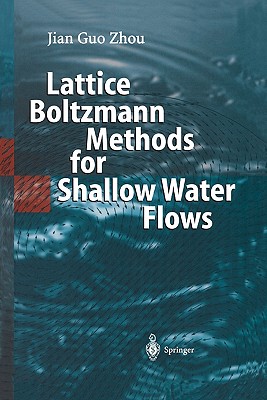
Lattice Boltzmann Methods for Shallow Water Flows
暫譯: 淺水流的格子玻爾茲曼方法
Zhou, Jian Guo
- 出版商: Springer
- 出版日期: 2010-10-14
- 售價: $4,600
- 貴賓價: 9.5 折 $4,370
- 語言: 英文
- 頁數: 112
- 裝訂: Quality Paper - also called trade paper
- ISBN: 364207393X
- ISBN-13: 9783642073939
-
相關分類:
流體力學 Fluid-mechanics
海外代購書籍(需單獨結帳)
商品描述
商品描述(中文翻譯)
格子玻爾茲曼方法(LBM)是一種現代數值技術,具有高效性和靈活性,能夠模擬複雜或變化幾何形狀中的不同流動。它是從格子氣體自動機(LGA)演變而來,以克服LGA所面臨的困難。LBM中的核心方程實際上是連續玻爾茲曼方程的一種特殊離散形式,使其在統計物理中具有自我解釋性。該方法以極其簡化的方式描述了粒子運動的微觀圖景,而在宏觀層面上則提供了流體的正確平均描述。平均粒子速度在時間和空間中的行為與物理流體中的流動速度相同,顯示了離散微觀現象與連續宏觀現象之間的直接聯繫。與基於流動方程直接解的傳統計算流體力學(CFD)相比,格子玻爾茲曼方法提供了一種間接解決流動方程的方法。該方法的特點是計算簡單、並行處理以及邊界條件的易於實現。正是這些特性使得格子玻爾茲曼方法在不同領域中成為一種非常有前景的計算方法。近年來,它受到廣泛關注,並成為計算流體力學中一個非常有潛力的研究領域。然而,大多數已出版的書籍僅限於針對Navier-Stokes方程的格子玻爾茲曼方法。另一方面,淺水流在許多實際情況中存在,例如潮汐流、波浪、開放渠道流和壩溢流。
作者簡介
Dr. Jian Guo Zhou graduated from Wuhan University with first degree in River Mechanics and River Engineering and subsequently finished his MSc in Hydraulics and Fluvial Mechanics at Tsinghua University. He received his PhD in Fluid Mechanics from Leeds University. Since then, he has been working in computational fluid dynamics. His representative contributions are the surface gradient method for the treatment of the source terms in shallow water equations, the elastic-collision scheme for slip/semi-slip boundary conditions for lattice Boltzmann methods, the centered scheme for the force terms in the lattice Boltzmann equation, and lattice Boltzmann methods for shallow water equations with or without turbulence modelling.
作者簡介(中文翻譯)
周建國博士畢業於武漢大學,獲得河流力學與河流工程的學士學位,隨後在清華大學完成水力學與河流力學的碩士學位。他在利茲大學獲得流體力學的博士學位。自那時起,他一直從事計算流體力學的研究。他的代表性貢獻包括:用於淺水方程源項處理的表面梯度方法、適用於格子玻爾茲曼方法的滑移/半滑移邊界條件的彈性碰撞方案、格子玻爾茲曼方程中力項的中心方案,以及適用於有或無湍流模型的淺水方程的格子玻爾茲曼方法。