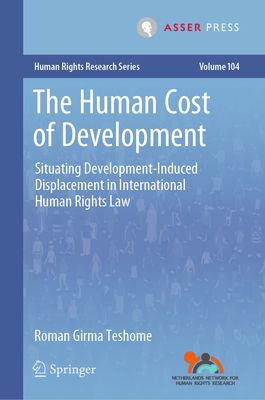
The Human Cost of Development: Situating Development-Induced Displacement in International Human Rights Law
暫譯: 發展的人類成本:將發展引起的流離失所置於國際人權法的背景中
Teshome, Roman Girma
- 出版商: T.M.C. Asser Press
- 出版日期: 2026-02-25
- 售價: $7,250
- 貴賓價: 9.5 折 $6,887
- 語言: 英文
- 頁數: 330
- 裝訂: Hardcover - also called cloth, retail trade, or trade
- ISBN: 9462657505
- ISBN-13: 9789462657502
海外代購書籍(需單獨結帳)
商品描述
This book examines development-induced displacement (DID), a form of internal displacement in which individuals or groups are involuntarily moved from their homes to make room for development projects, and its adverse consequences in light of international human rights law (IHRL). Using a human rights-based approach as a theoretical framework, it seeks to (re)frame the socio-economic consequences of DID as human rights issues and explore IHRL responses to these issues. It further aims to identify and analyse the human rights frameworks and norms applicable in the context of displacement, the rights of people affected, and the corresponding obligations of states. While there is currently no binding and comprehensive international legal framework specifically addressing DID, individuals affected can benefit from the general protections provided under IHRL. Additionally, there are specialized human rights regimes that deal with specific subject matters relevant to DID or offer normative protections to specific groups affected by DID. Notably, the frameworks concerning the rights of internally displaced persons, the rights of indigenous peoples, and the right to development provide applicable normative standards. Relevant standards can also be drawn from various policy frameworks adopted by international financial institutions funding development projects potentially resulting in displacement. This work draws on these legal and policy frameworks. Overall, the objectives of this book are twofold: first, to map out existing IHRL norms applicable to DID; and second, to assess the adequacy of these norms in addressing the adverse consequences and distinctive features of DID. To these ends, the book identifies the relevant frameworks and norms, examines their application within the context of DID, and critically engages with their gaps and limitations. Those working at the intersection of human rights and development or displacement will find this book relevant. It also offers valuable insights for protecting the rights of individuals or groups potentially affected by DID or for implementing DID in accordance with human rights standards. Roman Girma Teshome is Assistant professor at Utrecht University's School of Law in Utrecht, The Netherlands. This is volume 104 in the Human Rights Research Series.
商品描述(中文翻譯)
本書探討發展引起的流離失所(DID),這是一種內部流離失所的形式,個人或群體因發展項目而被迫從家中搬遷,並分析其在國際人權法(IHRL)下的負面後果。本書以人權為基礎的方法作為理論框架,旨在將DID的社會經濟後果重新框定為人權問題,並探討IHRL對這些問題的回應。此外,本書還旨在識別和分析在流離失所背景下適用的人權框架和規範、受影響者的權利以及國家的相應義務。
目前尚無具約束力且全面的國際法律框架專門針對DID,但受影響的個人可以受益於IHRL提供的一般保護。此外,還有專門的人權體系處理與DID相關的特定主題,或為受DID影響的特定群體提供規範性保護。值得注意的是,關於內部流離失所者的權利、原住民的權利以及發展權的框架提供了適用的規範標準。相關標準也可以從國際金融機構採納的各種政策框架中獲得,這些框架資助的發展項目可能導致流離失所。本書借鑒了這些法律和政策框架。總體而言,本書的目標有兩個:首先,繪製出適用於DID的現有IHRL規範;其次,評估這些規範在應對DID的負面後果和獨特特徵方面的充分性。為此,本書識別相關的框架和規範,檢視其在DID背景下的應用,並批判性地探討其缺口和局限性。
在人權與發展或流離失所交集工作的讀者將會發現本書的相關性。本書還為保護可能受DID影響的個人或群體的權利,或根據人權標準實施DID提供了寶貴的見解。
Roman Girma Teshome是荷蘭烏特勒支大學法學院的助理教授。本書為人權研究系列的第104卷。