商品描述
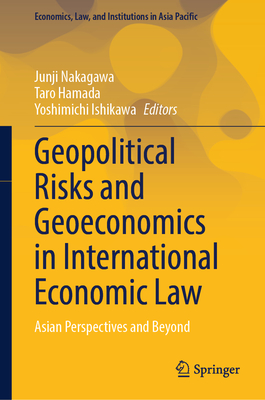
The rules-based international economic order is undergoing profound transformation. Geopolitical risk and geoeconomic strategy are no longer external shocks to a stable system; they now shape the core of international economic law (IEL), influencing trade regulation, investment protection, digital governance, and supply-chain design. Tariffs, sanctions, investment screening, data controls, and security-driven regulation have become structural features of the global economy. This edited volume originates from the 9th Asian International Economic Law Network (AIELN) Conference, held in Tokyo in June 2025 under the theme "Geopolitical Risks and Geoeconomics in International Economic Law: Asian Perspectives and Beyond." It brings together scholars, practitioners, and policymakers to examine how IEL is responding to persistent geopolitical uncertainty and regulatory risk. The chapters analyze how legal frameworks allocate the costs of geopolitical and regulatory risk, whether the liberal trading system is fragmenting into regional or minilateral arrangements, and how security, resilience, and sustainability are reshaping market access and investment governance. A central question is whether international economic law can adapt to these pressures without abandoning rule-based multilateralism. Placing Asia at the center of the analysis, the volume explores whether Asian states can move beyond being objects of great-power strategies and instead act as norm entrepreneurs shaping the future of international economic law.
商品描述(中文翻譯)
基於規則的國際經濟秩序正經歷深刻的轉變。地緣政治風險和地緣經濟策略不再是穩定系統的外部衝擊;它們現在塑造了國際經濟法(IEL)的核心,影響貿易規範、投資保護、數位治理和供應鏈設計。關稅、制裁、投資審查、數據控制和以安全為驅動的規範已成為全球經濟的結構性特徵。
本編輯卷的內容源自於2025年6月在東京舉行的第九屆亞洲國際經濟法網絡(AIELN)會議,主題為「國際經濟法中的地緣政治風險與地緣經濟學:亞洲視角及其超越」。本書匯集了學者、實務者和政策制定者,探討國際經濟法如何應對持續的地緣政治不確定性和監管風險。
各章節分析法律框架如何分配地緣政治和監管風險的成本,自由貿易體系是否正在分裂為區域或小型多邊安排,以及安全性、韌性和可持續性如何重塑市場准入和投資治理。一個核心問題是國際經濟法是否能在不放棄基於規則的多邊主義的情況下適應這些壓力。
本書將亞洲置於分析的中心,探討亞洲國家是否能超越成為大國策略的對象,而轉而作為規範創業者,塑造國際經濟法的未來。
作者簡介
Junji Nakagawa is a Professor at the Faculty of Liberal Arts at Chuo Gakuin University. He is also a Professor Emeritus of the University of Tokyo. He is Of Counsel at Anderson, Mori & Tomotsune. He received his B.A., M.A. and Ph.D. from the University of Tokyo. Before assuming the current positions, he was a Professor of International Economic Law at the Institute of Social Science at the University of Tokyo. He is a Chairperson of the Asia International Economic Law Network (AIELN). His research covers a wide range of public international law regulating transnational economic transactions. His major recent publications include: A Post-WTO International Legal Order, Springer, 2020; Asian Perspectives on International Investment Law, Routledge, 2019; Nationalization, Natural Resource and International Investment Law, Routledge, 2017; and International Harmonization of Economic Regulation, Oxford University Press, 2011. Taro Hamada is Professor at the Faculty of Law at Senshu University, Japan. He previously served at the Ministry of Foreign Affairs of Japan and at the Permanent Mission of Japan in Geneva, where he was responsible for WTO and EPA negotiations. He examines the evolving legal and institutional frameworks that govern global trade, with particular attention to how states balance economic integration, domestic regulatory autonomy, and the protection of workers. His recent publications include International Law and the Global Economy, co-ed., Shinzan-sha, 2021, in Japanese; "International Trade and Labor" in International Economic Law, 31, 2022, in Japanese; and "Are Korea's Import Bans on Japanese Foods Based on Scientific Principles?", co-author, in European Journal of Risk Regulation, 11(1), 2020. Yoshimichi Ishikawa is Associate Professor at the School of International Relations at the University of Shizuoka, Japan. Before entering academia, he served in the Ministry of Foreign Affairs of Japan, working on WTO dispute settlement. He received his PhD in Law from the University of Bern, Switzerland, where he completed his dissertation, International Trade in Food after a Nuclear Accident, with the distinction of magna cum laude. His research focuses on evidence-based analysis of international trade regulation, with particular interest in the quantification of risk and the design of effective risk governance frameworks. He currently serves as a Board Member of the Japanese Society of International Economic Law.
作者簡介(中文翻譯)
中川純司是中央學院大學文學院的教授,同時也是東京大學的名譽教授。他是安達信、森與友常法律事務所的顧問。他在東京大學獲得學士、碩士及博士學位。在擔任目前職位之前,他曾是東京大學社會科學研究所的國際經濟法教授。他是亞洲國際經濟法網絡(AIELN)的主席。他的研究涵蓋了調節跨國經濟交易的廣泛公共國際法。他最近的重要出版物包括:《WTO後的國際法律秩序》(Springer,2020年);《亞洲對國際投資法的看法》(Routledge,2019年);《國有化、自然資源與國際投資法》(Routledge,2017年);以及《經濟規範的國際協調》(Oxford University Press,2011年)。
濱田太郎是日本專修大學法學院的教授。他曾在日本外交部及日本駐日內瓦常駐代表團任職,負責WTO及EPA談判。他研究全球貿易的法律及制度框架的演變,特別關注各國如何平衡經濟整合、國內監管自主權及工人保護。他最近的出版物包括《國際法與全球經濟》(合編,信山社,2021年,日文);《國際貿易與勞動》收錄於《國際經濟法》第31期,2022年,日文;以及《韓國對日本食品的進口禁令是否基於科學原則?》(合著,發表於《歐洲風險規範期刊》第11卷第1期,2020年)。
石川義道是日本靜岡大學國際關係學院的副教授。在進入學術界之前,他曾在日本外交部工作,專注於WTO爭端解決。他在瑞士伯爾尼大學獲得法律博士學位,並以優異的成績完成論文《核事故後的食品國際貿易》。他的研究專注於基於證據的國際貿易規範分析,特別關注風險的量化及有效風險治理框架的設計。他目前擔任日本國際經濟法學會的董事會成員。