商品描述
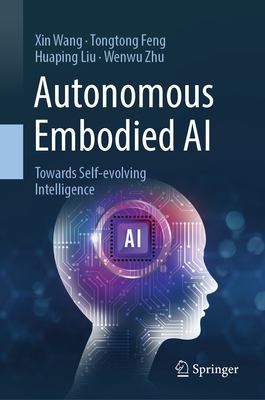
This book offers a concise yet comprehensive exploration of embodied artificial intelligence (AI) and its integration with swarm manipulation, navigation, and tracking tasks. It uniquely bridges the gap in the existing literature by providing a thorough review of swarm-embodied AI, focusing on collaborative perception and decision-making methods. Its standout features include a systematic approach, detailed discussions on advanced directions, and a practical case study on multi-robot multi-target tracking. It commences by examining the three key elements of embodied AI: multi-sensor fusion, embodied perception, and embodied decision-making. It reviews existing works that independently optimize each of these elements. Subsequently, the book delves into swarm-embodied AI, encompassing swarm-embodied collaborative perception, collaborative decision-making, and future research directions. Specifically, it explores how swarm intelligence enhances the scalability and generalizability of embodied AI, and conversely, how embodied AI augments swarm intelligence by adapting learning models to diverse tasks and environments. Finally, the book presents a case study of multi-robot multi-target tracking, providing a practical demonstration of all algorithms discussed within. Readers can follow this case study step by step to gain a deeper understanding of the advancements and potential challenges of swarm-embodied AI. Designed with accessibility in mind, this book caters to a wide audience, including researchers, students, and practitioners seeking insights into this rapidly evolving field. Its user-friendly format ensures ease of understanding without requiring specialized prior knowledge. By distilling complex concepts and highlighting practical applications, the book serves as an invaluable resource for anyone interested in the intersection of embodied AI and swarm intelligence.
商品描述(中文翻譯)
本書提供了一個簡明而全面的探討,關於具身人工智慧(AI)及其與群體操控、導航和追蹤任務的整合。它獨特地填補了現有文獻中的空白,提供了對群體具身AI的徹底回顧,重點在於協作感知和決策方法。其突出特點包括系統化的方法、對先進方向的詳細討論,以及關於多機器人多目標追蹤的實用案例研究。
本書首先檢視具身AI的三個關鍵元素:多感測器融合、具身感知和具身決策。它回顧了現有的研究,這些研究獨立優化了每一個元素。隨後,本書深入探討群體具身AI,涵蓋群體具身協作感知、協作決策及未來研究方向。具體而言,它探討了群體智慧如何增強具身AI的可擴展性和普遍性,反之,具身AI又如何通過將學習模型適應於多樣的任務和環境來增強群體智慧。最後,本書呈現了一個多機器人多目標追蹤的案例研究,提供了對所有討論過的演算法的實用示範。讀者可以逐步跟隨這個案例研究,以深入了解群體具身AI的進展和潛在挑戰。
本書以可及性為設計考量,適合廣泛的讀者群,包括研究人員、學生和尋求洞見的從業者,這個快速發展的領域。其使用者友好的格式確保了易於理解,而不需要專門的先前知識。通過提煉複雜的概念並突顯實用應用,本書成為任何對具身AI和群體智慧交集感興趣的人的寶貴資源。
作者簡介
Xin Wang is an associate professor at Tsinghua University, with a Ph.D. from Zhejiang University and Simon Fraser University. His research focuses on multimedia intelligence and machine learning. Dr. Wang has published over 200 high-quality research papers prestigious conferences including ICML, NeurIPS, IEEE TPAMI, IEEE TKDE, ACM KDD, WWW, ACM SIGIR, ACM Multimedia, etc., winning three best paper awards such as ACM Multimedia Asia in 2023 and IEEE ICME best paper runner up in 2025. He serves as Associate Editor for IEEE Transactions on Multimedia, IEEE Transactions on Circuits and Systems for Video Technology. He was honored with the ACM China Rising Star Award, IEEE TCMC Rising Star Award and DAMO Academy Young Fellow. He has co-authored several books, including "Automated Machine Learning and Meta-Learning for Multimedia" and "Visual Question Answering," published by Springer in 2021 and 2022. Tongtong Feng is a postdoctoral fellow at the Department of Computer Science and Technology, Tsinghua University. He got his Ph.D. degree in Computer Science and Technology from Beijing University of Posts and Telecommunications. His research interests include Autonomous Embodied AI, Self-evolving Agent, and Multimedia Intelligence. He has published over 20 high-quality research papers in top journals and conferences, including IEEE TMM, ESWA, ACM Multimedia, and AAAI, etc. He got the Best Paper Nomination of ACM Multimedia 2024. Huaping Liu is a professor at Tsinghua University, earned his Ph.D. degree from Tsinghua University in 2004. Dr. Liu specializes in embodied intelligence, particularly robotic perception and control. He's a National Science Fund recipient and senior editor of the International Journal of Robotics Research. Dr. Liu has co-authored several books, including "Robotic Tactile Perception and Understanding" and "Wearable Technology for Robotic Manipulation and Learning," published by springer in 2018 and 2020. Wenwu Zhu is a professor at Tsinghua University, obtained his Ph.D. degree from New York University in 1996. Previously, he held positions as a research manager at Microsoft Research Asia, chief scientist and director at Intel Research China, and member of Technical Staff at Bell Labs, New Jersey. His research focuses on data-driven multimedia networking and multimedia intelligence, resulting in over 400 referred papers and over 100 patents. He has received numerous awards, including ACM SIGMM Technical Achievement Award in 2023, IEEE Circuits and Systems Society Charles A. Desoer Technical Achievement Award in 2024 and 12 Best Paper Awards, such as ACM Multimedia in 2012 and IEEE Transactions on Circuits and Systems for Video Technology in 2001 and 2019. Dr. Zhu has served as Editor-in-Chief for IEEE Transactions on Multimedia (2017-2019) and IEEE Transactions on Circuits and Systems for Video Technology (2024-2025) and on steering committees for IEEE Transactions on Multimedia (2015-2016) and IEEE Transactions on Mobile Computing (2007-2010). He has also chaired major conferences including ACM Multimedia 2018 and ACM CIKM 2019. He is recognized as an AAAS Fellow, ACM Fellow, IEEE Fellow, SPIE Fellow, and a member of The Academy of Europe (Academia Europaea). Dr. Zhu has co-authored several books, including "Automated Machine Learning and Meta-Learning for Multimedia" and "Visual Question Answering," published by Springer in 2021 and 2022.
作者簡介(中文翻譯)
王鑫是清華大學的副教授,擁有浙江大學和西門菲莎大學的博士學位。他的研究專注於多媒體智能和機器學習。王博士在包括ICML、NeurIPS、IEEE TPAMI、IEEE TKDE、ACM KDD、WWW、ACM SIGIR、ACM Multimedia等著名會議上發表了超過200篇高品質的研究論文,並獲得了三項最佳論文獎,包括2023年的ACM Multimedia Asia和2025年的IEEE ICME最佳論文亞軍。他擔任IEEE Transactions on Multimedia和IEEE Transactions on Circuits and Systems for Video Technology的副編輯。他曾獲得ACM中國新星獎、IEEE TCMC新星獎和DAMO Academy青年研究員獎。他共同撰寫了幾本書籍,包括2021年和2022年由Springer出版的《自動化機器學習與多媒體的元學習》和《視覺問答》。
馮彤彤是清華大學計算機科學與技術系的博士後研究員。他在北京郵電大學獲得計算機科學與技術的博士學位。他的研究興趣包括自主體現AI、自我演化代理和多媒體智能。他在頂級期刊和會議上發表了超過20篇高品質的研究論文,包括IEEE TMM、ESWA、ACM Multimedia和AAAI等。他獲得了2024年ACM Multimedia最佳論文提名。
劉華平是清華大學的教授,於2004年獲得清華大學的博士學位。劉博士專注於體現智能,特別是機器人感知和控制。他是國家科學基金的獲獎者,也是《國際機器人研究期刊》的資深編輯。劉博士共同撰寫了幾本書籍,包括2018年和2020年由Springer出版的《機器人觸覺感知與理解》和《機器人操作與學習的可穿戴技術》。
朱文武是清華大學的教授,於1996年獲得紐約大學的博士學位。此前,他曾擔任微軟亞洲研究院的研究經理、英特爾中國研究院的首席科學家和主任,以及新澤西州貝爾實驗室的技術員工。他的研究專注於數據驅動的多媒體網絡和多媒體智能,發表了超過400篇被引用的論文和超過100項專利。他獲得了多項獎項,包括2023年的ACM SIGMM技術成就獎、2024年的IEEE Circuits and Systems Society Charles A. Desoer技術成就獎以及12項最佳論文獎,如2012年的ACM Multimedia和2001年及2019年的IEEE Transactions on Circuits and Systems for Video Technology。朱博士曾擔任IEEE Transactions on Multimedia(2017-2019)和IEEE Transactions on Circuits and Systems for Video Technology(2024-2025)的主編,並在IEEE Transactions on Multimedia(2015-2016)和IEEE Transactions on Mobile Computing(2007-2010)的指導委員會中任職。他還主持了包括2018年ACM Multimedia和2019年ACM CIKM在內的主要會議。他被認可為美國科學促進會(AAAS)會士、ACM會士、IEEE會士、SPIE會士以及歐洲學院(Academia Europaea)的成員。朱博士共同撰寫了幾本書籍,包括2021年和2022年由Springer出版的《自動化機器學習與多媒體的元學習》和《視覺問答》。