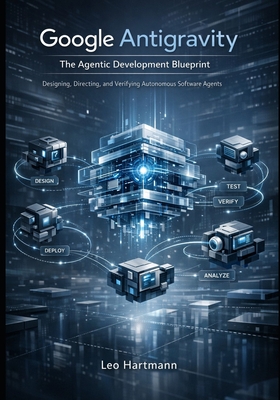
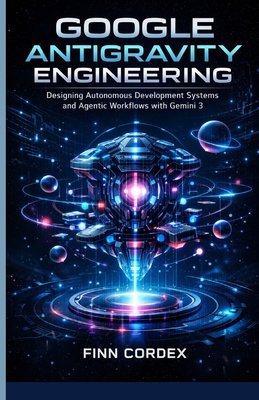
Google Antigravity Engineering: Designing Autonomous Development Systems and Agentic Workflows with Gemini 3 (Paperback)
暫譯: Google 反重力工程:使用 Gemini 3 設計自主開發系統與代理工作流程 (平裝本)
Cordex, Finn
- 出版商: Independently Published
- 出版日期: 2025-12-18
- 售價: $880
- 貴賓價: 9.5 折 $836
- 語言: 英文
- 頁數: 160
- 裝訂: Quality Paper - also called trade paper
- ISBN: 9798261988632
- ISBN-13: 9798261988632
-
相關分類:
AI Coding
海外代購書籍(需單獨結帳)
商品描述
Google Antigravity Engineering
Designing Autonomous Development Systems and Agentic Workflows with Gemini 3
By Finn Cordex
Manual coding is no longer the bottleneck. Control is.
As AI systems evolve from single prompts into autonomous development environments, engineers face a new challenge: how to design, orchestrate, secure, and scale agentic workflows that can reason, plan, and act with minimal human intervention. Google Antigravity represents a major shift in this direction - transforming the IDE into an intelligent, self-directed engineering partner powered by Gemini 3.
Google Antigravity Engineering is the definitive, production-grade guide to building and operating autonomous development systems using Google's emerging antigravity paradigm. Written for experienced developers and AI engineers, this book goes beyond surface-level tutorials to focus on system design, architecture, and real-world execution.
You will learn how to:
-
Design agentic IDE workflows that plan, execute, and self-correct across complex codebases
-
Engineer autonomous development pipelines using Gemini 3 for reasoning, planning, and tool use
-
Build multi-agent systems that collaborate, delegate, and resolve conflicts at runtime
-
Apply LangGraph and LangChain to orchestrate long-running, stateful AI workflows
-
Debug, test, and optimize agentic systems for performance, reliability, and safety
-
Secure autonomous development environments against prompt injection, data leakage, and misuse
-
Deploy production-ready antigravity systems that scale across teams and enterprise environments
Unlike introductory AI books, this guide treats agentic development as an engineering discipline, not a novelty. Each chapter combines theoretical foundations, hands-on Python implementations, and expert commentary drawn from real-world production systems. Code examples are complete, executable, and explained line by line, with a strong emphasis on design trade-offs and operational reality.
This book is ideal for:
-
Senior software engineers and platform engineers
-
Machine learning and applied AI engineers
-
Technical leads designing AI-assisted development workflows
-
Researchers and practitioners working with agentic systems and autonomous tools
If you are ready to move beyond prompt engineering and start engineering autonomy itself, Google Antigravity Engineering gives you the architectural insight, practical tools, and professional rigor required to lead the next generation of AI-driven software development.
商品描述(中文翻譯)
Google 反重力工程
設計自主開發系統和代理工作流程與 Gemini 3
作者:Finn Cordex
手動編碼不再是瓶頸。控制才是。
隨著 AI 系統從單一提示演變為自主開發環境,工程師面臨一個新挑戰:如何設計、協調、保護和擴展能夠推理、計劃並在最小人為干預下行動的代理工作流程。Google 反重力代表了這一方向的重大轉變——將 IDE 轉變為一個由 Gemini 3 驅動的智能、自我導向的工程夥伴。
Google 反重力工程是使用 Google 新興的反重力範式來構建和運行自主開發系統的權威生產級指南。本書針對經驗豐富的開發者和 AI 工程師,超越表面級的教程,專注於系統設計、架構和實際執行。
您將學習如何:
- 設計能夠在複雜代碼庫中計劃、執行和自我修正的代理 IDE 工作流程
- 使用 Gemini 3 工程自主開發管道以進行推理、計劃和工具使用
- 構建能夠在運行時協作、委派和解決衝突的多代理系統
- 應用 LangGraph 和 LangChain 來協調長時間運行的有狀態 AI 工作流程
- 調試、測試和優化代理系統以提高性能、可靠性和安全性
- 保護自主開發環境免受提示注入、數據洩漏和濫用
- 部署可在團隊和企業環境中擴展的生產就緒反重力系統
與入門 AI 書籍不同,本指南將代理開發視為一種工程學科,而非新奇事物。每一章結合了理論基礎、實作 Python 實現和來自實際生產系統的專家評論。代碼示例完整、可執行,並逐行解釋,強調設計取捨和操作現實。
本書非常適合:
- 高級軟體工程師和平台工程師
- 機器學習和應用 AI 工程師
- 設計 AI 輔助開發工作流程的技術負責人
- 與代理系統和自主工具合作的研究人員和實踐者
如果您準備好超越提示工程,開始工程自主本身,Google 反重力工程將為您提供架構洞察、實用工具和專業嚴謹性,以引領下一代 AI 驅動的軟體開發。