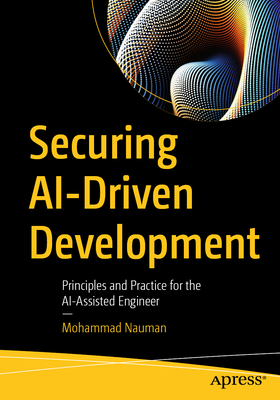
Securing Ai-Driven Development: Principles and Practice for the Ai-Assisted Engineer
暫譯: AI 驅動開發的安全性:AI 輔助工程師的原則與實務
Nauman, Mohammad
相關主題

商品描述
Software development has undergone a fundamental transformation as AI coding assistants redefine how software is built. Tasks that once required days now take hours, and complex systems are increasingly created by individuals rather than teams. This acceleration has introduced a hidden cost: security risks that accumulate quietly beneath polished, functional code. AI-generated outputs often appear correct and secure on the surface, yet frequently contain structural flaws such as outdated cryptographic practices, weak authorization controls, and overly permissive infrastructure. The common instinct to simply request 'secure' code from an AI misses a critical reality. Security is not an added feature but the result of deliberate architectural thinking and informed design choices.
This book builds this mindset from the ground up. It begins by challenging the illusion that security can be appended through prompts, reframing it instead as a continuous balance of risk, cost, and usability. It introduces practical threat modeling and emphasizes the importance of strict trust boundaries to defend against adversarial inputs. The discussion then moves into core engineering practices, covering least privilege, compartmentalization, secrets management, and the prevention of context leakage in modern workflows. It addresses common cryptographic mistakes generated by AI systems and explains how to select and apply secure primitives correctly. The book then expands to real-world systems, focusing on APIs, middleware, and distributed architectures where authorization flaws and verification gaps often arise. It establishes disciplined validation processes that combine automated analysis with human judgment. Finally, it explores the emerging risks of autonomous AI agents, presenting strategies such as minimal agency, sandboxing, and structured prompt design, alongside practical patterns for building secure AI-assisted workflows and end-to-end system hardening through realistic case studies.
By the end of this book, you will have developed a rigorous and practical security mindset for the AI-driven era, enabling you to critically evaluate generated code, design systems with structural resilience, and guide AI tools toward outcomes that are not only efficient but fundamentally secure.
What You Will Learn:
- Why AI coding assistants fail at security and precisely where to intervene
- How to apply the core principles of security engineering to AI-generated code
- How to audit, test, and verify code generated by an AI tool
- How to work securely at the frontier of agentic development
Who It Is For:
This book is for modern software developers who use AI coding assistants in their daily workflow and want to build secure systems without a formal background in security. It is designed for engineers at all levels, as well as data scientists, ML practitioners, and technical founders who are creating real-world applications with AI tools. No prior security expertise is required; only basic programming knowledge and experience working with AI-assisted development.
商品描述(中文翻譯)
軟體開發正經歷根本性的轉變,AI coding assistants 重新定義了軟體的建置方式。過去需要數天才能完成的工作,如今只需數小時;複雜系統也越來越常由個人而非團隊打造。這種加速帶來了一項隱藏成本:安全性風險會在外表精良、功能正常的程式碼底下悄悄累積。AI 產生的輸出表面上往往看似正確且安全,實際上卻經常包含結構性缺陷,例如過時的密碼編譯實務、薄弱的授權控制,以及權限過度寬鬆的基礎架構。單純要求 AI 產生「安全」程式碼,是一種常見的直覺反應,但忽略了關鍵事實:安全性不是額外附加的功能,而是審慎的架構思考與充分理解後的設計選擇所產生的結果。
本書將從基礎開始建立這種思維模式。首先,本書會挑戰「安全性可以透過 prompts 後續附加」的假象,轉而將安全性重新定位為風險、成本與可用性之間持續不斷的平衡。本書介紹實務上的威脅建模(threat modeling),並強調嚴格信任邊界(trust boundaries)對防禦敵對輸入的重要性。接著,內容將進入核心工程實務,涵蓋最小權限(least privilege)、隔離(compartmentalization)、機密管理(secrets management),以及在現代工作流程中防止內容洩漏(context leakage)。本書也會探討 AI 系統產生的常見密碼學錯誤,並說明如何正確選擇與套用安全的密碼學原語(cryptographic primitives)。之後,討論將延伸至真實世界的系統,聚焦於 API、middleware 與分散式架構,因為授權缺陷與驗證漏洞往往會在這些環境中出現。本書建立嚴謹的驗證流程,結合自動化分析與人工判斷。最後,本書將探討自主 AI agents 所帶來的新興風險,介紹最小代理能力(minimal agency)、sandboxing 與結構化 prompt 設計等策略,並透過實際案例研究,說明如何建立安全的 AI 輔助工作流程,以及如何從端到端強化系統安全性。
讀完本書後,你將建立一套適用於 AI 驅動時代、嚴謹且實用的安全思維,使你能夠批判性地評估產生的程式碼、設計具備結構韌性的系統,並引導 AI 工具產出不僅有效率,更從根本上安全的成果。
你將學到:
• 為什麼 AI coding assistants 在安全性方面會失效,以及應該在何處精準介入
• 如何將安全工程的核心原則套用至 AI 產生的程式碼
• 如何稽核、測試並驗證 AI 工具產生的程式碼
• 如何在 agentic development 的前沿領域中安全地工作
適用對象:
本書適合在日常工作流程中使用 AI coding assistants,並希望建置安全系統、但沒有正式安全背景的現代軟體開發者。本書適用於各種程度的工程師,也適合運用 AI 工具打造實際應用程式的 data scientists、ML 從業人員與技術創業者。不需要具備先前的安全專業知識;只要擁有基本程式設計能力,以及 AI 輔助開發的工作經驗即可。
作者簡介
Mohammad Nauman holds a PhD in Security and completed his postdoctoral research at the Max Planck Institute for Software Systems in Germany, where his work focused on the intersection of security and machine learning. His expertise uniquely combines deep knowledge of traditional security principles with a nuanced understanding of modern AI systems and code-generation technologies, an increasingly critical and rare skill set in today's evolving technological landscape.
With a career spanning more than 25 years, Nauman has taught security and related technical subjects at both undergraduate and postgraduate levels in academic institutions, as well as through widely accessible online platforms. His Udemy courses, followed by over 24,000 students worldwide, reflect both the broad relevance of his work and the effectiveness of his teaching methodology.
Nauman brings together strong theoretical foundations and practical insights, enabling him to not only explain why security vulnerabilities arise at a structural level but also demonstrate how developers can address them in real-world scenarios. His experience as an educator and researcher allows him to translate complex concepts into actionable guidance, making security accessible and applicable for practitioners across skill levels.
作者簡介(中文翻譯)
Mohammad Nauman 擁有 Security 博士學位,並在德國 Max Planck Institute for Software Systems 完成博士後研究,研究重點聚焦於 Security 與 machine learning 的交會領域。他的專業能力獨特地結合了對傳統 Security 原則的深厚理解,以及對現代 AI 系統與程式碼生成技術的細緻認識;在今日持續演進的科技環境中,這是一組日益重要且難得的技能。
Nauman 的職涯超過 25 年,曾在學術機構中教授大學部與研究所階段的 Security 及相關技術科目,也透過廣泛普及的線上平台授課。他在 Udemy 開設的課程已有來自世界各地、超過 24,000 名學生修習,充分展現其工作的廣泛適用性,以及教學方法的成效。
Nauman 將扎實的理論基礎與實務洞見融為一體,不僅能從結構層面說明 Security 漏洞為何會產生,也能示範開發人員如何在真實世界的情境中加以處理。他兼具教育者與研究人員的經驗,能將複雜概念轉化為可付諸行動的指引,讓不同技術程度的從業人員都能理解並應用 Security。