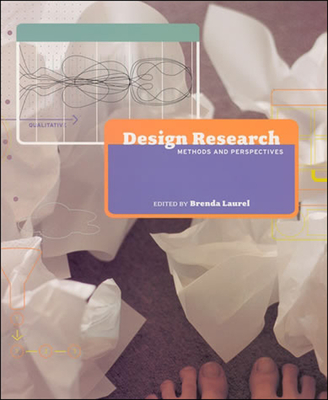
How the tools of design research can involve designers more directly with objects, products and services they design; from human-centered research methods to formal experimentation, process models, and application to real world design problems. The tools of design research, writes Brenda Laurel, will allow designers "to claim and direct the power of their profession." Often neglected in the various curricula of design schools, the new models of design research described in this book help designers to investigate people, form, and process in ways that can make their work more potent and more delightful. "At the very least," Peter Lunenfeld writes in the preface, "design research saves us from reinventing the wheel. At its best, a lively research methodology can reinvigorate the passion that so often fades after designers join the profession."
The goal of the book is to introduce designers to the many research tools that can be used to inform design as well as to ideas about how and when to deploy them effectively. The chapter authors come from diverse institutions and enterprises, including Stanford University, MIT, Intel, Maxis, Studio Anybody, Sweden's HUMlab, and Big Blue Dot. Each has something to say about how designers make themselves better at what they do through research, and illustrates it with real world examples--case studies, anecdotes, and images. Topics of this multi-voice conversation include qualitative and quantitative methods, performance ethnography and design improvisation, trend research, cultural diversity, formal and structural research practice, tactical discussions of design research process, and case studies drawn from areas as unique as computer games, museum information systems, and movies. Interspersed throughout the book are one-page "demos," snapshots of the design research experience.
Design Research charts the paths from research methods to research findings to design principles to design results and demonstrates the transformation of theory into a richly satisfying and more reliably successful practice.
設計研究工具如何讓設計師更直接地投入其所設計的物件、產品與服務;內容涵蓋以人為本的研究方法、正式實驗、流程模型,以及這些方法在真實世界設計問題中的應用。
Brenda Laurel 寫道,設計研究工具將使設計師「有能力主張並掌握其專業的力量」。設計研究往往遭到設計學校各種課程的忽視;本書所介紹的新型設計研究模型,能協助設計師以更有效、更令人愉悅的方式研究人、人造形體與流程,進而提升作品的影響力。「至少,」Peter Lunenfeld 在序言中寫道,「設計研究能讓我們不必重新發明輪子。最理想的情況是,充滿活力的研究方法,能重新點燃設計師加入這個專業後經常逐漸消退的熱情。」
本書旨在向設計師介紹各種可用於提供設計依據的研究工具,以及如何有效判斷運用這些工具的時機與方式。各章作者來自不同的學術機構與企業,包括 Stanford University、MIT、Intel、Maxis、Studio Anybody、瑞典的 HUMlab,以及 Big Blue Dot。每位作者都針對設計師如何透過研究提升自身的專業能力提出見解,並以真實世界的案例加以說明,包括個案研究、軼事與圖片。
這場多方對話涵蓋的主題包括質化與量化方法、表演民族誌與設計即興、趨勢研究、文化多樣性、形式與結構研究實務、設計研究流程的策略性討論,以及取材自電腦遊戲、博物館資訊系統與電影等獨特領域的個案研究。全書各處穿插一頁式的「示範」(demo),以快照形式呈現設計研究的實際經驗。
《Design Research》描繪了從研究方法、研究發現、設計原則到設計成果的發展路徑,並展示如何將理論轉化為更充實、更令人滿意,也更可靠成功的實務。
Brenda Laurel is Chair of the graduate Media Design Program at Art Center College of Design in Pasadena, California and was the co-founder of Purple Moon. She is the author of Utopian Entrepreneur (MIT Press, 2001).