Handbook of Microbial Artificial Intelligence: Applications and Ethical Considerations
暫譯: 微生物人工智慧手冊:應用與倫理考量
Aransiola, Sesan Abiodun, Reddy, Kondakindi Venkateswar, Oyewole, Oluwafemi Adebayo
相關主題

商品描述
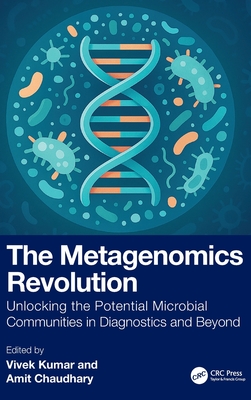
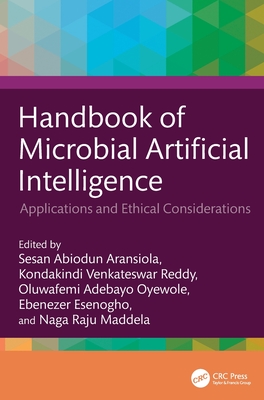
This book explores the transformative intersection of artificial intelligence (AI) and microbiology, introducing the concept of microbial artificial intelligence (MAI). Designed to bridge the gap between microbiology and AI, it provides a comprehensive overview of fundamental AI concepts, practical applications, limitations, ethical considerations, and future opportunities in this emerging field.
Featuring contributions from a global team of experts, the book is structured into two distinct sections for a deeper exploration of MAI. The first section introduces the fundamentals of MAI, offering microbiologists a clear understanding of AI principles and their relevance to microbiology. The second section highlights real-world applications of MAI across diverse industries, including healthcare, genomics, metagenomics, drug discovery, antimicrobial resistance, biofuel production, food quality and safety, astrobiology, and forensic science. This section addresses critical issues such as bias in MAI, ethical challenges, and the impact of data collection and interpretation on research outcomes, while proposing strategies to mitigate these challenges.
This essential resource is ideal for students and researchers eager to explore the potential of MAI and understand AI's growing influence on microbiology. It also serves as valuable supplementary reading for AI professionals seeking insights into broader applications of AI across scientific disciplines.
商品描述(中文翻譯)
這本書探討了人工智慧(AI)與微生物學之間的變革性交集,介紹了微生物人工智慧(MAI)的概念。旨在彌合微生物學與AI之間的鴻溝,提供了對基本AI概念、實際應用、限制、倫理考量以及這一新興領域未來機會的全面概述。
本書由全球專家團隊貢獻,分為兩個不同的部分,以便深入探討MAI。第一部分介紹了MAI的基本原理,讓微生物學家清楚理解AI原則及其與微生物學的相關性。第二部分則突顯了MAI在各行各業的實際應用,包括醫療保健、基因組學、宏基因組學、藥物發現、抗微生物抗性、生物燃料生產、食品質量與安全、天體生物學以及法醫科學。這一部分還探討了MAI中的偏見、倫理挑戰以及數據收集和解釋對研究結果的影響等關鍵問題,同時提出了減輕這些挑戰的策略。
這本重要的資源非常適合渴望探索MAI潛力並理解AI對微生物學日益影響的學生和研究人員。它也為尋求了解AI在科學學科中更廣泛應用的AI專業人士提供了有價值的補充閱讀。
作者簡介
Dr Sesan Abiodun Aransiola is a Lecturer at the Department of Microbiology, University of Abuja, and Philomath University, Abuja, Nigeria. He obtained his BTech, MTech and Ph.D in Environmental Microbiology from the Federal University of Technology, Minna, Nigeria. He has demonstrated his research expert in the production of vermicasts from vermicoposting of organic wastes to assist plants in the remediation of polluted soil with heavy metals. His expertise spans environmental health, phytoremediation, vermicomposting, marine resources and bioremediation of pollutants in the soil. Aransiola's research is deeply rooted in innovative solutions for soil and water remediation, with significant contributions to microbial biotechnology and waste management. He is an award-winning researcher of different grant including TETFUND/DR&D/CE/UNU/ABUJA/IBR/2025/VOL.1. He has over 130 publications including book chapters, research and review articles of good international repute with high impact factor. He has co-edited scientific books of global interest which include microbial biotechnology for bioenergy, marine bioresources: prospects and obstacles, marine bioresources: prospects and obstacles, marine microbial products: applications and opportunities (Elsevier). Ecological interplays in microbial enzymology, prospects for soil regeneration and its impact on environmental protection, Soil microbiome in green technology sustainability, marine bioprospecting for sustainable blue-bioeconomy, vermitechnology: economic, environmental and agricultural sustainability, white pollution: biodiversity and hazards in marine plastisphere, wetland ecosystems: conservation strategies, policy management and applications (Springer). Microbial biofilms - applications and control, marine greens: environmental, agricultural, industrial and biomedical applications, environmental footprint of bioplastic additives, emerging contaminants in food and food products, phytoremediation in food safety: risks and prospects, biotoxins in food: threats and benefits, fuel cells in environmental sustainability, biotechnology of climate-smart agriculture in food security and sustainable farming (CRC Press) with many more in the process. Dr Aransiola has been a review editor and as guest editor, he hosted two special issues with Elsevier (Research in Microbiology) and Frontiers on biofilms - community, structure, applications and mitigation and effects of microplastics on soil ecosystems respectively. Previously before joining academic, he rose to the rank of assistant chief scientific officer at National Biotechnology Research and Development Agency, Nigeria where he was involved in the uses of vinasse (a by-product of ethanol) as bio-fertilizer to reclaim polluted soil for agricultural purposes. Dr. Aransiola's academic journey is complemented by robust research, teaching career (with proper mentoring and supervising both undergraduate and post graduate students) and active involvement in community services, where he leverages his knowledge to foster sustainability. His contributions continue to impact both academia and the broader environmental sciences community. He is a member of Nigerian Society for Microbiology, Association of Environmental Impact Assessment of Nigeria (Affiliation of International Association for Impact Assessment) and American Society for Microbiology.
.
Kondakindi Venkateswar Reddy received his M.Sc (Microbiology) 2006-2008 from Sri Krishnadevyaraya University, Anantapur, Andhrapradesh, M.Tech (Environmental Management) and Ph.D (2017) in Environmental Science and Technology from Jawaharlal Nehru Technological University Hyderabad, Telangana. During his doctoral program in the area of industrial microbiology, he worked on isolation, characterization and molecular identification of Cellulase Producing bacterial isolates used in aquaculture waste water treatment. He has been working as a faculty in Microbiology and Biotechnology for past15 years, teaching undergraduate and post graduate students. His forte is Industrial microbiology, Biotechnology and Environmental management. He has successfully completed four AICTE approved Faculty development programmes in the areas of Applied Environmental microbiology, Experimental Biotechnology. Biochemistry and Cell biology. He has published 50 book chapters (Springer/ Taylor and Francis/ Elsevier), 4 Books one from Springer and one from Royal Society of Chemistry, 50 research papers and Five Review articles in reputed journals. He has active reviewer in Elsevier, Taylor and Francies, Springer etc., He has actively participated in 25 National/ International conferences, and presented various research papers in prestigious Universities. Currently, he is working as an Asst. Professor at Center for Biotechnology, University College of Engineering Science and Technology Hyderabad, Jawaharlal Nehru Technological University Hyderabad. Telangana, India.
Dr Oluwafemi Adebayo Oyewole holds a BTech Degree in Microbiology (2004) and MTech Degree in Microbiology with specialization in Environmental Microbiology (2010), from Federal University of Technology Minna, Niger State, Nigeria. He obtained his PhD in Environmental Microbiology (2016) from the University of Portsmouth, UK. He is currently an Associate Professor in the Department of Microbiology, Federal University of Technology Minna, Nigeria. His current roles include teaching undergraduate and postgraduate students and research supervision in the areas of Environmental, Productive and Applied Microbiology. He has been involved in several administrative responsibilities within and outside the University. He has supervised 77 undergraduate, 14 MTech and 11 PhD students. He is also engaging in community development and professional consultancy services outside of the University and engaged in editorial/academic support services. He has received multiple categories of Awards of Excellence in his field and was listed among the top 500 authors based on scholarly output between 2021 and 2025, according to SCOPUS/SCiVal at Elsevier B.V 2025. He was also named among the Top scientists in three fields--microbiology, biochemistry, and agricultural and biological sciences. So far, his publications have produced more than 1982 total citations with an h-index of 20 and i-10 index of 48 according to Google Scholar. He has over 300 research publications in Journals, books, conference proceedings and GenBank submission, won some research grants, has 6 patents from his research findings and is a member of Professional Associations.
Prof. Ebenezer Esenogho (NRF C2 Rated) is a highly accomplished academic and researcher with a distinguished career spanning close to two decades. He holds a Diploma in Computer Engineering (Upper Division, 2002/2003), a Bachelor of Engineering degree in Computer Engineering (Second Class Honours, Upper Division, 2007/2008), and a Master of Engineering in Electronics Engineering (2010/2011) from the University of Benin, Nigeria. Prof. Ebenezer lectured at the University of Benin, where he rose to the rank of Senior Lecturer. From 2013 to 2016, he pursued his PhD in Electronic Engineering at the University of KwaZulu-Natal (UKZN), South Africa, under the Centre of Radio Access and Rural Technology (CRART), a Centre of Excellence. His doctoral studies were funded by leading industry players, including Telkom SA, Eskom, Alcatel, Ericsson, and Huawei. Following his PhD, Prof. Ebenezer was awarded the prestigious Global Excellence and Stature (GES) Post-Doctoral Research Fellowship at the University of Johannesburg (UJ), where he conducted cutting-edge research in the Fourth Industrial Revolution (4IR) domain at the Institute for Intelligent Systems (IIS) and the Centre for Telecommunications (CfT). After that, he served as a Senior Research Associate at CfT and as Research Coordinator for the Centre for Collaborative Digital Networks. Prior to his deployment on the Diplomatic/Foreign mission to Uganda with the Nigeria Ministry of Foreign Affairs, under the Technical Aid Corps program. Prof. Ebenezer was appointed as an Associate Professor in the Department of Electrical, Telecommunications, and Computer Engineering at Kampala International University, Uganda, where he contributed to the training of manpower in the East African educational sector. He was later appointed as an Expatriate Senior Lecturer at the University of Botswana, where he supported the research roadmap in Electronics, Telecommunications, Artificial Intelligence, developed new short programs, and contributed to the Botswana Qualifications Authority (BQA) review of undergraduate and postgraduate programs. Currently, Ebenezer Esenogho is appointed a Distinguished Professor and the Head of the Centre for Artificial Intelligence and Multidisciplinary Innovation Studies (CAIMIS) at the University of South Africa (UNISA), Pretoria campus where is mentoring over thirty postdoctoral research fellows and hosting over ten Research Associate. He is also a Visiting Professor at Mbarara University of Science and Technology (MUST), Uganda, where he supports postgraduate supervision and mentor junior staff members in the field of AI/ML. Prof. Ebenezer is a recipient of numerous grants, scholarships, awards, and fellowships, including the CEPS/Eskom HVDC (2013, 2014), J.W. Nelson Award (2015), GES Post-Doctoral Fellowship (2017, 2018, 2019/20), the French/South Africa Institute of Technology (F' SAIT) SARChi Chair (2021) and NRF research grant award (2025). In 2025, he was awarded the prestigious National Research Foundation (NRF) C2-rating for researchers of international repute. His research excellence was recognized with the best oral paper presentation award at the UJ Postdoctoral Fellowship Conference in 2019. A dedicated academic leader, Prof. Ebenezer has served in various leadership roles, which includes the first postgraduate representative on the Faculty Management Board of the University of KwaZulu-Natal (2015-2016) and as the first postdoctoral research fellow representative in the University of Johannesburg Senate (2018-2020). He was also a UJ/DST/NRF research delegate to the H2020-ESASTAP EU-South Africa STI Cooperation in Vienna, Austria, aimed at strengthening technology, research, and innovation ties between South Africa and the European Union. Prof. Ebenezer has supervised numerous postgraduate students (Postdoc, PhD, M.Phil. and Master) and has authored/co-authored several peer-reviewed journal articles and conference papers. He has chaired sessions at international conferences and serves on the editorial board of the KIU Journal of Science, Engineering, and Technology. His expertise as a reviewer has led to his appointment as an external grant proposal assessor for the Australian University Kuwait (Grant No. PN18-15EE-01) and grant reviewer for the Kuwait Foundation for Advance Science (KFAS). His research interests include but not limited to Fifth Generation (5G) Wireless Networks, Cognitive Radio Networks, Network Security/Cybersecurity, Smart Grid, IoT/IoE, SDN/SDR, Wireless Sensor Networks, Artificial Intelligence/Machine Learning, Big Data, and Mobile/Cloud Computing. Prof. Ebenezer is a registered Engineer in Nigeria, and a member of the South African Institute of Electrical Engineers (SAIEE), IEEE Region 8, and several other professional bodies. Prof. Ebenezer is deeply committed to service to humanity, having engaged in numerous community development initiatives in South Africa, Uganda, Botswana, and his home country, Nigeria. His contributions to academia, research, and mentorship continue to inspire and shape the future of engineering and technology in Sub-Saharan Africa.
Naga Raju Maddela received his M.Sc. (1996-1998) and Ph.D. (2012) in Microbiology from Sri Krishnadevaraya University, Anantapuramu, India. During his doctoral program in the area of Environmental Microbiology, he investigated the effects of industrial effluents/insecticides on soil microorganisms and their biological activities and he is working as Faculty in Microbiology since 1998, teaching undergraduate and postgraduate students. He worked on Prometeo Investigator (fellowship received from SENESCYT) at Universidad Estatal Amazónica, Ecuador during 2013-15, received "Postdoctoral Fellowship" (2016-2018) from Sun Yat-sen University, China. He also received external funding from "China Postdoctoral Science Foundation" in 2017, internal funding from "Universidad Técnica de Manabí" in 2020. He participated in national / international conferences, and presented research data in China, Cuba, Ecuador, India and Singapore. Currently, he is working as a Full Professor at the Facultad de Ciencias de la Salud, Universidad Técnica de Manabí, Portoviejo, Ecuador. He has been actively publishing scientific articles, books (authored and edited) and chapters since 2007. As of now, he published over 100 articles, 30 books and 40 book chapters.
作者簡介(中文翻譯)
Dr. Sesan Abiodun Aransiola 是尼日利亞阿布賈大學微生物學系及菲洛馬斯大學的講師。他在尼日利亞米納的聯邦科技大學獲得環境微生物學的學士、碩士及博士學位。他在有機廢物的蚯蚓堆肥生產蚯蚓糞方面展現了研究專長,以協助植物修復受重金屬污染的土壤。他的專業領域涵蓋環境健康、植物修復、蚯蚓堆肥、海洋資源及土壤污染物的生物修復。Aransiola 的研究深植於土壤和水體修復的創新解決方案,對微生物生物技術和廢物管理做出了重要貢獻。他是多個獎項的獲得者,包括 TETFUND/DR&D/CE/UNU/ABUJA/IBR/2025/VOL.1。他擁有超過 130 篇的出版物,包括書籍章節、研究和評論文章,並在國際上享有良好的聲譽,影響因子高。他共同編輯了多本全球關注的科學書籍,包括 微生物生物技術在生物能源中的應用、海洋生物資源:前景與障礙、海洋微生物產品:應用與機會(Elsevier)。微生物酶學中的生態相互作用、土壤再生的前景及其對環境保護的影響、綠色技術可持續性的土壤微生物組、可持續藍色生物經濟的海洋生物勘探、蚯蚓技術:經濟、環境和農業可持續性、白色污染:海洋塑料圈中的生物多樣性與危害、濕地生態系統:保護策略、政策管理與應用(Springer)。微生物生物膜 - 應用與控制、海洋綠色:環境、農業、工業及生物醫學應用、生物塑料添加劑的環境足跡、食品及食品產品中的新興污染物、食品安全中的植物修復:風險與前景、食品中的生物毒素:威脅與益處、環境可持續性的燃料電池、食品安全與可持續農業中的氣候智慧農業生物技術(CRC Press),還有許多其他正在進行中的研究。Dr. Aransiola 曾擔任審稿編輯,並作為客座編輯,主持了兩期特刊,分別在 Elsevier(微生物學研究)和 Frontiers 上發表,主題為 生物膜 - 社區、結構、應用與緩解及微塑料對土壤生態系統的影響。在加入學術界之前,他在尼日利亞國家生物技術研究與發展機構擔任助理首席科學官,參與使用酒糟(乙醇的副產品)作為生物肥料來修復受污染土壤的工作。Dr. Aransiola 的學術旅程伴隨著強大的研究、教學生涯(對本科生和研究生進行適當的指導和監督)以及積極參與社區服務,他利用自己的知識促進可持續性。他的貢獻持續影響著學術界和更廣泛的環境科學社群。他是尼日利亞微生物學會、尼日利亞環境影響評估協會(國際影響評估協會的附屬機構)及美國微生物學會的成員。
Kondakindi Venkateswar Reddy 於 2006-2008 年在安那塔布爾的斯里克里希納德維亞拉亞大學獲得微生物學碩士學位,並在泰倫加納的賈瓦哈拉爾尼赫魯科技大學獲得環境管理碩士學位及環境科學與技術博士學位(2017)。在他的工業微生物學博士課程中,他專注於細胞纖維素產生細菌的分離、特徵描述及分子鑑定,這些細菌用於水產養殖廢水處理。他在微生物學和生物技術領域擔任教職已有 15 年,教授本科生和研究生。他的專長是工業微生物學、生物技術和環境管理。他成功完成了四個 AICTE 認可的教職發展計劃,涵蓋應用環境微生物學、實驗生物技術、生物化學和細胞生物學。他在知名期刊上發表了 50 篇書籍章節(Springer/Taylor and Francis/Elsevier)、4 本書(其中一本來自 Springer,另一本來自皇家化學學會)、50 篇研究論文和五篇評論文章。他在 Elsevier、Taylor and Francis、Springer 等期刊擔任活躍的審稿人,並積極參加 25 次國內/國際會議,並在多所知名大學發表各種研究論文。目前,他在賈瓦哈拉爾尼赫魯科技大學海德拉巴工程科學與技術學院的生物技術中心擔任助理教授。
Dr. Oluwafemi Adebayo Oyewole 擁有微生物學的 BTech 學位(2004)和專攻環境微生物學的 MTech 學位(2010),均來自尼日利亞米納的聯邦科技大學。他於 2016 年在英國朴茨茅斯大學獲得環境微生物學博士學位。目前,他是尼日利亞米納聯邦科技大學微生物學系的副教授。他目前的職責包括教授本科生和研究生以及在環境、生產和應用微生物學領域進行研究指導。他參與了多項校內外的行政職責,並已指導 77 名本科生、14 名 MTech 學生和 11 名博士生。他還參與社區發展和校外專業諮詢服務,並從事編輯/學術支持服務。他在其領域獲得了多個卓越獎項,並根據 SCOPUS/SCiVal 在 2025 年被列為 2021 至 2025 年間學術產出前 500 名作者之一。他還被評選為微生物學、生物化學及農業與生物科學三個領域的頂尖科學家。迄今為止,他的出版物已產生超過 1982 次引用,根據 Google Scholar 的 h-index 為 20,i-10 指數為 48。他在期刊、書籍、會議論文及 GenBank 提交中擁有超過 300 篇研究出版物,獲得了一些研究資助,擁有 6 項專利,並是專業協會的成員。
Prof. Ebenezer Esenogho (NRF C2 Rated) 是一位成就卓越的學者和研究人員,擁有近二十年的卓越職業生涯。他擁有計算機工程文憑(上級,2002/2003)、計算機工程學士學位(第二級榮譽,上級,2007/2008)及電子工程碩士學位(2010/2011),均來自尼日利亞本尼大學。Prof. Ebenezer 曾在本尼大學任教,並晉升為高級講師。從 2013 年到 2016 年,他在南非夸祖魯-納塔爾大學(UKZN)攻讀電子工程博士學位,並在無線接入和農村技術中心(CRART)這一卓越中心進行研究。他的博士研究得到了包括 Telkom SA、Eskom、Alcatel、Ericsson 和 Huawei 等行業領先企業的資助。獲得博士學位後,Prof. Ebenezer 獲得了約翰內斯堡大學(UJ)全球卓越與聲望(GES)博士後研究獎學金,在智能系統研究所(IIS)和電信中心(CfT)進行第四次工業革命(4IR)領域的前沿研究。隨後,他擔任 CfT 的高級研究助理及協作數字網絡中心的研究協調員。在被派往烏干達的外交/外事任務之前,Prof. Ebenezer 被任命為烏干達坎帕拉國際大學電氣、電信及計算機工程系的副教授,為東非教育部門的人力培訓做出了貢獻。之後,他被任命為博茨瓦納大學的外籍高級講師,支持電子、電信、人工智慧的研究路線圖,開發新的短期課程,並參與博茨瓦納資格管理局(BQA)對本科及研究生課程的審查。目前,Ebenezer Esenogho 被任命為南非大學(UNISA)人工智慧與多學科創新研究中心(CAIMIS)的傑出教授及主任,指導超過三十名博士後研究員,並主持超過十名研究助理。他還是烏干達馬巴拉科技大學(MUST)的客座教授,支持研究生指導並指導年輕教職員在人工智慧/機器學習領域的發展。Prof. Ebenezer 獲得了多項資助、獎學金、獎項和研究獎學金,包括 CEPS/Eskom HVDC(2013、2014)、J.W. Nelson 獎(2015)、GES 博士後獎學金(2017、2018、2019/20)、法國/南非技術學院(F'SAIT)SARChi 主席(2021)及 NRF 研究資助獎(2025)。在 2025 年,他獲得了國家研究基金會(NRF)C2 級評級,成為國際知名的研究者。他的研究卓越在 2019 年的 UJ 博士後獎學金會議上獲得最佳口頭報告獎。作為一位專注的學術領導者,Prof. Ebenezer 在多個領導角色中服務,包括夸祖魯-納塔爾大學(2015-2016)的首位研究生代表及約翰內斯堡大學參議院(2018-2020)的首位博士後研究員代表。他還是 UJ/DST/NRF 研究代表,參加了在奧地利維也納舉行的 H2020-ESASTAP 歐盟-南非科技合作會議,旨在加強南非與歐盟之間的技術、研究和創新聯繫。Prof. Ebenezer 指導了眾多研究生(博士後、博士、碩士及碩士研究生),並撰寫/共同撰寫了多篇同行評審的期刊文章和會議論文。他在國際會議上主持過多個會議,並擔任 KIU 科學、工程與技術期刊的編輯委員會成員。他的審稿專業使他被任命為澳大利亞科威特大學的外部資助提案評估員(資助編號 PN18-15EE-01)及科威特科學進步基金會(KFAS)的資助審查員。他的研究興趣包括但不限於第五代(5G)無線網絡、認知無線網絡、網絡安全/網絡安全、智能電網、物聯網/物聯網、SDN/SDR、無線傳感器網絡、人工智慧/機器學習、大數據及移動/雲計算。Prof. Ebenezer 是尼日利亞的註冊工程師,並是南非電氣工程師協會(SAIEE)、IEEE 第 8 區及其他多個專業機構的成員。Prof. Ebenezer 深切致力於人道服務,參與了南非、烏干達、博茨瓦納及其祖國尼日利亞的多項社區發展計劃。他對學術界、研究及指導的貢獻持續激勵並塑造著撒哈拉以南非洲的工程與技術未來。
Naga Raju Maddela 於 1996-1998 年在斯里克里希納德維亞拉亞大學獲得微生物學碩士學位,並於 2012 年獲得博士學位。