相關主題

商品描述
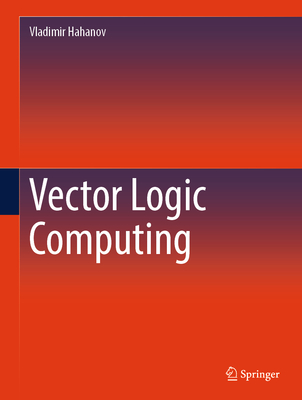
This book creates a non-processor economy vector logic in-memory computing based on read-write transactions on logical vectors, truth tables, and matrices. In-memory vector logic is a harmonic relationship between a model and an algorithm that aims to reduce time and energy in modeling for simulation by using additional space and matter. Vector logic is an ideal form of representation of functions and structures for modelling and simulating social and physical processes. Modeling without simulation is a prompt-computing for creating a comprehensive testing map of any functionality or structure on a logical vector. Intelligent computing is here the integration of classical and artificial intelligence mechanisms for modeling and simulation, using vector-logical and matrix models to process functions and structures. The book first discusses the development of smart vector logic data structures to reduce the computational complexity of simulation algorithms. Then it explores the creation of mechanisms for vector logic modeling and testing, leveraging truth tables and matrices built on a logical vector. After that, the author goes on to cover the following: vector testing of logic circuits by simulating faults as addresses of logical vector bits; vector testing of graph structures by simulating transition faults as truth table addresses, and vector logic in-memory computing of unitary-encoded big data as truth table addresses. The book then explores the logical vector modeling for the simulation of social processes via unitary pattern encoding on the universe primitives. The goal of cyber-social vector logic computing is energy-effective monitoring and moral management of cyber-social processes and phenomena. Vector logic is a functional and structural relationship for in-memory computing, which forms an exponentially redundant data structure in memory to minimize its processing time and energy. The original vector logic mechanisms are implemented in the MOSI cloud service - Modeling for Simulation, written in Python, for simulating good-value states and faults, as addresses for logical circuits, functionalities, and structures. The book can be helpful for specialists in the field of big data prompt computing, including social and physical processes, as well as for engineers involved in testing digital GL, RTL, and system-level projects, automatic test generation, and good-value and fault address simulation. The theory and practice of vector-logical computing, algorithms, models, mechanisms, and codes are an original development to create energy- and time-saving processor-less new computing in memory.
商品描述(中文翻譯)
這本書創建了一種基於邏輯向量、真值表和矩陣的非處理器經濟向量邏輯內存計算,該計算基於讀寫交易。內存向量邏輯是模型與算法之間的和諧關係,旨在通過使用額外的空間和物質來減少建模模擬所需的時間和能量。向量邏輯是表示函數和結構的理想形式,適用於建模和模擬社會及物理過程。沒有模擬的建模是一種即時計算,用於創建任何功能或結構在邏輯向量上的綜合測試圖。智能計算在這裡是將經典和人工智能機制整合在一起,用於建模和模擬,使用向量邏輯和矩陣模型來處理函數和結構。本書首先討論了智能向量邏輯數據結構的發展,以減少模擬算法的計算複雜性。然後探討了利用基於邏輯向量的真值表和矩陣創建向量邏輯建模和測試機制。之後,作者繼續涵蓋以下內容:通過模擬故障作為邏輯向量位址來進行邏輯電路的向量測試;通過模擬轉換故障作為真值表位址來進行圖結構的向量測試,以及將單位編碼的大數據作為真值表位址進行的向量邏輯內存計算。接著,本書探討了通過對宇宙原始物進行單位模式編碼來模擬社會過程的邏輯向量建模。網絡社會向量邏輯計算的目標是對網絡社會過程和現象進行能量有效的監控和道德管理。向量邏輯是一種功能和結構關係,用於內存計算,形成一種指數冗餘的數據結構,以最小化其處理時間和能量。原始的向量邏輯機制在MOSI雲服務中實現——模擬建模,使用Python編寫,用於模擬良好狀態和故障,作為邏輯電路、功能和結構的位址。本書對於大數據即時計算領域的專家,包括社會和物理過程,以及參與測試數位GL、RTL和系統級項目、自動測試生成和良好值及故障位址模擬的工程師,都將有所幫助。向量邏輯計算、算法、模型、機制和代碼的理論與實踐是創造節能和節時的無處理器新內存計算的原創發展。
作者簡介
Vladimir Hahanov was born in USSR in 1953. He is Doctor of Science, Professor of Computer Engineering Faculty, Design Automation Department, Kharkov National University of Radio Electronics, Ukraine. R&D fields: Design and Test of computers, Test Generation and Fault Simulation for SoC, Quantum memory-driven computing, Cyber Physical & Cyber Social Computing, Pattern Recognition & Machine Learning Computing, Digital Smart Cyber University, Cloud-Driven Traffic Control, Vector-Logic Computing. Previous positions: Acting Science Vice-Rector (2016), Dean of Computer Engineering Faculty (2003-2017). Supervisor for 4 Doctor of Science, 36 PhD's, and 150 more engineers for 27 countries. General Chair of IEEE East-West Design & Test Symposium for 23 Years since 2003. Author of 650+ publications and 25 textbooks, 5 patents and 212 Scopus-indexed papers. H-index is 16, 1155 citations by 734 documents. Prof. Hahanov is IEEE Senior Member since 2010, IEEE Computer Society Golden Core Member, SAE Member and IFAC Member.
作者簡介(中文翻譯)
弗拉基米爾·哈哈諾夫於1953年出生於蘇聯。他是科學博士,烏克蘭哈爾科夫國立電子學大學計算機工程學院設計自動化系的教授。研究與開發領域包括:計算機的設計與測試、系統單晶片(SoC)的測試生成與故障模擬、量子記憶驅動計算、網絡物理與網絡社會計算、模式識別與機器學習計算、數位智慧網絡大學、雲端驅動的交通控制、向量邏輯計算。曾任職位包括:代理科學副校長(2016年)、計算機工程學院院長(2003-2017年)。指導來自27個國家的4位科學博士、36位博士及150多位工程師。自2003年以來擔任IEEE東西方設計與測試研討會的總主席,已有23年。著作超過650篇,出版25本教科書,擁有5項專利及212篇Scopus索引論文。H指數為16,引用次數1155次,文獻數734篇。哈哈諾夫教授自2010年起為IEEE資深會員,IEEE計算機學會黃金核心會員,SAE會員及IFAC會員。