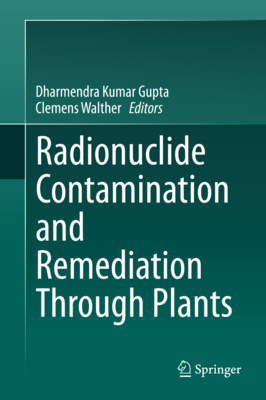
Radionuclide Contamination and Remediation Through Plants
暫譯: 放射性核素污染與植物修復
Gupta, Dharmendra Kumar, Walther, Clemens
- 出版商: Springer
- 出版日期: 2014-07-30
- 售價: $7,090
- 貴賓價: 9.5 折 $6,735
- 語言: 英文
- 頁數: 314
- 裝訂: Hardcover - also called cloth, retail trade, or trade
- ISBN: 3319076647
- ISBN-13: 9783319076645
-
相關分類:
化學 Chemistry
海外代購書籍(需單獨結帳)
商品描述
This book focuses on the mechanistic (microscopic) understanding of radionuclide uptake by plants in contaminated soils and potential use of phytoremediation. The key features concern radionuclide toxicity in plants, how the radioactive materials are absorbed by plants, and how the plants cope with the toxic responses. The respective chapters examine soil classification, natural plant selection, speciation of actinides, kinetic modeling, and case studies on cesium uptake after radiation accidents.
Radionuclide contaminants pose serious problems for biological systems, due to their chemical toxicity and radiological effects. The processes by which radionuclides can be incorporated into vegetation can either originate from activity interception by external plant surfaces (either directly from the atmosphere or from resuspended material), or through uptake of radionuclides via the root system. Subsequent transfer of toxic elements to the human food chain is a concrete danger. Therefore, the molecular mechanisms and genetic basis of transport into and within plants needs to be understood for two reasons: The effectiveness of radionuclide uptake into crop plants - so-called transfer coefficient - is a prerequisite for the calculation of dose due to the food path. On the other hand, efficient radionuclide transfer into plants can be made use of for decontamination of land - so-called phytoremediation, the direct use of living, green plants for in situ removal of pollutants from the environment or to reduce their concentrations to harmless levels.
商品描述(中文翻譯)
這本書專注於對受污染土壤中放射性核素被植物吸收的機制(微觀)理解,以及植物修復的潛在應用。主要特點涉及放射性核素對植物的毒性、放射性物質如何被植物吸收,以及植物如何應對這些毒性反應。各章節探討土壤分類、自然植物選擇、錒系元素的物種化、動力學建模,以及輻射事故後銫的吸收案例研究。
放射性核素污染物對生物系統造成嚴重問題,因為它們具有化學毒性和輻射效應。放射性核素進入植物的過程可以源自外部植物表面對活動的攔截(直接來自大氣或重新懸浮的物質),或通過根系吸收放射性核素。隨後將有毒元素轉移到人類食物鏈中是一個具體的危險。因此,必須理解進入植物內部的分子機制和遺傳基礎,原因有二:放射性核素在作物植物中的吸收效率——所謂的轉移係數——是計算由食物途徑引起的劑量的前提。另一方面,將放射性核素有效轉移到植物中可以用於土地的去污——所謂的植物修復,即直接利用活的綠色植物在原位去除環境中的污染物或將其濃度降低到無害水平。