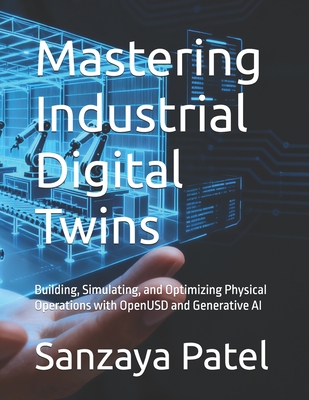
Mastering Industrial Digital Twins: Building, Simulating, and Optimizing Physical Operations with OpenUSD and Generative AI
暫譯: 掌握工業數位雙胞胎:使用 OpenUSD 和生成式 AI 建立、模擬及優化實體操作
Patel, Sanzaya
- 出版商: Independently Published
- 出版日期: 2025-11-20
- 售價: $1,300
- 貴賓價: 9.8 折 $1,274
- 語言: 英文
- 頁數: 468
- 裝訂: Quality Paper - also called trade paper
- ISBN: 9798275327526
- ISBN-13: 9798275327526
-
相關分類:
GAN 生成對抗網絡
海外代購書籍(需單獨結帳)
相關主題

商品描述
Stop building. Start simulating.
Every year, billions of dollars are wasted on factory expansions, warehouse reconfigurations, and data center upgrades that fail to deliver promised results. The traditional approach-build first, optimize later-is broken. Capital is expensive. Mistakes are permanent. There's a better way.
Operate Before You Build introduces the twin-first paradigm: treat your plant, warehouse, or data center as a simulated product before spending a single dollar on physical construction. Using photoreal digital twins powered by OpenUSD and generative AI, you can design, stress-test, and optimize operations in a risk-free virtual environment-then build with confidence.
This comprehensive guide bridges theory and practice, serving both beginners new to digital twins and experienced practitioners seeking enterprise-scale implementation. You'll learn to:
- Export CAD models to simulation-ready OpenUSD format
- Integrate live sensor data for real-time synchronization
- Build physics-accurate environments with materials, gravity, and collision detection
- Simulate human and robot workflows to identify bottlenecks before they exist
- Apply generative AI to auto-optimize layouts and policies
- Close the design-operate loop for continuous improvement
- Manage model risk and maintain stakeholder trust
Why now? NVIDIA and Siemens have productized Omniverse + Teamcenter workflows. OpenUSD standardization is accelerating through the Alliance for OpenUSD (AOUSD). Enterprises are moving to digital-first factory planning. The technology barrier is gone-the only question is whether you'll adopt before your competitors do.
What you'll achieve: Cut time-to-throughput by 40-60%. De-risk expansions that typically cost millions. Train robots and people on faithful virtual replicas. Make every CapEx decision with simulation-backed confidence.